



Great Barrier Reef suffers sharp coral decline: Report









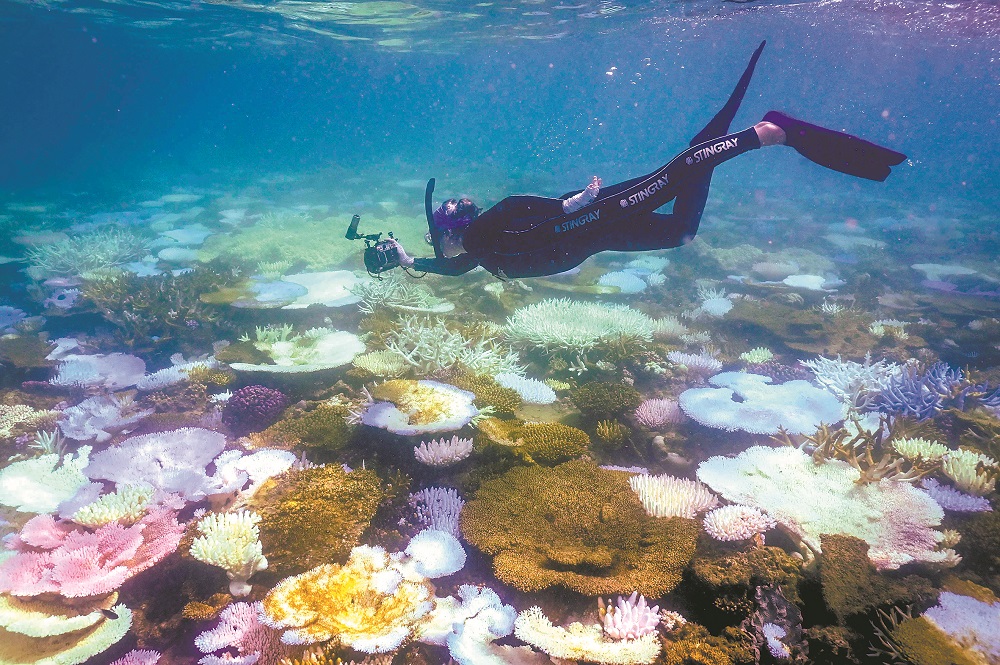
SYDNEY — Australia's Great Barrier Reef's hard coral cover has sharply declined, returning to near long-term average levels after recent record highs, a report revealed on Wednesday.
The findings underscore a new volatility in coral health, according to the Australian Institute of Marine Science's annual survey report of the world's largest coral reef system off the coast of Queensland, Australia.
The Great Barrier Reef has experienced the largest annual decline in coral cover in two of its three regions since the institute began monitoring 39 years ago, the report said.
This decline was mainly caused by climate change-driven heat stress from the 2024 mass bleaching event, alongside damage from cyclones and crown-of-thorns starfish outbreaks, it said.
According to the institute, coral cover fell by about 25 percent in the northern section, nearly 14 percent in the central region, and around one-third in the southern region, which has experienced such severe bleaching for the first time.
The institute's Long-Term Monitoring Program, or LTMP, leader Mike Emslie said that over the past 15 years, hard coral cover has become more volatile, fluctuating rapidly between record lows and highs, pointing to an ecosystem under stress.
Coral reefs dominated by the Acropora species, known for their fast growth but high vulnerability, were among the most impacted, "as they are susceptible to heat stress, cyclones and are a favorite food of crown-of-thorns starfish", Emslie said.
The LTMP surveyed 124 reefs between August 2024 and May 2025, finding that most reefs had hard coral cover of 10-30 percent, 33 reefs had 30-50 percent, two reefs exceeded 75 percent, and two were below 10 percent.
The institute's CEO Selina Stead said the findings strongly demonstrate how ocean warming due to climate change is causing significant and rapid harm to the Great Barrier Reef's coral communities.
Xinhua










