A divided world
The masses were desperate to seek asylum abroad, "the world seemed to be divided into two parts - those places where the Jews could not live and those where they could not enter," wrote Chaim Weizmann, Israel's first president, in 1936.
"Both the United States and Britain refused to accept any more refugees in substantial numbers, and all the other countries followed suit. All around, the embassies were shutting their doors, and countries closing their borders," he wrote. "That was when rumors started to circulate in Vienna about a place where one could actually go without a visa."
Shlomo Aouizerat, a French rabbi who now lives in Shanghai, said: "Of course I'd heard before about the Japanese invasion of China. But I only started to understand the gravity of the situation when I came here seven years ago. Keeping in mind that people in great pain tend to develop animosity toward others who have suffered less, it's remarkable that the Chinese, themselves being murdered and severely maltreated, didn't withhold their help when it was needed by others."
In August 1945, Japan surrendered, and on Sept 3 that year, the ghetto was officially liberated. In the next five years, almost all the Jewish refugees left Shanghai to start new lives elsewhere.
In 1939, 13-year-old Michael Blumenthal arrived in Shanghai with his parents and stayed until 1947. In his autobiography, From Exile to Washington, the former US treasury secretary wrote about the experience. "I thought life was passing me by and that those were wasted years. Yet I now realize that I was wrong. The tough refugee years were precious lessons for the future; I lived them intensely, and they taught me much that was valuable and that I might never have learned in normal circumstances," he wrote. "Today I am grateful for that."
During her 2013 visit, Grebenschikoff donated her handmade wedding dress to the refugee museum, where she married in November 1948.
And in November 2011, five months after Sasson's visit to find "Uncle Chu", the refugee museum, aided by the local population bureau, finally managed to find Chu's daughter, with whom Sasson regularly played as a little girl. The old man had passed away, but the "sisters" shared an online video chat. "I promised you we wouldn't have to wait more than 60 years before we saw one another again," said Sasson, from her Florida home. Age can play strange tricks, and in fact, 65 years had passed since her family's departure, but the promise had not been forgotten.
Contact the writer at zhaoxu@chinadaily.com.cn
 |
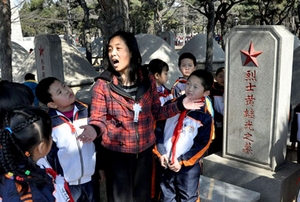 |
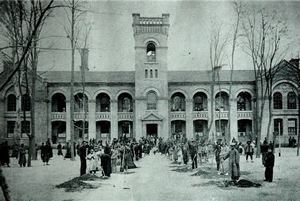
| Weihsien: Life and death in the shadow of the Empire of the Sun | In memory of unnamed war heroes |

Copyright 1995 - . All rights reserved. The content (including but not limited to text, photo, multimedia information, etc) published in this site belongs to China Daily Information Co (CDIC). Without written authorization from CDIC, such content shall not be republished or used in any form. Note: Browsers with 1024*768 or higher resolution are suggested for this site.
License for publishing multimedia online 0108263 Registration Number: 130349