



Education is like the rabbit-tortoise race









 |
| SONG CHEN/CHINA DAILY |
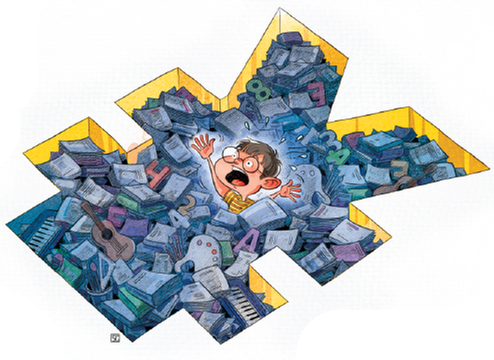
A mother recently posted on the internet a long list of expensive extracurricular classes for her child, including 12,000 yuan ($1,786) a year for English, 14,000 yuan for logic and mathematic, 7,000 yuan for dancing, 11,000 yuan for photography and 6,000 yuan for drawing, and complained that she is not raising a child, but a money burner.
Extracurricular classes for students are not a new topic. Still, they end up fraying public nerves whenever they come up in discussions, which is surprising because parents are free to provide their children with customized education, including special after-school classes, to make up for their inadequate school and family education.
But the problem is that most of the nongovernmental training institutions usually offer subjects aimed at improving children's performance in school. In this sense, extracurricular classes are not simply money spinners.
The widespread anxiety among Chinese parents over their children's future is understandable. It is not inhumane for anxious parents to get their children admitted to special training institutions and overburden them with extra work. This can be considered a result of the broad social environment in China.
Since the concept that their children should not lose at the starting point is deep-rooted in their minds, many parents force their kids from the kindergarten stage to attend special classes to excel in their class. How many parents would dare to chart a different course for their kids when they see other children attend special classes and perform well in school?
The practice of "good" schools setting admission test papers in such a way that only the "best" students-those who have "acquired" extra knowledge and skills-are selected and the fierce education race ahead make even the most cool-headed parents worry about their children's future.
Ironically, some parents say students are under increasing pressure to attend extracurricular classes partly because the education authorities have taken measures to lighten the school and homework burden on children.
The measures to alleviate the homework burden, they say, have put them in a dilemma: if they follow the rules, those students who do not will gain advantage in future examinations. And after considering the pros and cons of the authorities' measures, many parents choose to push their children into extracurricular classes-which is a classic case of the "prisoner's dilemma".
The pocket-pinching education model many Chinese parents have adopted is a result of not only the well-designed promotion tactics of some training agencies that cater to worried parents' psychological needs, but also employers' diploma-oriented recruitment practice, rigid management of the State-run education system and people's concern about their children's future in the increasingly competitive job market.
Parents' thirst for quality education and choice of diverse education models for their children call for deepening of reform in the education system.
To put a brake on the rising extracurricular training trend, the education authorities should take proper measures to promote balanced distribution of educational resources, change the current evaluation system that mainly focuses on students' scores, and set up a system that separates students' enrollment from their exam scores. The problems associated with the education model-lighter school education burden combined with intense after-school training-cannot be addressed if the authorities don't take targeted measures.
Education involves various aspects of society, so one cannot expect deepened educational reform to be implemented overnight. While taking steps to secure a brighter future for their children, parents should realize that life is not a sprint race, but a marathon in which one cannot succeed by running at top speed right from the outset.
Children should not be viewed as a learning machine. Instead, they should be cultivated into all-round talents with high moral values, and good intellectual and physical qualities.
The author is a Zhejiang-based middle school teacher. The article was first published in China Youth Daily.





