



Optimism rises over fate of the finless porpoise









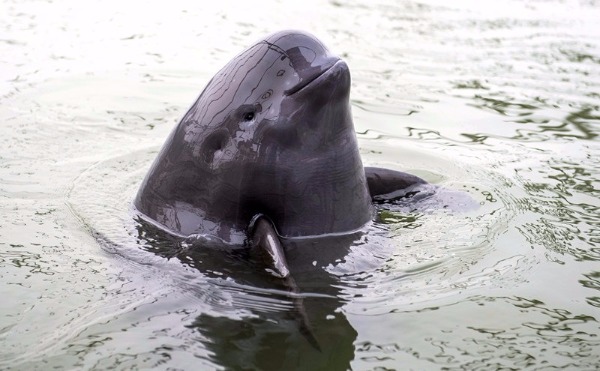
Sometimes known as "river pigs", the species is also called the "smiling angel" because its round face and steep forehead give the impression of a smile.
The porpoise lives on eels, bass, whitebait, shrimps and aquatic plants, according to location. However, its existence is threatened by a lack of food as a result of illegal fishing, sand excavation and wetland development.
So far this year, 21 porpoises have been found dead along the course of the river.
"We have already lost the Baiji (a type of dolphin), which was declared functionally extinct in 2007. Only 10 years later, the population of finless porpoise has fallen at startling speed," said Li Yanliang, director of the National Aquatic Wildlife Conservation Association.
"The porpoise is the only freshwater mammal in the Yangtze River, but it is in critical condition and greatly affected by human activities."
His words were echoed by Zhang Li, secretary-general of the SEE Foundation, a charity organized by entrepreneurs: "The decrease in the population is the result of excessive shipping, industrial pollution and the overexploitation of natural resources. It's not only a disaster for the species, but also for the Yangtze River's ecosystem."
The mammal, which sits at the apex of an "aquatic pyramid", is a key indicator of the river's ecological health. "If the porpoise becomes extinct, many other forms of life in the water will follow, and the river's ecosystem will be severely damaged," Wang, the researcher, said.
Triple approach
The government has used three methods to protect the porpoise: on-and off-site conservation and captive breeding. On-site conservation seeks to protect the species in its natural habitat, while offsite relies on reconstruction of original habitats in new locations.
In 2015 and 2016, on-site conservation work was undertaken in Hewangmiao, Hubei, and Anqing, Anhui province. Off-site work was first jointly undertaken by the ministry and the hydrobiology institute in the 1990s, when five finless porpoises were transferred to the Tian'ezhou Milu Nature Reserve in Shishou, Hubei.


- China's State Council sets up team to investigate Shanxi coal mine explosion
- Desert fighter, US friend to reunite soon
- Serbian president meets HBIS chief, backs green steel push in Belgrade
- Chinese-built cruise ship passes sea trials
- Senior Jiangxi official Li Wei investigated for discipline violations
- Guangzhou launches latest affordable housing scheme





