



Deals of expediency will not bury the past









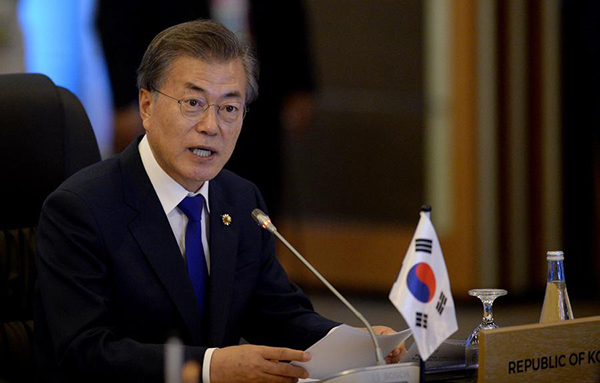
The Republic of Korea’s President Moon Jae-in was simply telling the truth when he said on Thursday that the 2015 agreement between his country and Japan intended to settle once and for all the decades-long row over Korean women forced into wartime sexual slavery was seriously flawed, “both in process and content”.
His remarks came after a state-appointed panel concluded the ROK’s former government failed to properly communicate with the victims to get their consent on the deal and covered up the Japanese demands that Seoul avoid using the term “sexual slavery” — with Seoul agreeing to formally refer to the victims as “victims of Japanese military comfort stations” — and provide a specific plan to remove a bronze statue representing sex slaves in front of its embassy in Seoul.
That is why the deal, though called “final and irreversible”, has never really resolved the highly emotional issue, which remains a thorn in bilateral relations, as proved by the continuation of weekly demonstrations in front of the Japanese embassy in Seoul.
It was always an agreement struck on shaky ground, and Japan has been angry that Seoul hasn’t taken steps to remove the statue and similar memorials in the country, while it has fostered anger in the ROK as it failed to seek an explicit apology from the Japanese government for wartime abuses.
It is not a question of money.
The fund established under the 2015 deal provides 1 billion yen ($8.8 million) to the surviving victims in the name of recovering their “honor and dignity” and healing their “psychological wounds”. It is about Japan shirking its responsibilities, as Tokyo stopped short of calling the money official government compensation, thereby refusing to acknowledge the Japanese government at the time systematically organized military sex enslavement.
Historical records and memories of the victims themselves suggest that Japan forced tens of thousands of women from Korea and other Asian countries that it invaded during World War II to be sex slaves for its imperial army.
Yet the current Japanese administration has been reluctant to acknowledge this, insisting that “comfort women” were recruited by civilians and that the army brothels were commercially operated.
Japanese Prime Minister Shinzo Abe once even said the women were not forced to be sex slaves as “there was no evidence to prove there was coercion as initially suggested”.
Because of all this, the victims and their sympathizers have never accepted the deal, seeing it as political expediency.
As Moon said, the agreement cannot resolve the comfort women issue.
That can only happen when those in Japan who continue to insist on whitewashing the country’s wartime history face it squarely so that the past can be laid to rest.


Today's Top News
- Desert fighter, US friend to reunite soon
- Chinese assets gaining appeal around world
- Global poverty relief entails collaboration
- China's major industrial firms' profits jump 18.2%
- China-Serbia cooperative leap from roads to robots
- Chinese FM highlights China's contributions to UN cause





