


Discovering Guangxi, from Nanning to historic Beihai










Walking around I came upon Beihai’s distinctive vernacular, a mixture of local languages and dialects. Colloquial speech included “Qin-Lian”, a southern branch of “Yue Chinese” found along coastal areas of Beihai, Qinzhou and Fangcheng. To an outsider such as myself, it resembled what in the West is known as Cantonese. Indeed there were the almost musical-sounding tones which I remembered clearly from living in Guangzhou. Today of course, Putonghua is widely spoken due to universal education.
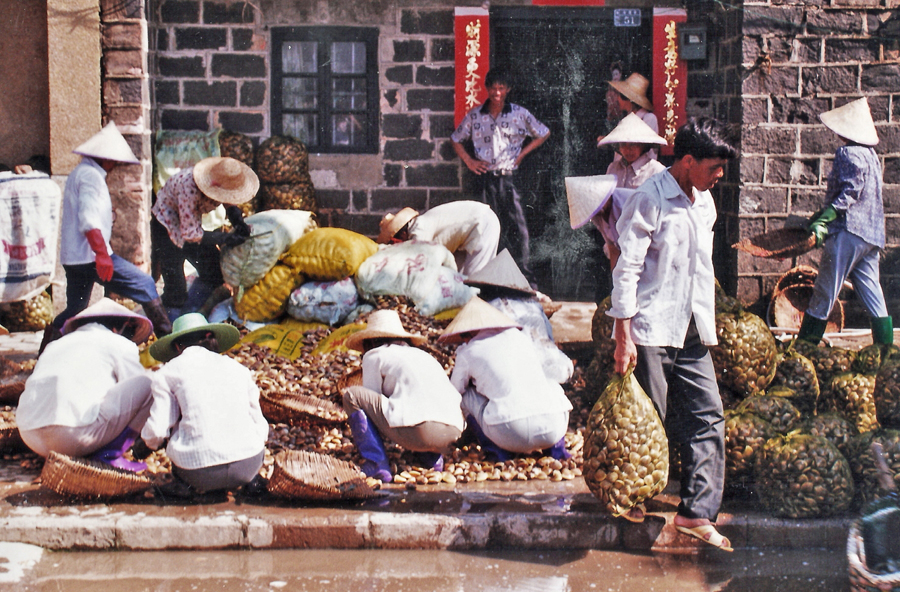
Bordering the historic district a centuries old fishing harbor buzzed with activity. Small sampans rowed by women wearing circular bamboo hats acted as water taxis for large ocean-going fishing boats anchored offshore alongside older sailing vessels. The sampans continually landed crateloads of fish and harvests of shellfish. Boxes were then piled up along the harbor walls, where women packed the shells into polystyrene containers for onward shipment. Tall frames rising from the waters were part of a system for lifting submerged nets, harvesting fish straight from the sea floor.
I was informed that most of the fisherfolk in Beihai were Dan people who followed a traditional lifestyle, living on the cockle boats crowding parts of the fishing harbor. Known according to their way of life Hao (”oyster”) Dan collect oysters and fish; Zhu (”pearl”) Dan gather pearls and fish in the shallow waters off Beihai’s coast and Yu (“fish”) Dan live solely from fishing. The Dan have their own passionate folk songs and ceremonies which I would sometimes encounter.
With seafood in abundance, it was of course prominent in local cuisine. Directly south of the fishing town, Waisha Island is a low lying area of reclaimed land separated by a narrow canal. In 1999 it buzzed with many temporary-looking wooden buildings and large tents set up as seafood restaurants. Noisy and colorful, it was fascinating to down a cold drink while watching diners negotiating over fish of all shapes and sizes, including squid, octopus and crab squirming around in large glass or plastic tanks. Once caught, they reemerged prepared in a variety of dining styles, including Sichuan hotpot. Sea breezes spread an aroma of sizzling fish across the island. Tourist stalls overflowed with coral and decorative shells.





