



Herders welcome changes in Xinjiang's 'Valley of Life'









Amangul Hanuyalbik, 61, is the oldest herder in the neighborhood. "I'm too old to work, so now I mostly look after my grandchildren," he said.
He has passed on his whip to his son, who takes care of 250 sheep, 50 horses and 10 cattle.
In the daytime, men usually graze sheep and cattle on the pasture, while women cook meat and naan bread at home. Their traditional dwellings are built from logs and mud. When night falls, the whole family gathers around the stove, chatting over hot milk tea.
But life is not as idyllic as it seems. The four doctors in the hospital in the valley know best how perilous life here can be. They have just saved a herdsman who fell from a cliff and nearly died from bleeding inside his skull.
Years ago, a member of an epidemic prevention team also had a brush with death after falling from his horse when delivering oral poliovirus medicine to children.
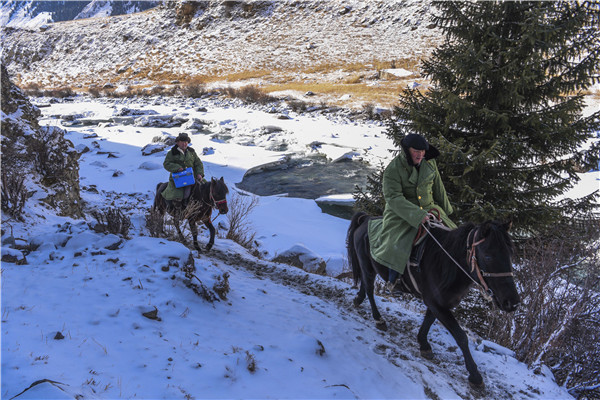
Gyens, head of the nearest hospital, has been working in Akyaz for 12 years. In the remote mountains, patients do not go to see doctors. Instead the doctors go house to house by car, motorcycle, horseback or on foot to treat minor illness and injuries. Patients in serious condition are sent to the county hospital.


- Guangzhou launches latest affordable housing scheme
- Shandong capital unveils Novi Sad-inspired sister city garden
- China's port throughput expands in early 2026 on strong container growth
- Sandy land miracle: Old friends to meet again
- Traditional dragon boat race in Hunan highlights local flair
- Xizang children's hospital joins charity program for severe illness aid





