



Rediscovering the historic city of Xi’an









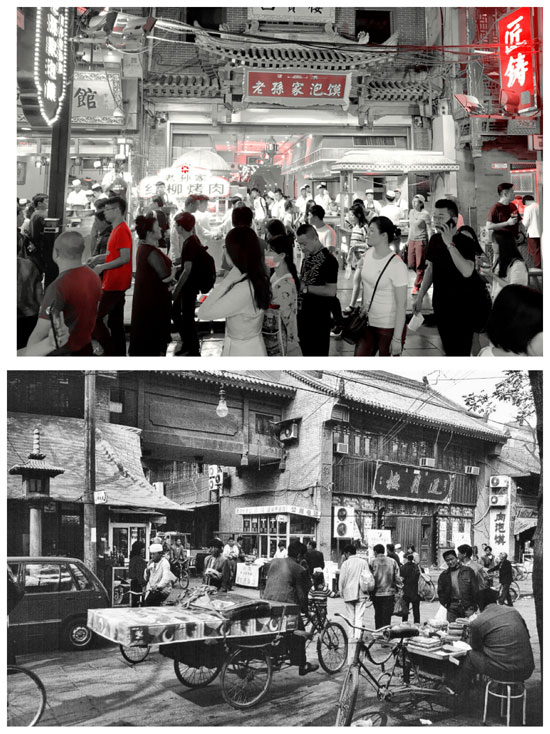
Within hours of leaving my Beijing apartment, I was photographing Xi’an’s vibrant Muslim Quarter. Xi’an is particularly fortunate to have this district right in the heart of the older city. It is a reminder of the city’s relationship with the Silk Road, and the many traders who moved east and settled there. By the 8th century AD Xian was one of the world’s largest cities, with over one million inhabitants. Today it is a natural draw for visitors, who mingle on the alleys with local residents dressed in costumes associated with the Hui or Islamic people of northwestern China. With literally hundreds of restaurants and food stores it is a place to eat authentic snacks such as beef or mutton roujiamo (a hamburger-like sandwich) and often be entertained by the very act of food preparation. It might even come with theatrical performances and songs.
When I was last there in 2004, cars squeezed through the arched passageway of the Drum Tower and along what then felt a somewhat neglected older street. Every evening that structure is now beautifully bathed in color, as is the neighboring Bell Tower — both located along the city’s central axis. In my return to Beiyuanmen and the quieter, less tourist-driven North Guangji Street, many photo opportunities presented themselves; people, food, clothing stalls. Narrow bustling side lanes were covered, creating a feeling reminiscent of Middle Eastern bazaars. The air was filled with the aroma of grilled lamb sprinkled with spices. Walking around I would try to imagine the historic feel of the area, of the camels, porters and traders, the many languages spoken, the costumes and attire, meat roasting over fire, helmeted soldiers patrolling with swords and spears. Indeed, it is still possible to imagine the history of this area going back generations.
The stall-lined Huajue Alley led west of Beiyuanmen to the city’s Great Mosque, the largest in China. Set within peaceful gardens dating from the Ming Dynasty, it combines traditional Chinese architectural form with Islamic functionality. Over the past 21 years, I have regularly revisited it. Like much of the surrounding area, it has seemingly withstood the ravages of change.





