



Endangered cranes get better protection









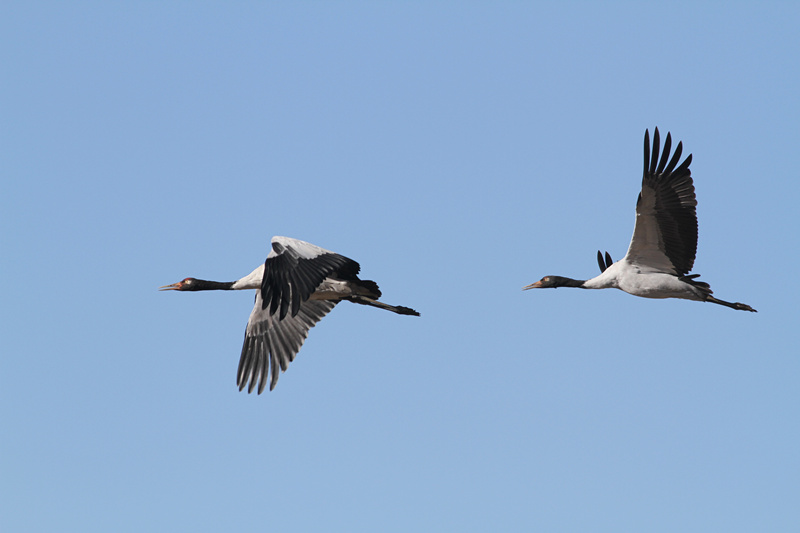
Park ranger Losonchokyi carries nothing but a camera, telescope, flask of butter tea and a small satchel of tsampa - roasted barley flour - during his daily patrols at a nature reserve in Qinghai province.
In 2015, the 60-year-old joined a patrol unit at Longbao National Nature Reserve, which was established in 1986 to focus on protecting black-necked cranes.
The species is classified as vulnerable by the International Union for Conservation of Nature and enjoys first-class protection in China.
From April to October, thousands of the cranes fly to Longbao, an important breeding ground for the species.
Losonchokyi spends hours every day patrolling the breeding sites at the reserve to prevent Tibetan sand foxes and stray or feral herding dogs from harassing breeding cranes, eating eggs and killing chicks.
"The black-necked crane is a symbol of pureness and happiness in my hometown," he said. "I'm lucky that my job is to protect them, although it is not always interesting work."
Longbao has 10 rangers focused on protecting the cranes. On summer evenings, the rangers pitch tents near the breeding sites to prevent wild animals, livestock and humans from disturbing the nesting cranes.
"It's difficult to walk in the reserve during summer as the wetland is fed by high precipitation, groundwater and glacier meltwater," Losonchokyi said. "We don't wear shoes while patrolling at the reserve because they would get stuck in the mud."
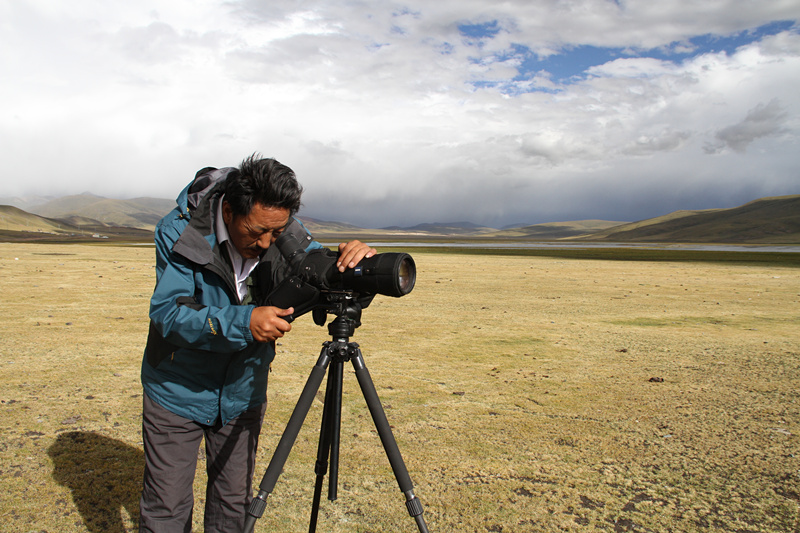
Losonchokyi earns about 1,800 yuan ($280) a month. He said he has never thought of giving up this job as he has seen an increasing number of black-necked cranes flocking to his hometown in recent years.
Basangtserin, an official at the nature reserve, said there were only about 20 black-necked cranes nesting at Longbao in the 1980s.
"Thanks to the improved protection of cranes, and especially crane eggs, now more than 300 cranes fly to Longbao every year," he said.
The 10,000-hectare reserve has electronic monitoring equipment installed to help better track the cranes, according to Basangtserin.
The reserve is in Sanjiangyuan, which has a total wetland area of 8.1 million hectares. However, the environment has been damaged by human activity.
In 2015, 963 rangers like Losonchokyi were deployed across 22 counties and districts in Sanjiangyuan to protect 1.9 million hectares of wetland.


- Mainland slams DPP's sustained separatist agenda
- Robots expanding limits of mega projects
- Intl partnership targets poverty
- China's State Council sets up team to investigate Shanxi coal mine explosion
- Desert fighter, US friend to reunite soon
- Serbian president meets HBIS chief, backs green steel push in Belgrade





