



Waste ban prompts rethink on plastic









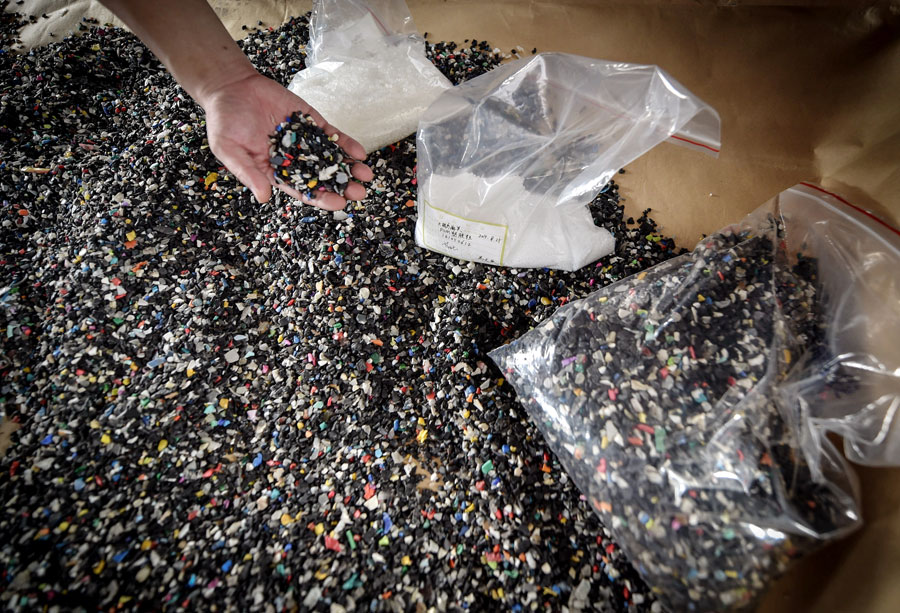
The end products of plastic recycling are known in the industry as PET (polyethylene terephthalate) pellets.
These sterile resin pellets can be fed readily into a variety of systems and turned into a liquid that in turn is extruded into molds to form a virtually limitless range of items-from water bottles to syringes, and computer keyboards to clothing.
China has banned imports of scrap for the messy business of making PET pellets, accepting only completed pellets.
Businesses in China that transformed the scrap into pellets have been moving their machinery to Southeast Asia, particularly Malaysia.
Zhang Tao from polyethylene pellet supplier Tanjung Majujaya in Malaysia, told Plastics News that business has been good.
"Since China can't import scrap, they buy pellets from us and our business has improved," he said.
Susan Collins from the Container Recycling Institute, said, "Fulfilling the promise of recycling is leading to a product that can be used to replace virgin materials."
Virgin plastic refers to the resin produced directly from petrochemicals, such as natural gas or crude oil, which has never been used or processed before.
Producing new plastic from recycled items saves 33 percent of the energy-mainly gas and oil-required to get such materials out of the ground initially.
The health sector has benefited significantly from the use of plastic.
It can be used for prosthetics, latex gloves, intravenous bags, dialysis tubes, engineered tissue, microneedle patches for drug delivery, absorbable stitches, even plasters.
Hermetically sealed single-use disposable syringes have been viewed as a way to slow diseases spread by drug users. Condoms have helped slow the spread of HIV.
Some 60 percent of infectious plastic waste is incinerated, according to a study by the US Department of Health and Human Services. The study found that while incineration is not readily associated with sustainability, it does prevent disease transmission, but with the drawback of releasing carcinogens into the atmosphere.











