



Transportation, energy, and informatization key segments in rural infrastructure construction









Transportation, irrigation, energy, and informatization are major segments in rural infrastructure construction in China and will largely boost domestic investment in the next two years, according to working plans of certain ministries, Economic Information Daily reported. Industry insiders estimated a total of 4.52 trillion yuan ($651.2 billion) will be invested in rural infrastructure projects from 2018 to 2020, said the report.
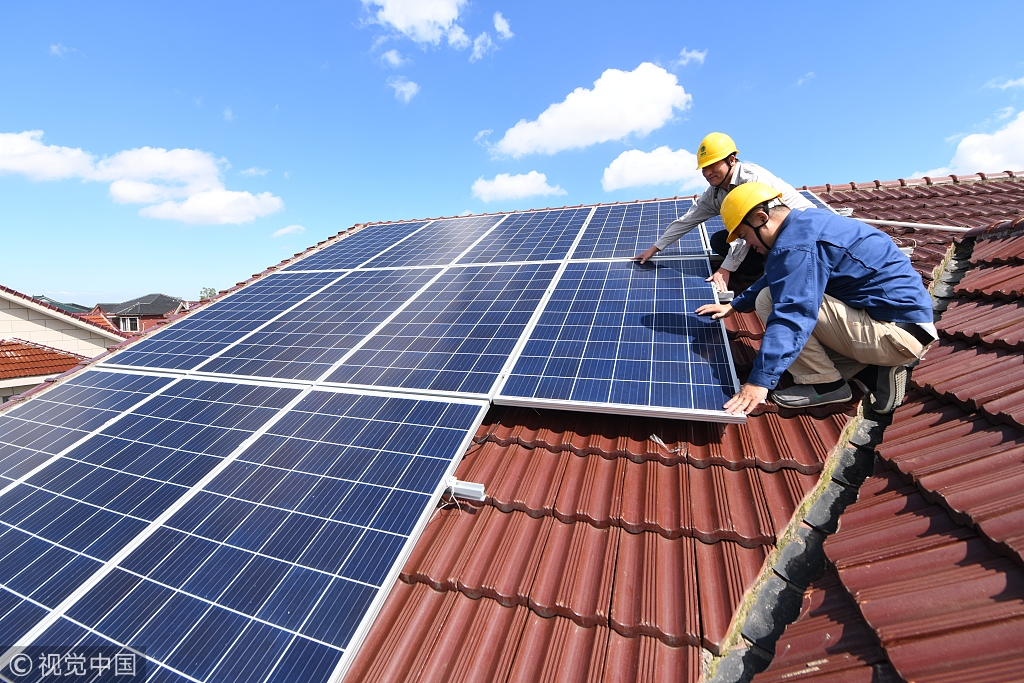
Logistics infrastructure network construction has become a priority of transportation development in rural regions, said the Ministry of Transportation. Major irrigation projects, including the building of water-saving and ecological irrigation areas, as well as the upgrading of large and medium-sized irrigation and drainage pump stations are also on the list for rural revitalization. Solar energy, shallow geothermal energy, biomass energy, and upgrading of rural power grid are the next step for developing clean energy in China's rural areas, according to the National Energy Administration.
The expansion of broadband network and 4G network will further accelerate the integration of modern information technology such as Internet of Things and smart devices with the production and living in rural areas, according to road maps drafted by the National Development and Reform Commission (NRDC), and the Ministry of Industry and Information Technology (MIIT).
"The core requirement of rural revitalization is to integrate the development of urban and rural areas, and making all productive factors accessible in these areas, and establish relevant industries as well," said Gao Liangliang, associate researcher at the Institute of Rural Development, Chinese Academy of Social Sciences.
According to the MIIT, new energy vehicles are to be mass introduced to rural areas in China, with new energy pilot villages and counties on the way. The building of charging facilities will be guaranteed, said the NDRC. The National Energy Administration will also issue a three-year plan to guarantee the charging of NEVs, said the report.
Mobile operators are also accelerating their expansions in rural areas. For example, the China Telecom plans a 15 billion yuan investment in rural regions to further improve the company's expansion of 4G and optical network.
Investment in rural infrastructure construction is estimated to reach 4.52 billion yuan from 2018 to 2020, according to the uncompleted part of above Ministries' 13th five-year plans, said Qianzhan Industrial Research Institute.
"The real investment may be more than 4 trillion yuan, as rural region construction is in huge domestic demand," said Zhu Qizhen, director of the Institute of Farmers Studies, China Agricultural University.











