
国产热热热精品,亚洲视频久久】日韩,三级婷婷在线久久,99人妻精品视频,精品九热人人肉肉在线,AV东京热一区二区,91po在线视频观看,久久激情宗合,青青草黄色手机视频

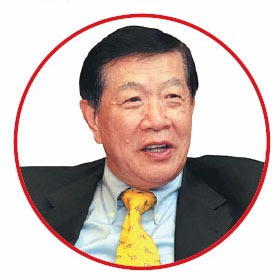
Henry Chang-yu Lee
World-leading forensic scientist
BORN:

Nov 22, 1938 in Rugao, Jiangsu province

EDUCATION:

? 1959: Graduates from Central Police College, Taiwan

? 1972: BSc in forensic sciences, City University of New York

? 1974: MSc in biochemistry, New York University

? 1975: PhD in biochemistry, NYU

CAREER:

? 1960-65: Officer in the Taipei Police Department, rising to the rank of captain

? 1979-98: Director and chief criminalist, Connecticut State Police Forensic Laboratory

? 1998-2000: Commissioner of the Connecticut Department of Public Safety

? 2001-10: Commissioner emeritus of the Connecticut State Police Forensic Laboratory

? 2006: Establishes the Henry C. Lee Institute of Forensic Science at University of New Haven, Connecticut, where he serves as director of forensic research and training

? September 2013: Accepts consultancy role at China's Procuratorate Technology Information Research Center, part of the Supreme People's Procuratorate

? 2016-present: Chairman of the Silk Road Forensic Consortium

Top forensic scientist finds evidence of great progress
Henry Chang-yu Lee say China has become a leading player in high-tech systems for catching criminals
Cao Yin
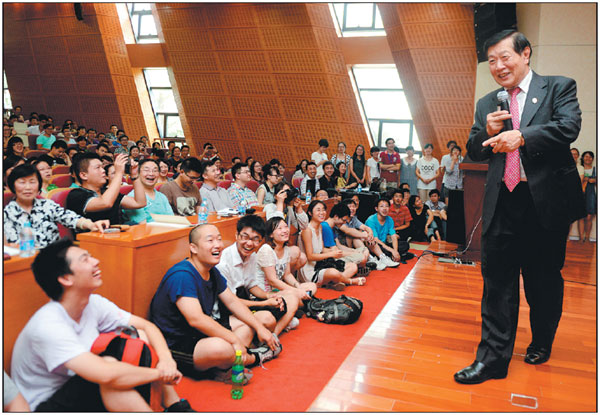
Henry Chang-yu Lee gives a speech at Shanghai Jiao Tong University on July 26, 2013. Du Xin / China Daily

Globally renowned forensic scientist Henry Chang-yu Lee has tipped China to become a world leader in high-tech evidence collection thanks to growing investment in time, energy and talent since the 1980s.

"I believe the technology in China will be more advanced than even in the United States within five years," the Chinese-American expert said in an exclusive interview.

Lee, 80, has more than five decades of experience in forensic science and has taken part in investigations into some of the biggest criminal cases in the United States. Since the 1980s, he has regularly traveled to China to offer his expertise to students, law enforcement, lawyers and judges.

"The apparatus and devices used to identify fingerprints or footprints, for example, were very simple when I first visited Chinese forensic laboratories," he said. Yet as forensic science has developed in the country, he said there have been many advances, particularly in electronic evidence collection and real-time monitoring at banks to prevent fraud.

In 2016, Lee and several other experts established the Silk Road Forensic Consortium in Xi'an, Shaanxi province, to fight crime and safeguard security by boosting scientific exchanges among countries involved in the Belt and Road Initiative.

The consortium, which has 150 members from 30 countries and regions, provides an open platform for forensic specialists, police officers and judges to share ideas and difficulties as well as experiences in DNA identification studies.

Lee, who acts as chairman, said, "Although we speak different languages in our daily lives, we all speak the same 'language' at work, and that's the language of criminal investigation. We share the same goal - to speak for the dead using forensic science."

In September, at the organization's third annual conference in Yantai, Shandong province, Lee announced plans to unify DNA identification standards among its members to try and build a mutual DNA database that can better solve criminal cases.

Unified standards are essential to the world of forensic science, he told China Daily. For example, he said, forensic technicians in different Chinese cities use various chemical reagents, apparatus and reports to identify DNA, which could affect cross-regional cases.

"If we can achieve unification in China, it can be extended across Asia, to the consortium and finally the world," he added. "It would mean a brighter future for forensic science."


1 2 3 Next   >>|
Henry Chang-yu Lee
World-leading forensic scientist
BORN:

Nov 22, 1938 in Rugao, Jiangsu province

EDUCATION:

? 1959: Graduates from Central Police College, Taiwan

? 1972: BSc in forensic sciences, City University of New York

? 1974: MSc in biochemistry, New York University

? 1975: PhD in biochemistry, NYU

CAREER:

? 1960-65: Officer in the Taipei Police Department, rising to the rank of captain

? 1979-98: Director and chief criminalist, Connecticut State Police Forensic Laboratory

? 1998-2000: Commissioner of the Connecticut Department of Public Safety

? 2001-10: Commissioner emeritus of the Connecticut State Police Forensic Laboratory

? 2006: Establishes the Henry C. Lee Institute of Forensic Science at University of New Haven, Connecticut, where he serves as director of forensic research and training

? September 2013: Accepts consultancy role at China's Procuratorate Technology Information Research Center, part of the Supreme People's Procuratorate

? 2016-present: Chairman of the Silk Road Forensic Consortium

Top forensic scientist finds evidence of great progress

Henry Chang-yu Lee say China has become a leading player in high-tech systems for catching criminals
Cao Yin
Henry Chang-yu Lee gives a speech at Shanghai Jiao Tong University on July 26, 2013. Du Xin / China Daily

Globally renowned forensic scientist Henry Chang-yu Lee has tipped China to become a world leader in high-tech evidence collection thanks to growing investment in time, energy and talent since the 1980s.

"I believe the technology in China will be more advanced than even in the United States within five years," the Chinese-American expert said in an exclusive interview.

Lee, 80, has more than five decades of experience in forensic science and has taken part in investigations into some of the biggest criminal cases in the United States. Since the 1980s, he has regularly traveled to China to offer his expertise to students, law enforcement, lawyers and judges.

"The apparatus and devices used to identify fingerprints or footprints, for example, were very simple when I first visited Chinese forensic laboratories," he said. Yet as forensic science has developed in the country, he said there have been many advances, particularly in electronic evidence collection and real-time monitoring at banks to prevent fraud.

In 2016, Lee and several other experts established the Silk Road Forensic Consortium in Xi'an, Shaanxi province, to fight crime and safeguard security by boosting scientific exchanges among countries involved in the Belt and Road Initiative.

The consortium, which has 150 members from 30 countries and regions, provides an open platform for forensic specialists, police officers and judges to share ideas and difficulties as well as experiences in DNA identification studies.

Lee, who acts as chairman, said, "Although we speak different languages in our daily lives, we all speak the same 'language' at work, and that's the language of criminal investigation. We share the same goal - to speak for the dead using forensic science."

In September, at the organization's third annual conference in Yantai, Shandong province, Lee announced plans to unify DNA identification standards among its members to try and build a mutual DNA database that can better solve criminal cases.

Unified standards are essential to the world of forensic science, he told China Daily. For example, he said, forensic technicians in different Chinese cities use various chemical reagents, apparatus and reports to identify DNA, which could affect cross-regional cases.

"If we can achieve unification in China, it can be extended across Asia, to the consortium and finally the world," he added. "It would mean a brighter future for forensic science."

道真| 仙居县| 常德市| 蓬溪县| 邹平县| 射阳县| 香港| 北海市| 来安县| 土默特左旗| 元氏县| 苍溪县| 望奎县| 桑日县| 孟州市| 焉耆| 邯郸市| 改则县| 双辽市| 遂宁市| 长治县| 清新县| 时尚| 庆云县| 商南县| 辽源市| 九龙坡区| 廊坊市| 沂水县| 尼木县| 台安县| 宝丰县| 三亚市| 榆中县| 涞源县| 固镇县| 伊川县| 柳州市| 天全县| 正宁县| 女性|