



China leads global net revolution









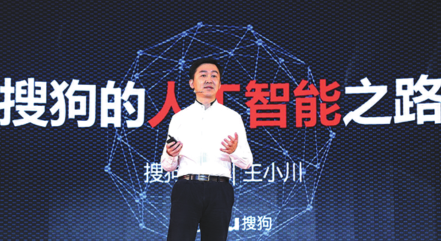
Wang Xiaochuan: Search engine guru
Nov 9, 2017, was an exciting day for Wang Xiaochuan, CEO of the search engine Sogou, because that was when his company made it onto the New York Stock Exchange. As a member of the first generation to witness and participate in the development of China's internet industry, Wang had spent decades anticipating that moment.
Born in 1978, the year the reform and opening-up policy started, Wang was lucky to grow up in a time when the country was determined to embrace information technology and the internet.
"I have experienced every important moment since reform and opening-up began, and I have benefited a lot. Thanks to the policy, I was among the first Chinese to use a computer. It totally changed my life," he said.
In 1985, in his second year of primary school, Wang was showcasing his calligraphy skills in the playground when he saw a group of children lined up in front of a black-and-white screen viewing the results of a programming class at the school-an early version of a shoot'em-up computer game.
He was fascinated, and later discovered that the machine was a computer.
"That was the first time I realized the magic of the computer. I could pass my thoughts to it in a certain language, and it would produce the result I wanted," he said.
When he was in primary school, Wang decided to learn Logo, an educational programming language, and won several awards for his achievements. In 1994, China officially connected to the internet. Two years later, Wang's family installed a telephone line that provided dial-up internet access.
In 2003, he graduated from Tsinghua University with a degree in computer science, and joined the web portal Sohu, where he developed products such as the Sogou Search Engine, Sogou Pinyin inputting software and Sogou Explore, a web browser, which boosted the company's might against other internet forerunners.
Sogou is now the world's third-most-popular search engine after Google and Baidu, and Wang has set his sights on artificial intelligence-powered technology for the company's development.
When Google's AI-powered program AlphaGo defeated South Korea's Lee Se-dol for the third time at Go, a popular board game in Asia, Wang gave all of Sogou's employees a day off in admiration. The victory ushered in a new era: that of AI.
"In middle school, I had the idea of writing a program that would allow a computer to play chess against a human. But back then I was only thinking about using my programming and algorithmic skills to make the machine smarter," he said.
He believes that the great breakthrough of today's AI is that it is data-driven, rather than reliant on a programmer's ingenuity to make the machine more intelligent.
"For me, the development of the internet in China over the past three decades has been like a sumptuous banquet," he said. "But rather than just enjoying the banquet, I'm preparing a new course."


- China's State Council sets up team to investigate Shanxi coal mine explosion
- Desert fighter, US friend to reunite soon
- Serbian president meets HBIS chief, backs green steel push in Belgrade
- Chinese-built cruise ship passes sea trials
- Senior Jiangxi official Li Wei investigated for discipline violations
- Guangzhou launches latest affordable housing scheme





