



Powerful X-rays to shed light on research









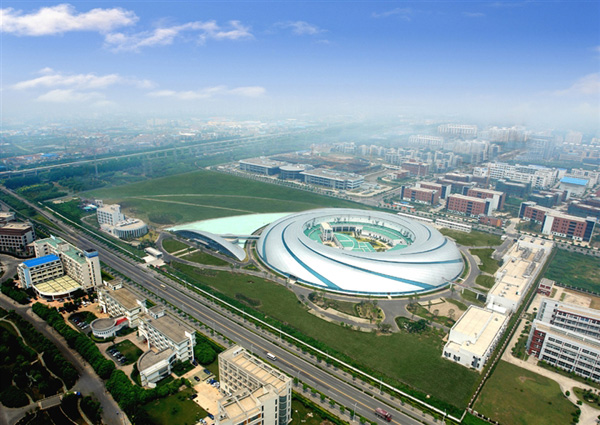
China announced on Thursday that it has mastered the core technologies to build the world's brightest synchrotron radiation light source, and that it expects to be able to produce the most powerful X-rays by 2025. This will allow scientists to study subatomic particles in greater detail and promote more understanding in fields ranging from material science to medicine.
The light source facility - the High Energy Photon Source - will be built by the Institute of High Energy Physics under the Chinese Academy of Sciences in Beijing. The project has been approved by the National Development and Reform Commission and is expected to cost around 4.8 billion yuan ($720 million), said Luo Xiaoan, deputy director of the institute.
HEPS will be one of the world's few fourth-generation synchrotron light sources with the ability to probe the inner structures of materials, he said.
HEPS will produce the brightest X-rays in the world, surpassing Sweden's MAX IV, the strongest light source of its kind in the world, he said.
"HEPS is essentially a super microscope that can have wide applications in fields that require observing extremely tiny structures, like condensed matter physics, nanotechnology and medicine."
Synchrotron light is created when the trajectory of charged subatomic particles, most often electrons, is bent with powerful magnets close to the speed of light inside a large ring. The higher the energy is, the brighter the light is, and the smaller the structures it can penetrate.
There are more than 50 light sources of its kind in the world that are either in operation or under construction, Luo said. China currently has three such light sources, with the most advanced being the Shanghai Synchrotron Radiation Facility, which opened in 2009.
The institute recently completed a test facility for HEPS, which passed evaluations on Thursday. A panel of experts believe the facility provides "a solid and trustworthy technical foundation" for the upcoming construction of the new light source.
Luo said the final facility will incorporate world-leading technologies.
Zhang Chuang, a researcher at the institute, said HEPS will play a key role in probing protein structures and revealing inner molecular structures in finer details.
"It will also help us understand molecular arrangements in transistors and microchips. We will be able to figure out how to continue to upgrade and innovate the materials." he said.


- Intl partnership targets poverty
- China's State Council sets up team to investigate Shanxi coal mine explosion
- Desert fighter, US friend to reunite soon
- Serbian president meets HBIS chief, backs green steel push in Belgrade
- Chinese-built cruise ship passes sea trials
- Senior Jiangxi official Li Wei investigated for discipline violations





