



California ports see record freight traffic









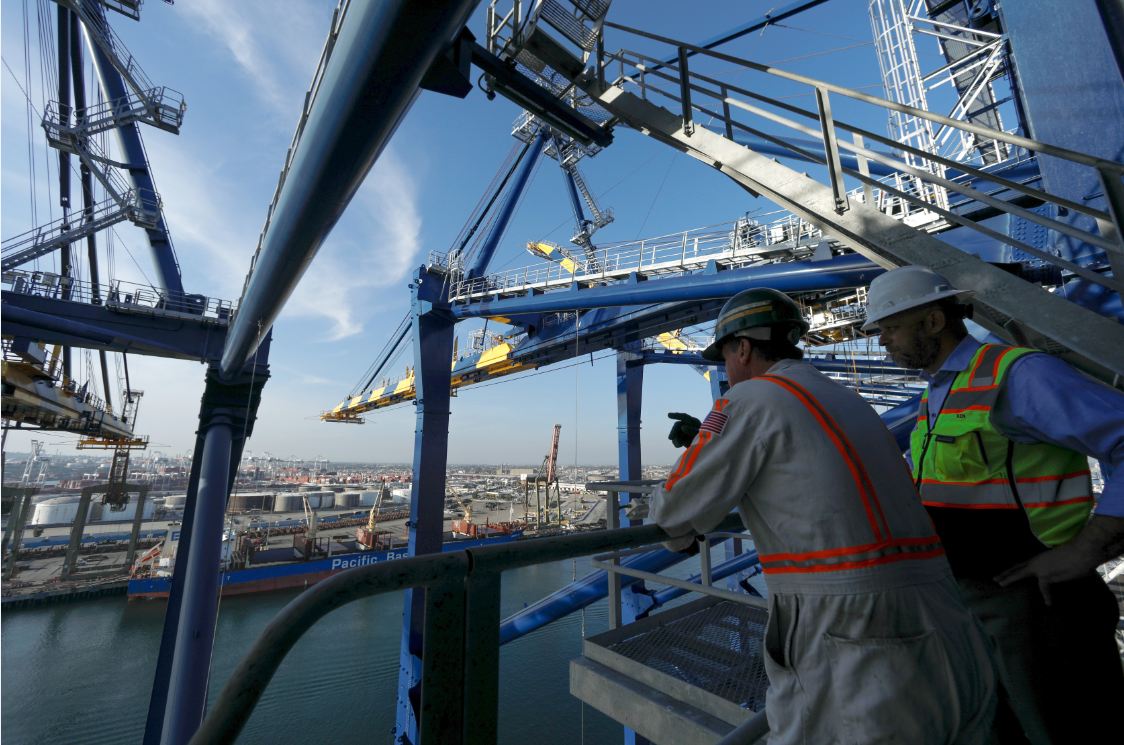
The major ports in California have seen record volume recently as the United States importers of Chinese goods moved their orders forward in anticipation of higher tariffs.
An increase in duties that importers had expected at the end of 2018 didn't materialize, but the businesses have seen higher shipping costs since the summer.
The ports of Los Angeles and Long Beach in Southern California and the Port of Oakland in Northern California both reported increased imports and decreased exports last year, partly due to "front-loading".
The three major container ports in California carry approximately 50 percent of the nation's total container cargo volume. Los Angeles and Long Beach saw a strong January, as the ports handled 852,450 twenty-foot containers last month, up 5.41 percent up from the same period in 2018.
"With the Lunar New Year holiday in Asia, we expect a slowdown in cargo in February. China and the US are currently in discussions about future tariffs. We'll need to wait and see how that plays out," Phillip Sanfield, spokesman for the ports of Los Angeles and Long Beach, told China Daily in an email.
Imports from China to the ports increased from 5.4 million containers in 2017 to 5.7 million in 2018, while exports from the US to China decreased from 881,128 containers in 2017 to 701,493 in 2018.
"What we saw in 2018 was a 6.4 increase in imports over the previous year. Some of that is likely due to 'front-loading' into the US to beat increased tariffs. On the US export side, we saw a significant decrease, 20.4 percent, in cargo leaving the US bound for China," said Sanfield.
The situation is the same at the Port of Oakland, which handled the equivalent of 2.55 million 20-foot containers last year, up 5.2 percent from the 2017 volume. The import cargo volume increased 5 percent, while exports declined 3.5 percent, according to port figures.
"The port had a record year in 2018, and that was due in part to front-loading of import commodities from Asia-particularly China," said Mike Zampa, Port of Oakland spokesman.
Among the "multiple influences at work" are the China-US trade dispute, which prompted shippers to accelerate import orders ahead of anticipated tariffs, and a buildup of empty containers in the US that required repositioning to Asia because of the import surge, according to the port.
"The cost has increased from $1,200 per container in June to $1,900 to $2,000 now. I heard some people even paid twice the normal cost," said Taylor Chow, spokesman of the Oriental Food Association, a San Francisco-based group representing more than 30 food importers.
As more containers piled up at the ports, the importers also experienced longer wait times to pick up the containers, and rising prices from truck drivers.
He said most of the warehouses in the San Francisco Bay Area are full of Chinese goods, and they have to pay extra to rent warehouses to store those goods.
Aside from the extra costs, the importers could face a 25 percent tariff that the Trump administration proposed to put on $200 billion worth of Chinese products.
"The 25 percent tariff is too much for us. We can't afford the tariffs because our profit is less than that," said Chow. "We are very worried about the tariffs, as consumers have complained about the increased prices and unavailability of certain products during this Lunar New Year. We are not sure if they are willing to pay more for the same products," he said.
"I think the tariffs won't address the problem between the two countries, and it's the US people who will pay the bill," said Y. Ray Hing, president of AMB China Ventures Inc, a Silicon Valley-based business consultancy.
Hing represents Apollo Valves, a South Carolina company, selling its products to Chinese chemical factories and power stations. Hing sold $2 million worth of products to China before the tariffs dispute began last year, thanks to his Chinese clients' front-loading.
"We have a market potential of $5 million, but our sales have been zero since July," he said.
- US investors betting that trade deal will be made with China
- US toys may face 'price shocks'
- Promising progress needs pushing forward to a deal: China Daily editorial
- US increasingly isolated denying trend of the times: Editorial
- US increasingly isolated denying trend of the times: China Daily editorial











