



Storm in a hotpot









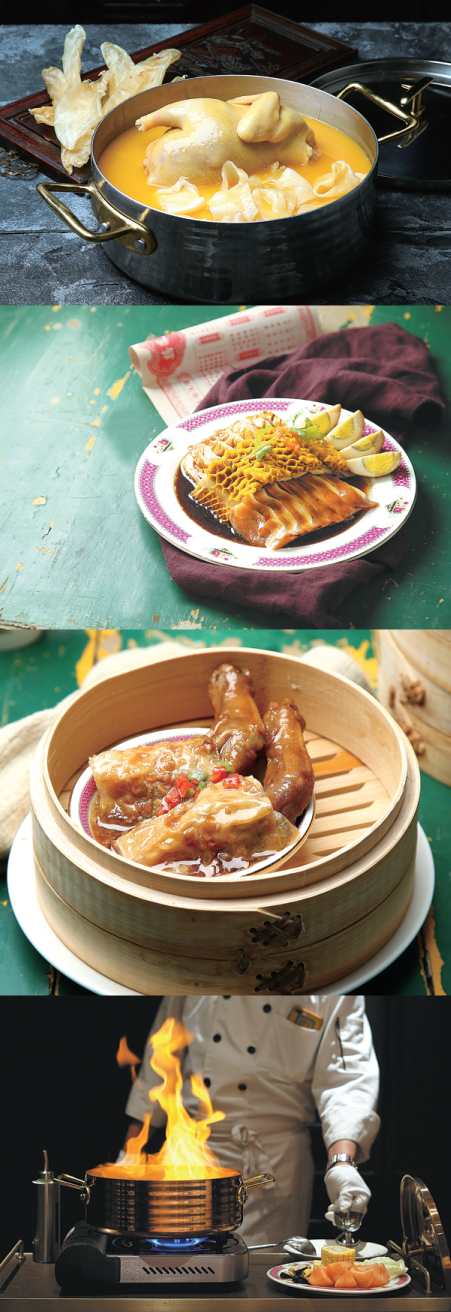
Chef Tam Tak-chuen has spent decades perfecting the art of creating authentic Cantonese dishes and handmade dim sum delicacies, Li Yingxue reports.
Hong Kong chef Tam Takchuen's culinary journey began back in the 1970s, when he spent a summer selling dim sum out of a basket to hungry diners at a neighborhood restaurant.
The basket was later strapped to his back to free up Tam's hands to serve diners.
"It was traditional to sell dim sum that way, and some restaurants in Hong Kong and Guangdong province still wheel a cart loaded with food around their dining halls," says Tam.
After the summer job, Tam was chosen by the restaurant's head chef to become an apprentice-and since his very first day in the kitchen until now, Tam has devoted more than four decades of his working life to the art of making dim sum.
His skill for creating traditional dim sum has now been passed on to Phoenix House, a restaurant chain in Beijing and Shanghai.
The founders of Phoenix House all hail from Hong Kong. Twenty years ago, they opened a Cantonese restaurant, Xin Wang, in Shanghai, an authentic old-style Hong Kong cafe which recreates the memory of the city during its heyday.
The founding of Phoenix House offers diners another two calling cards of Hong Kong's gourmet scene-dim sum and hotpot.
From the shining neon signs to the retro screens and large Chinese character of xi (double happiness) hanging on its red walls, the decor of the restaurant is a kind of time machine that transports diners back to the 1970s-as does the food.
"To design the dim sum menu for Phoenix House, I studied several traditional dim sum recipes that are rarely found in Hong Kong now, and taught my apprentice to make them step by step," says Tam.
One such example is tied duck feet with abalone sauce, a dish that could be found in high-end restaurants in Hong Kong during the 1950s and'60s.
"It's a legendary snack in Hong Kong. It uses two layers of tofu skin to wrap the duck feet, which are marinated in a special sauce together with shrimp, meat filling and fried taro, before the abalone sauce is poured over it ahead of steaming," says Tam.
The 58-year-old chef believes every dim sum dish requires meticulous and careful preparation, and no machine or assembly line could ever replicate his handmade flavors.
According to Tam, there are several kinds of chefs in the dim sum kitchen-one takes charge of panfrying while another handles the dough-and the skill of each position requires a chef with years of experience. In fact, it has taken Tam decades to master all the steps.















