



Tech board signals fast start as rules activated









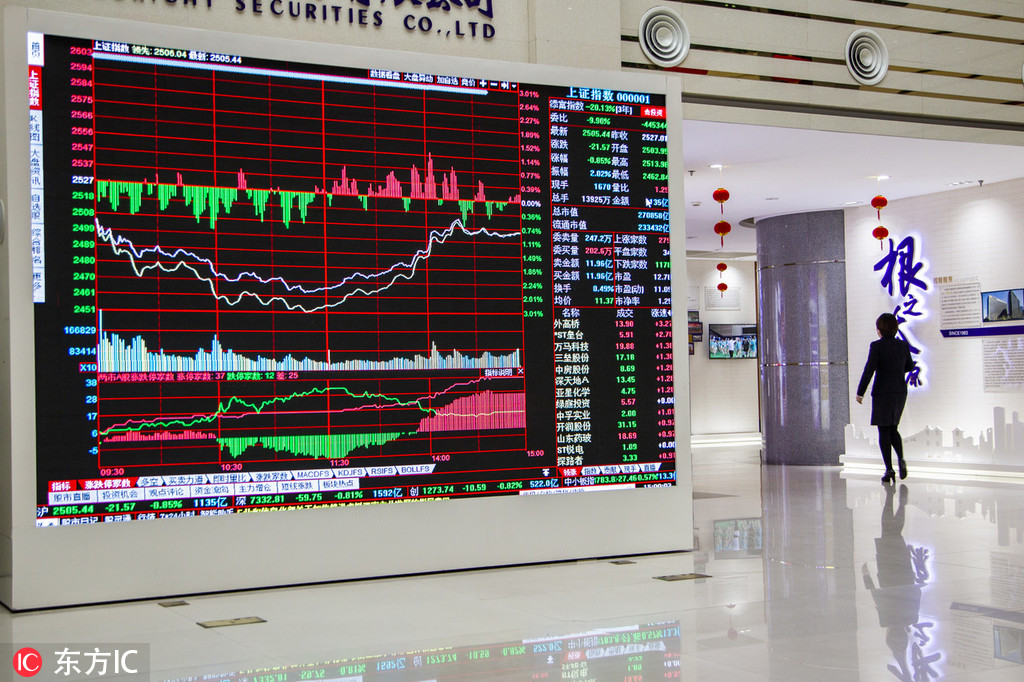
Regulations for China's science and technology innovation board at the Shanghai bourse took effect on Friday, signaling that the groundbreaking initiative may be launched as early as this month, analysts said.
The new equity trading platform will pioneer capital market reform, they said, as shown by market rule breakthroughs based on mature overseas markets and notable inclusiveness for tech companies.
The China Securities Regulatory Commission and the Shanghai Stock Exchange released detailed rules for the new board on their respective websites on Friday night. The regulations took effect immediately, signifying that tech companies can start to submit listing applications.
The regulations said the new board will experiment with the registration-based initial public offering system, in which eligible enterprises go public by filing required documents. Other trading platforms on China's A-share market use an approval system, whereby regulators decide whether a company can be listed or not.
Companies intending to go public on the new board should aim for the leading edge of global science and technology, and serve China's major needs and prime economic development directions, according to the regulations.
The board's registration system features IPO standards tailored for such companies, such as allowing unprofitable companies to be listed if they satisfy one of the five sets of financial indicators.
Dual-class share structures-a common governance structure used by tech companies to ensure founders' control over a company despite large-scale equity financing-is also allowed on the new board, the regulations said.
Dong Dengxin, director of the Finance and Securities Institute at the Wuhan University of Science and Technology, said acceptance of unprofitable companies and the dual-class share structures are both "unprecedented" in the A-share market's history.
Aside from support for tech companies, Dong said the new board also makes breakthroughs in expanding the market's role.
"Along with the registration system that delegates to the market instead of regulators identification of good companies, the new board's eased daily price fluctuation limits and tightened information disclosure rules will also improve asset-pricing efficiency."
The daily price fluctuation limit is set at 20 percent, beyond the 10 percent of other submarkets. Disclosure requirements for industry information and operating risks were also strengthened on the new board, according to the top securities regulator.
"China's speed in pushing forward the new board has beaten market expectations," Dong said. "The first group of listed firms may start trading in late March at the earliest."
President Xi Jinping said in Shanghai in November that China would launch the science and technology innovation board at the Shanghai Stock Exchange, and the new board would adopt the registration-based system.
"The new board has made fundamental innovations in market rules a prelude to reforms of the whole capital market, while containing related risks by starting within a small scope," according to a note from Xu Biao, chief strategy analyst with TF Securities, based Wuhan, Hubei province.
Wang Jianjun, general manager of the Shenzhen Stock Exchange, the other major mainland bourse, said on Saturday that the bourse is "fully prepared" to implement capital market reforms, prioritizing the registration system after Shanghai's moves bear fruit.
Xue Yi, an associate professor of finance at the University of International Business and Economics in Beijing, said design of the new board has combined the advanced experiences of overseas markets with China's needs. Further reforms could more efficiently boost innovation.
"China could develop the new board's primary market into a national platform, facilitating private equity funds' investment in tech companies, before they go public on the board," Xue said.











