



Why rural China is worth exploring









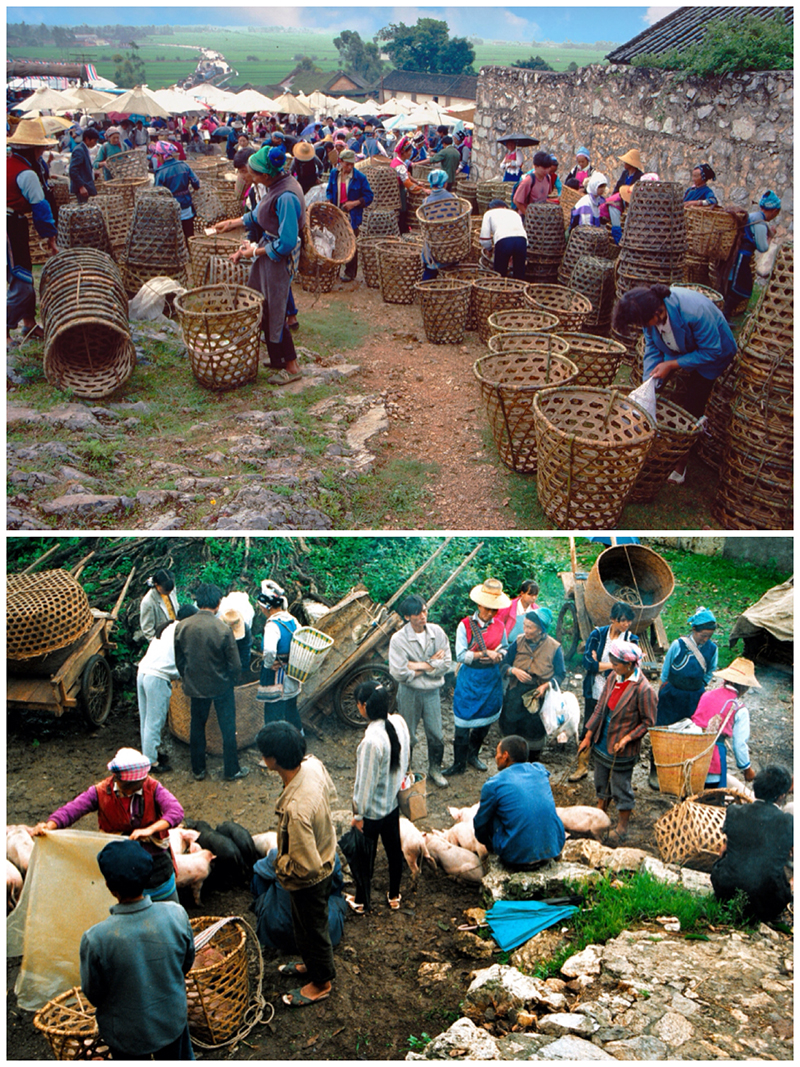
In 1992 I began work in Guangzhou. With arable farming going on right outside my workplace, it was so easy to go out and walk amidst vegetables, watching planting, cultivation, harvesting and even heading off to nearby markets. Today that is just a distant memory.
Although I returned to Scotland in mid-1993, I came back to China at every opportunity to explore more of the incredible Chinese countryside. These lands were often away from popular tourist routes, such as along the course of the Yangtze River, then part of Sichuan. The uplands of Yunnan, close to Tibet, let me cycle across high-plateau grasslands where black-coated yaks grazed. In 1997 my travels led right out across the deserts of China’s northwest to the Tianshan Mountains of Xinjiang.
At that time, there was an obvious presence of young people around the rural villages, with much farming requiring considerable labor. Recent visits to parts of Shanxi showed a quite different scene of a more elderly population. The youth of the countryside had been steadily drifting off to cities in search of work and hopefully success, which some did find, particularly in the earlier days of reform and opening-up.
As I travel around China I often look from the train window and think of not only the future of rural lands but also of the many wonderful memories from my earlier days of exploring them. Many of these times came when China still had a large and active population living in villages. Opportunities thankfully still arise to visit rural districts that would have been hard to reach or even find, such as Guizhou near Zunyi and Tongxiang in Zhejiang.
It is obviously difficult to encourage the young to move back from modern cities to rural lands. It is equally difficult to provide the range of services, such as schooling. Young people will continue to move to larger centers for education. I personally witnessed this while living and working in Guangzhou in the early 1990s. Many of my students had come from towns and villages across Guangdong to my college, some of them with the natural ambition of living in dynamic urban cores.
Much has been done to stabilize rural populations and improve living conditions. In many areas new roads are upgrading connectivity between villages and nearby towns. Better access allows urban residents to drive to farming villages for weekend home stays and rural life experiences.
There is much more to say about how the countryside can be developed sustainably, which as both a geographer and traveler I have been thinking a lot about recently. Certainly some of my finest moments in my China journey have been experiencing firsthand rural landscapes.





