



Abe's visit to Iran may not produce desired results









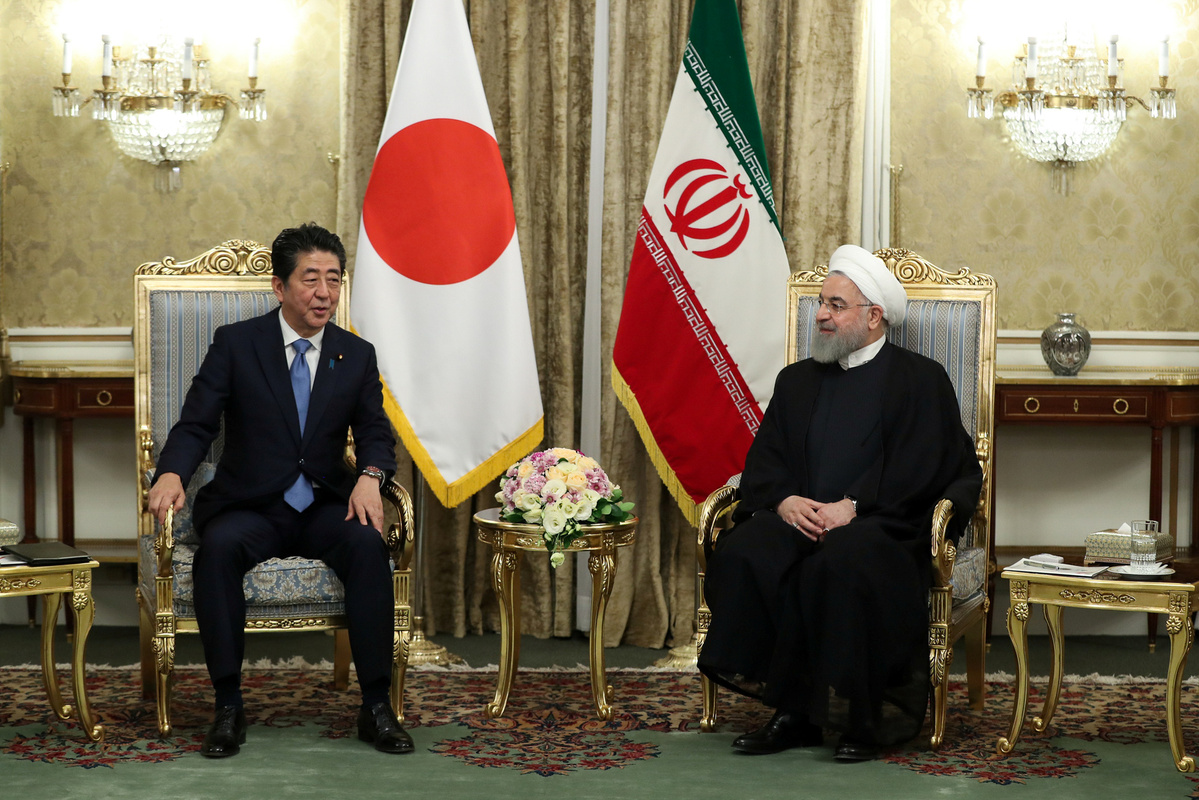
Japanese Prime Minister Shinzo Abe concluded his first state visit to Iran, also the first by any Japanese prime minister in 41 years, on Friday at a time when Teheran is at loggerheads with Washington and dark clouds are gathering over the Persian Gulf. Acting as an intermediary between the United States and Iran, Abe hoped to reduce the tensions between the two countries and facilitate dialogue, according to Kyodo News Agency.
But, analysts say, given the limited influence of Tokyo on Teheran and the highly complicated nature of the US-Iran conflict, it would be difficult for Japan to produce any remarkable result, because it cannot prompt the US to lift the sanctions against Iran and create the right atmosphere for the two sides to hold talks to resolve their disputes.
In fact, Abe's high-profile visit to Iran could be part of his efforts to increase Japans' influence in the Middle East regardless of whether he succeeds in bringing the US and Iran to the negotiation table.
Japan has adjusted its foreign strategy in tandem with the changes in the international situation and its own development needs. On the one hand, it has been tacitly supporting the US' unilateral policy and acting as the most loyal and reliable ally of the US in order to maintain the so-called dependable strategic partnership with the US. On the other hand, it has used every opportunity to expand its own political, military and diplomatic capabilities according to the changing regional and global situations.
In other words, Japan has been trying to become more independent of the US in its foreign policy.
Generally speaking, Japan strives to realize three goals: implementing a pro-US strategy and following the US' Middle East policy; ensuring its oil security and national interests through diplomatic efforts; and expanding its influence in the Middle East. Thus Japan is seizing every opportunity to showcase its "independent" Middle East policy, especially because the US' writ no longer runs large in the region. Which, to some extent, has helped Japan gain recognition as an influential political power.
The Islamic Republic of Iran Broadcasting reported that Sayyid Ali Hosseini Khamenei, supreme leader of Iran, made it clear during his meeting with Abe that Teheran doesn't trust Washington and won't repeat the trauma of negotiating the Joint Comprehensive Plan of Action (better known as the Iran nuclear deal) with Washington. Still, in terms of promoting Japan's Middle East policy centered on energy diplomacy, Abe's visit was worthwhile even though his lobbying failed.
Ever since Japan developed into an economic powerhouse, it has strived to become a global political power, even bidding to become a permanent member of the United Nations Security Council. Against this background, its Middle East policy has shifted from simply ensuring stable oil supply to participating in the making of rules for the region's energy market and expanding its discourse rights. This shows Japan is intent on playing the role of a coordinator and trying to adopt an "independent" foreign policy, which are contrary to what the US wants it to do.
At a time when the situation is unclear, one of Japan's objectives is to reduce the chances of confrontation between the US and Iran, and take part in the reshaping of the Middle East's political landscape. Yet Japan is expected to give up its "independent" diplomacy once the situation in the Middle East deteriorates.
Some scholars have even said that once Tokyo is unable to fulfill the requirements of a coordinator, its Middle East policy is bound to take a backseat and the Abe administration might be forced to choose between adhering to the US' policy and practicing "independent" diplomacy.
The author is head of the Arabic Language Department of the School of Asian Languages and Cultures, Zhejiang International Studies University. The views don't necessarily represent those of China Daily.





