


Tree-planting programs defy deserts and drought










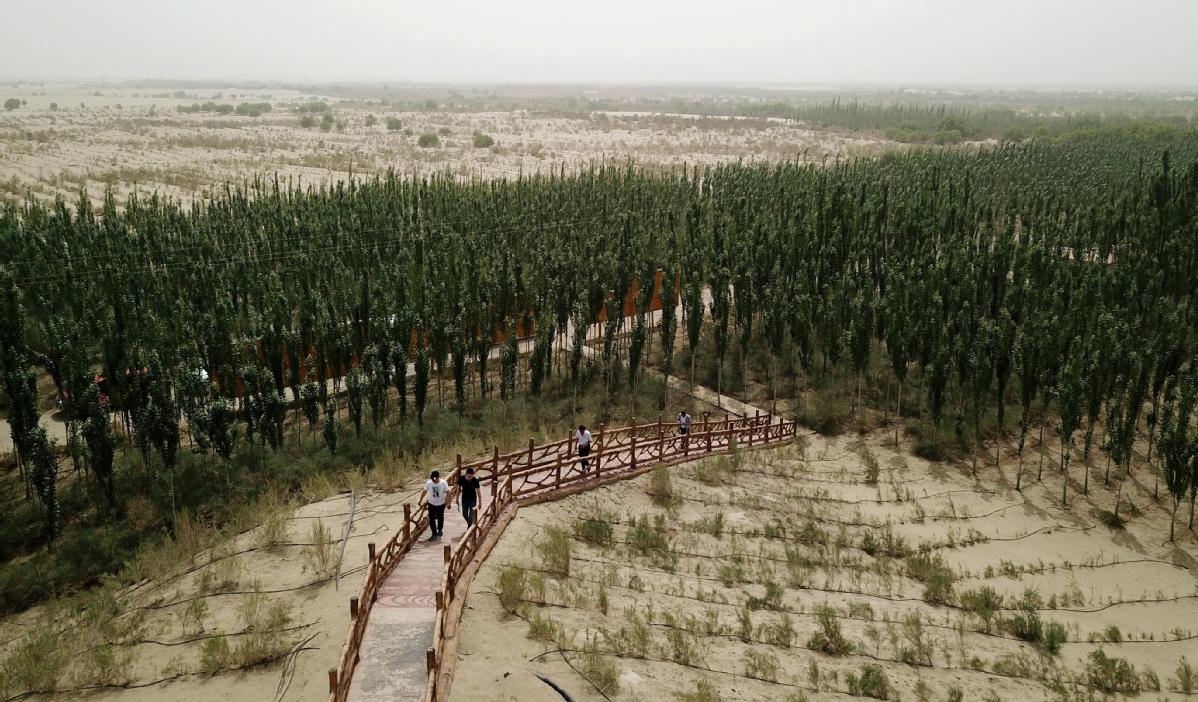
Afforestation efforts are providing jobs and improving lifestyles in underdeveloped areas. Li Lei reports from Kashgar, Xinjiang Uygur autonomous region.
Editor's note: This is the fourth in a series of stories focusing on the Xinjiang Uygur autonomous region, looking at developments in the environment, the economy and the cultural and business sectors, and poverty alleviation measures.
After decades of playing economic catch-up at the price of environmental degradation, China has learned to seek financial returns by restoring the land.
Now, some of the most rewarding examples of this policy shift can be found in the country's least-developed regions.
In Kashgar, Xinjiang Uygur autonomous region, government-led projects to slow desertification and reclaim the land are transforming an area that is home to 1.2 million rural poor, accounting for almost 40 percent of the region's total impoverished population.
These massive campaigns have improved the environment and boosted yields of traditional crops, such as cotton. They have also shored up income from lucrative cash crops by providing arable land in an area known for its harsh environment and lack of workable soil.
One of the places leading the fight is Makit county, Kashgar, which lies immediately west of the Taklimakan Desert, the second-largest area of shifting sand dunes in the world, spanning more than 1,000 kilometers across southern Xinjiang.
For as long as the locals can remember, raging year-round sandstorms have made farming an arduous undertaking. For generations, local families, mostly members of the Uygur ethnic group who own less than 1 hectare of sandy land per household, have struggled to feed themselves.
Osman Ataula, 40, who recently shook off poverty with government aid, said spring sandstorms are the most catastrophic for cotton farmers like him, because they rip apart the plastic mulch used to keep land moist and tear off nearly all the buds.
"It is common to replant several times a year," he said. "Then, I have to seek temporary jobs to help with the family expenses."





