



Landmark birth employs gene screening









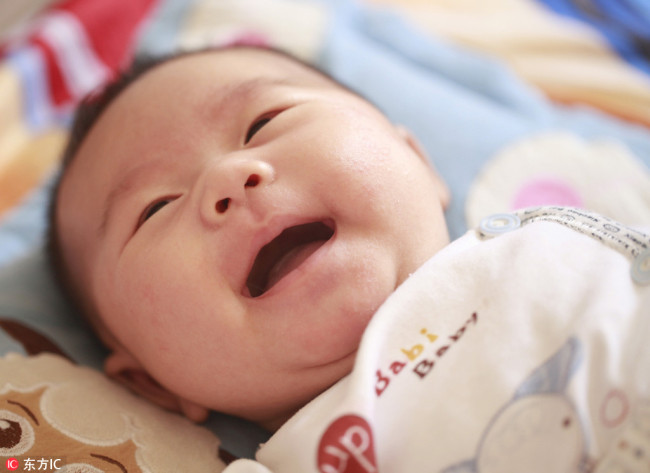
Nanjing hospital uses innovative tech to help woman bear a healthy child
A woman who used preimplantation genetic testing (PGT) to prevent congenital skeletal dysplasia recently gave birth to the world's first baby to be born under such conditions at the Nanjing Maternity and Child Health Care Hospital.
According to the hospital, the baby weighed 4.6 kilograms and was given a 10 Apgar score at birth.
The mother, surnamed Zhang, has tried for years with her husband to have babies. She had to have three abortions due to the fetuses' severe congenital spinal deformity.
In 2018, the couple went to Nanjing Maternity and Child Health Care Hospital, Jiangsu province, for treatment. The hospital found that both of them are carriers of the BMPER gene mutation.
The mutation of the gene - BMPER - can lead to a rare autosomal recessive skeletal dysplasia called DSD (Diaphanospondylodysostosis). Patients exhibit severe symptoms including ossification, abnormal kidney structure and somite defects.
Ling Xiufeng, director of the hospital's reproductive medical center, suggested to the couple that the PGT technology could be used to screen out the mutation so that they could have healthy babies.
"In other words, the method is to fertilize the egg in vitro, test the fertilized egg without the gene mutation and implant the healthy embryos into the uterus," Ling said.
The center made a specific plan for Zhang, who had three healthy embryos out of the seven fertilized eggs that received genetic testing. One embryo was implanted successfully in her uterus and developed into a healthy baby.
"The PGT technology can greatly reduce the chances of having genetically defective babies by selecting normal embryos," Ling said. "The couples who want to have children, especially those with genetic diseases, should first take genetic tests to clarify the pathogenic genes.
"Then, PGT technology should be adopted to screen the chromosomes and genes to avoid birth defects and block the heredity of genetic diseases in the families," she added.
Zhang Junqiang, director of the center's embryology laboratory, said that the PGT technology has been used at the center for more than three years to help families with genetic and chromosomal diseases.
"Though prenatal examination and genetic testing are common in some countries, few Chinese couples have such tests before having babies," Zhang said.
"Recessive pathogenic genes are not unusual, and every person has such genes," he said. "It's important for people to have prenatal examinations."
Guo Jun contributed to this story.


- Jiangsu's Yaohu Town and France's Puy du Fou unveil China's first bird-themed cultural tourism project
- Canadian man praises China's medical efficiency after knee surgery in Yichang
- 30,000 runners compete in cherry blossom-lined Wuhan Marathon
- Wuxi Symphony Hall and Moscow State Tchaikovsky Conservatory ink partnership agreement
- Wuxi Symphony Hall partners with Moscow Conservatory, unveils new music season
- UCLG ASPAC Youth Leaders China Tour kicks off in Suzhou





