



Powering to a cleaner and greener future









Qinghai is China's largest solar photovoltaic power generation base.
In February last year, Qinghai was approved as one of the six provincial-level regions to spearhead clean energy development by the National Energy Administration, together with Zhejiang, Sichuan, Gansu, the Ningxia Hui autonomous region and the Tibet autonomous region.
Last year, the electricity generated by clean energy in Qinghai reached 16.86 billion kWhs, with 3.76 billion kWhs transmitted to other places. The consumption of non-fossil fuels in Qinghai reached around 40 percent of all energy sources, much higher than the national average of 14 percent.
The Qinghai Clean Energy Research and Development Institute, founded in March, aims to push cooperation between the government, companies, schools and scientific research institutions on clean energy.
A power line to transfer clean energy from Qinghai to Zhumadian, Henan province, will come into use next year.
According to Qinghai's 13th Five-Year Plan (2016-20), the province will expand its new energy capacity to supply 110 billion kWhs of clean electricity every year to central and eastern parts of China, preventing the burning of 50 million tons of coal by 2020.
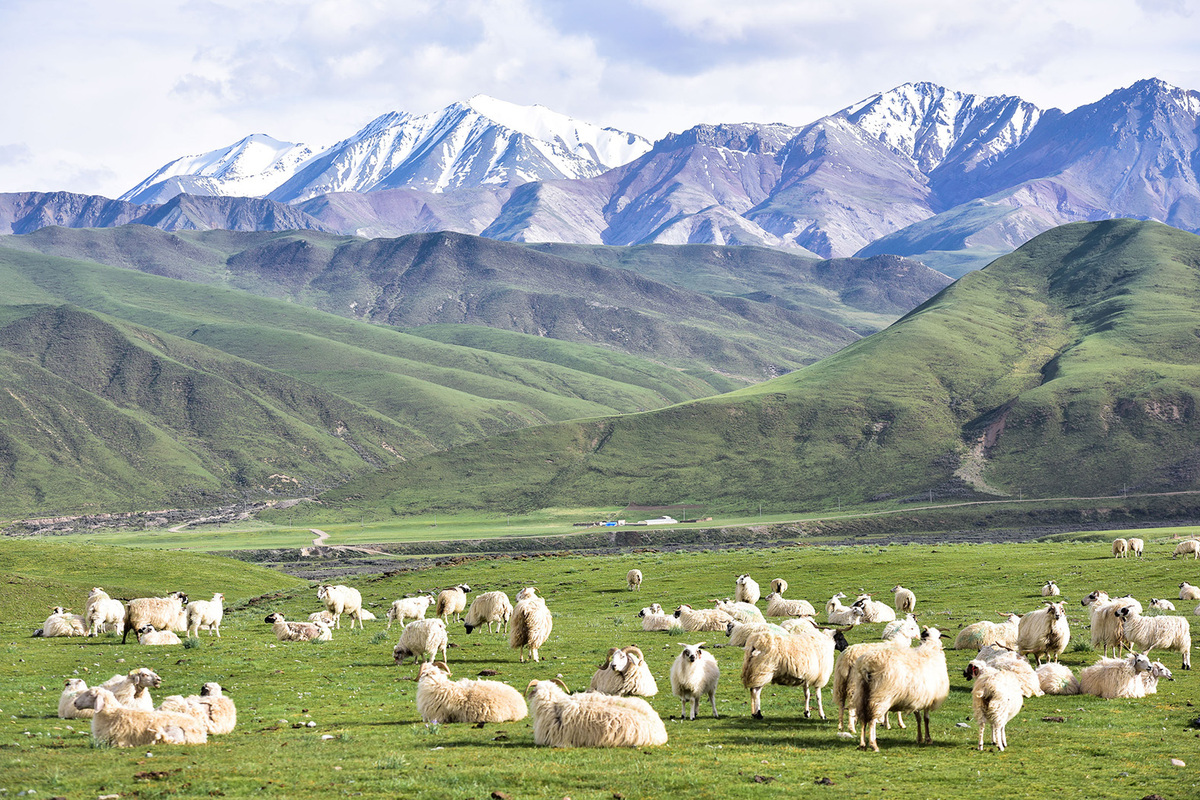
Qinghai is the source of China's three major rivers, the Yellow, Yangtze and Lancang and has strong hydro and solar power facilities to serve its 6 million people.
Sanjiangyuan is home to the head waters of the three rivers. In recent years, the government has injected more than 2.25 billion yuan ($327 million) into environmental protection and restoration.
Grassland vegetation cover increased by 27 percent last year. Biodiversity increased along with the population of wild animals. The number of Tibetan antelopes rose to more than 70,000 from less than 20,000 in 1980s. The Sanjiangyuan park is set to open in 2020.


- China's top health official urges cancer prevention: early screening and healthy lifestyles key
- China to deepen culture-tourism integration to spur consumption, growth
- China expands social safety net for gig workers, new professions
- China to boost life expectancy to 80 by 2030, says health minister
- China to train over 10 million workers, upgrade skills for new industries, says minister
- China to leverage AI in push to boost job creation, upgrade





