



World big enough for diverse systems to coexist









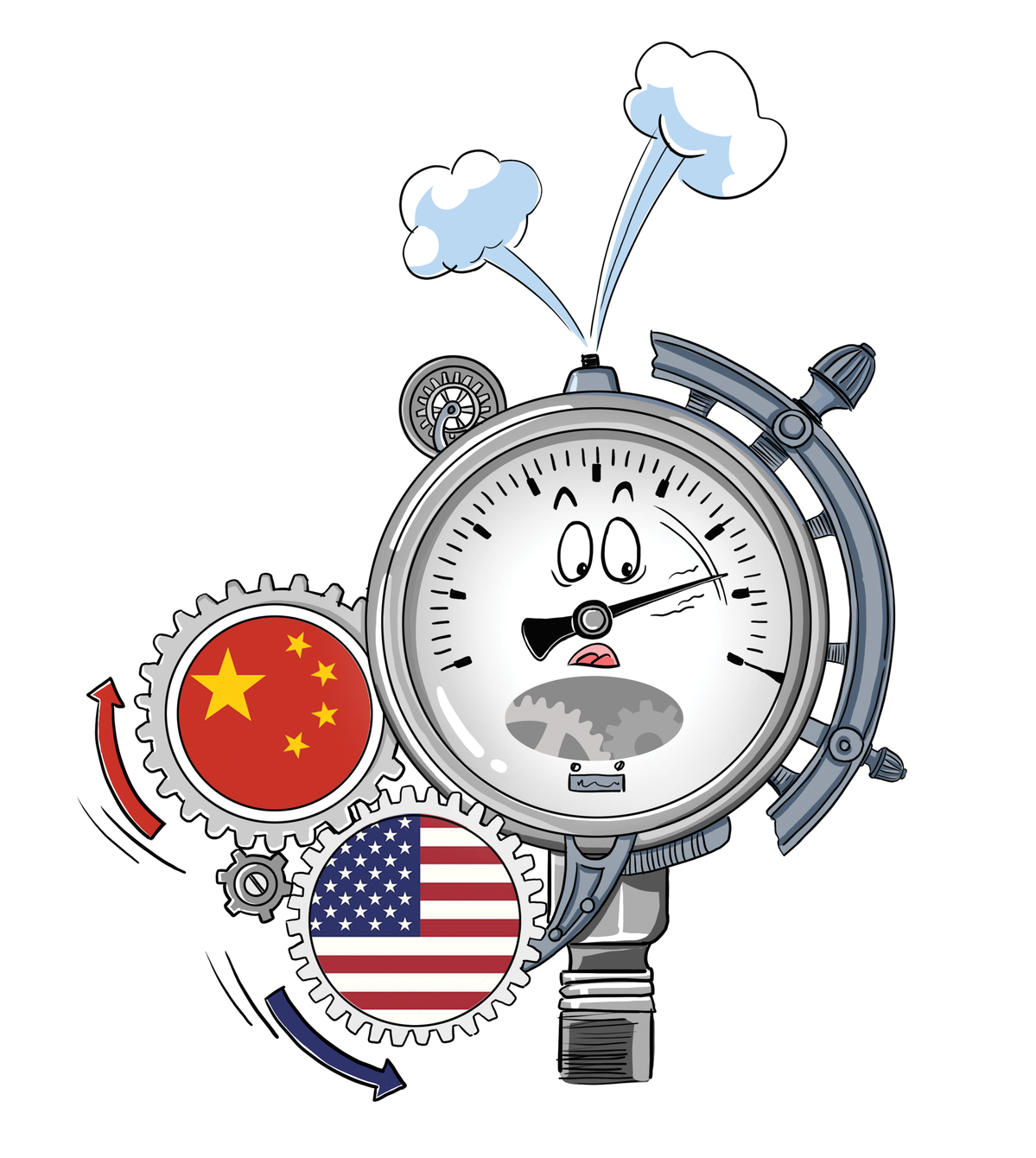
More than a year ago when the United States triggered a trade conflict with China, many expected the two sides to meet each other halfway and settle their differences and resume normal trading relations. But those expectations remained just expectations.
Despite facing many challenges in the past seven decades, China has registered fast and steady economic growth to become the world's second-largest economy. However, China's rapid socioeconomic development prompted some US (even a few Chinese) scholars to assume the country's governance system, too, would undergo a transformation-that China would increasingly resemble Western democracies, especially the United States which boasts a presidential form of government.
But that has not happened. Instead, the Communist Party of China has navigated the country through turbulent waters and further consolidated its standing in the international community.
The Party has been successful in its endeavors because it has adapted to the changing times and circumstances. For example, former leader Deng Xiaoping came up with the "one country, two systems" principle to ensure Hong Kong's return to China in 1997 was smooth and peaceful. Many in the US and the European Union wrongly assumed that Hong Kong's story was over with the handover, and that the former British colony would slip into a prolonged period of low, even negative growth. But the "one country, two systems" model has proved highly beneficial for Hong Kong, as it has helped it maintain its position as a global financial and logistics hub.
As long as China lagged far behind the US in terms of the overall size of the economy, the differences in the governance systems of China and the US didn't seem to matter much to the latter. In the 1970s, the difference in their political systems didn't stop US policymakers and scholars from seeking better relations with China. And in the 1990s, even early 2000s, there was talk of a G2-the US and China-as a new geopolitical partnership.
Until the early 2000s, China lagged far behind the US in advanced technology. But at the beginning of this decade, things started changing. China not only had become self-sufficient in several high-tech sectors but also its enterprises had become capable of competing with US and EU high-tech companies even in the American and European markets. And all this happened under the basic governance model put in place in 1949.
Besides, Chinese companies such as telecommunications equipment maker Huawei even became global leaders in many high-tech sectors, 5G technology being an apt example. If Huawei, which is the global leader in 5G, succeeds in spreading this cutting-edge technology worldwide, it would signal the arrival of China as a global high-tech giant that could hold its ground in competitions with other countries.
The Belt and Road Initiative is already changing the geopolitical landscape in Eurasia, linking countries into what is planned to be a seamless communication and trading zone that would be the largest of its kind.
China has built on its old contacts with Africa and Latin America to develop its own supply chains-the same is taking place in Central Asia, even in parts of Europe.
However, China does not seek to overturn the existing world order nor force other countries to follow its political and economic systems. By contrast, the US still believes its political system and soft power can help provide the greatest benefits for the world.
The fact that the US dollar is the currency of choice for most countries when it comes to foreign exchange reserves has added to the US' confidence. But in these times of economic globalization and changing economic landscapes, the US needs to seriously review its policies.
In fact, it's time for those who believe in an equitable world order to abandon their Cold War mentality and accept that different systems can coexist in today's world, as it is becoming increasingly pluralistic.
The author is a professor of geopolitics at Manipal University, India. The views don't necessarily represent those of China Daily.





