



Xinjiang at the heart of Belt, Road









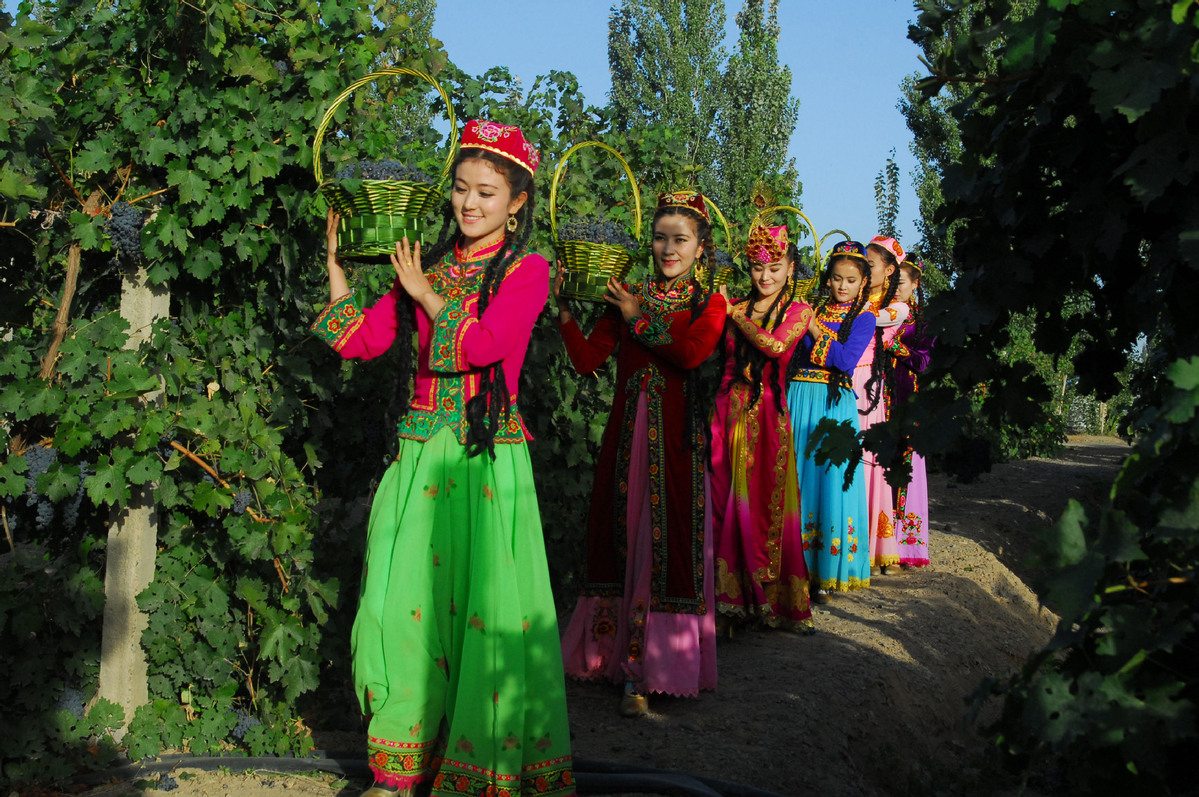
In China, a nation blessed with abundant natural beauty and lovely landscapes, the Xinjiang autonomous region is one of its most gorgeous places. Located in northwestern China, Xinjiang has the distinction of being the largest province in terms of area with a sparse population. Its land is three times bigger than France. The province borders seven countries. Due to its unique location, Xinjiang will play a vital role in the promotion of the Belt and Road Initiative.
Historically, Xinjiang has been the center of economic activities and the hub of connectivity between China, Afghanistan, India, Kazakhstan, Kyrgyzstan, Russia and Pakistan. In the past, 80 percent of Chinese trade was done through Xinjiang.
In the early 1980s, Xinjiang had little industry, so agriculture was the main sector of the economy. Later, thanks to Chinese government policies, industries in oil and petrochemicals, electric power production, metallurgy, chemicals and food processing were established. The province was developing fast and progressing parallel with other Chinese provinces. But due to some external factors, progress was hampered and violence triggered, which caused much disturbance and chaos in the province.
But with the introduction of the BRI, the region has regained stability. In fact, one of the core objectives of BRI is to promote the western part of China and create equal opportunities for the less-developed region of the nation. And to this end, Xinjiang is central to the BRI. Under the BRI, in less than four years, the Chinese government has spent more than $70 billion on the development of infrastructure in Xinjiang. Due to the sharp increase in trade and investment, the GDP of Xinjiang is growing at an annual rate of over 6.5 percent. For sustainable development, creation of jobs and poverty alleviation, the Chinese government has further earmarked 2 trillion yuan ($280 billion). Moreover, the central government has introduced a 15-year compulsory education plan for the underprivileged of Xinjiang. As is well-known, without education no nation can survive in the modern world. Article 132 of China’s constitution guarantees full financial and technical assistance to ethnic minorities of the country. In addition, minorities including Uyghur people have always been allowed to have more than one child. And in jobs and schools, special quotas are reserved for minorities.
In the 13th five-year plan which runs through 2016-2020, a special development plan has been sketched out for Xinjiang. A multitranche financing facility has been created under the BRI, in collaboration with the Asian Development Bank, Chinese government and Xinjiang provincial government. The project will enhance the regional cooperation of Xinjiang with Kazakhstan, Mongolia and other Central Asian countries. It will also increase trade-related facilities, provide support for small and medium-sized enterprises in border economic zones, enhance transport and logistics services, create employment opportunities for Xinjiang residents, and boost people-to-people exchanges and the promotion of culture.
The BRI offers boundless opportunities for Xinjiang, and the development process has already kicked off. Since the launch of the BRI in 2013, there have been remarkable positive changes taking place.
With generous investment and prudent economic policies from the central government, Xinjiang has become the gateway to Eurasia. The BRI is instrumental to China, especially for its western part and Xinjiang. The location of Xinjiang and its traditional links with Central Asia, India and Pakistan, and the Middle East provide numerous opportunities for mutual benefits. Only the failure to explore and a lack of proactive and sincere participation of the local people could limit the possibilities of a prosperous Xinjiang. Hence, by establishing a harmonious relationship between the Uyghur people and other stakeholders, numerous opportunities can be created. Sectors like health, education, petrochemicals, transport, logistics, tourism, agricultural products, meat, fruit, flowers, Uygur embroidered hats and local handicrafts carry huge potential for investors. We have to understand that the prosperity of Xinjiang is closely linked with peace and trust in government policies.
The author is a professor of economics and director of the Belt and Road Research Center at the School of Economics and Management, Yancheng Institute of Technology, China, and can be reached at hashmi@ycit.edu.cn.
The opinions expressed here are those of the writer and do not represent the views of China Daily and China Daily website.





