


Take a look at a Van Gogh masterpiece and you may spot a cherry blossom or two.
"To some extent all my work is based on Japanese art," Vincent Van Gogh wrote to his brother on July 15, 1888.
The artist had a personal collection of hundreds of Japanese works, and their influence on him is evident when you put some of his paintings alongside certain ukiyo-e, or woodcut prints, a genre that originated in the Edo period (1600s-1860s).
Ukiyo, a word from Buddhist sutra, means floating world, and ukiyo-e works reflect various aspects of everyday life in Japan over 400 years.
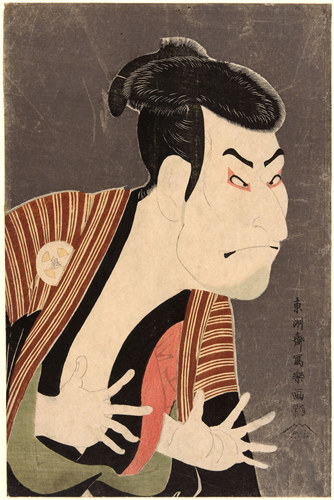
When American ships berthed in Yokohama, the port city south of Tokyo, in the late 1850s, it signaled that after 200 years of isolation Japan had opened its trading doors to the rest of the world. That trade would include works of art, and thus the wonders of ukiyo-e's floating world were scattered to the four winds.
What makes ukiyo-e stand in stark relief to other Japanese art forms such as kabuki and noh opera is its earthiness and utter straightforwardness.
"Ukiyo-e is about what you see, what you hear and what you think," said Yukiko Takahashi, the sixth-generation inheritor of the Takahashi family, which specializes in woodblock prints.
"It reflects what people pursued and what was popular at that time."
At first ukiyo-e works, which were then known as sumi-e, or ink-wash painting, were black and white. Later, with the import of pigment, sumi-e developed into esoushi.
There were three basic steps in producing a ukiyo-e piece: drawing, engraving and coloring.
"One work used about 20 to 30 different colors, and white was not used, keeping down the cost," Takahashi said. "A ukiyo-e piece costs about a bowl of soba noodles."





