



Asian economies generate buzz for hydrogen fuel cells









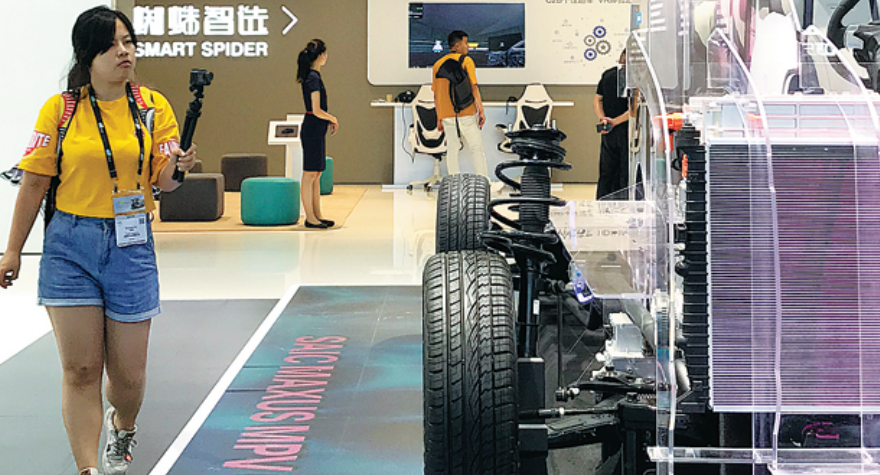
China, Japan and South Korea have all set ambitious targets to put millions of hydrogen-powered vehicles on the road by the end of the next decade.
But to date, hydrogen fuel cell vehicles have been upstaged by electric vehicles, which are increasingly becoming a mainstream option due to the success of Tesla's offerings as well as sales and production quotas set by China.
Critics argue FCVs may never amount to more than a niche technology. But proponents counter hydrogen is the cleanest energy source for autos available and that with time and more refueling infrastructure, it will gain acceptance.
China, far and away the world's biggest auto market with some 28 million vehicles sold annually, is aiming for more than 1 million FCVs in service by 2030. That compares with just 1,500 or so now, most of which are buses.
Japan, a market of more than 5 million vehicles annually, wants to have 800,000 FCVs sold by that time from about 3,400 currently.
South Korea, which has a car market just one-third the size of Japan, has set a target of 850,000 vehicles on the road by 2030. But as of the end of 2018, fewer than 900 had been sold.
Hydrogen's proponents point to how clean it is as an energy source, since water and heat are the only byproducts, and how it can be made from a number of sources, including methane, coal, water and even garbage. Resource-poor Japan sees hydrogen as a way to greater energy security.
They also argue that driving ranges and refueling times for FCVs are comparable to gasoline-powered cars, whereas EVs require hours to recharge and provide only a few hundred kilometers of range.
Many backers in China and Japan see FCVs as complementing EVs rather than replacing them. In general, hydrogen is seen as the more efficient choice for heavier vehicles that drive longer distances. Hence, the current emphasis on city buses.
Only a handful of automakers have made fuel cell passenger cars commercially available.
Toyota Motor Corp launched the Mirai sedan at the end of 2014 but has sold fewer than 10,000 globally. Hyundai Motor has offered the Nexo crossover since March last year and has sold just under 2,900 worldwide. It had sales of about 900 for its previous FCV model, the Tucson.
Honda Motor's Clarity Fuel Cell is available for lease, while Daimler AG's GLC F-CELL has been delivered to a handful of corporate and public-sector clients. Buses are seeing more demand. Both Toyota and Hyundai have offerings and have begun selling fuel cell components to busmakers, particularly in China.
Several Chinese manufacturers have developed their own buses, notably State-owned SAIC Motor, the nation's biggest automaker, and Geely Auto Group, which also owns the Volvo Cars and Lotus brands.
A lack of refueling stations, which are costly to build, is usually cited as the biggest obstacle to widespread adoption of FCVs. At the same time, the main reason cited for the lack of refueling infrastructure is that there are not enough FCVs to make them profitable.
Consumer worries about the risk of explosions are also a big hurdle and residents in Japan and South Korea have protested against the construction of hydrogen stations. This year, a hydrogen tank explosion in South Korea killed two people, which was followed by a blast at a Norway hydrogen station. Then there's the cost. Heavy subsidies are needed to bring prices down to levels of gasoline-powered cars. Toyota's Mirai costs consumers just over 5 million yen ($46,200) after subsidies of 2.25 million yen. That's still about 50 percent more than a Camry. Automakers contend that once sales volumes increase, economies of scale will make subsidies unnecessary.
Reuters











