



Celebrating 70 years of Chinese education









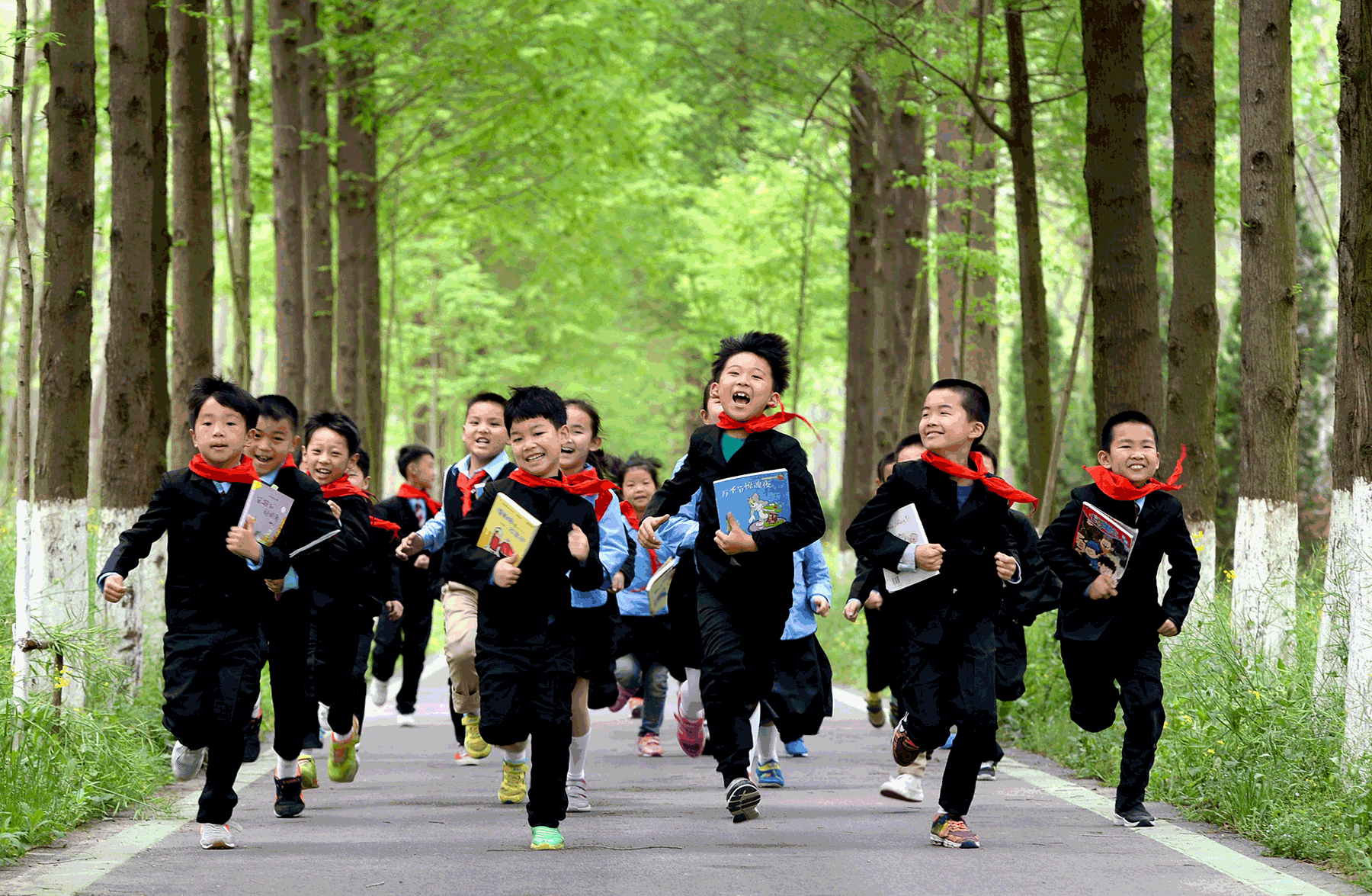
All class sectors across the motherland enfold for the national holiday. The growing momentum has delivered much excitement for Chinese citizens in responding to celebrate the 70th anniversary founding of the People's Republic of China for such a memorable occasion.
In 1949, the Chinese population was mostly illiterate. Only 20 percent of people were able to read and write. Directly after the revolution, the Chinese government immediately began a campaign to introduce a free compulsory curriculum to all Chinese citizens. This education system has progressed since reform and opening-up in 1978. It was again stressed and pushed after the 16th National Congress of the Communist Party of China in 2002.
The breakthrough of the "Two Basics" —basically universalizing compulsory education and basically eradicating illiteracy among young and middle-aged groups— in educational development was convened by the State Council after holding its first National Conference on Rural Education. It affected the duty of rural educators and increased spending for rural education. Strategic practice was in place in 2005 guaranteeing rural areas the mechanism of compulsory education. The "Two Basics" stays true to the original mission of eradicating illiteracy among young and middle-aged groups.
China's revised Compulsory Education Law propelled compulsory education into a new era of development. This achievement of the "Two Basics" did not just change the countryside's situation. It also covered China's pupils up to 99.3 percent by the end of 2008.
On the subject of higher education in 1949, there were only 117,000 enrolled undergraduates in China at that time. The newly founded People's Republic of China moved to expand higher learning to meet modern demands. China's higher education in 1999 was expanded in scale by a large margin. Later in 2006 improvements continued, as the central government made quality a top priority of higher education.
Compulsory education has been implemented throughout the Chinese mainland for decades. It's securely protected by laws and regulations following the provision of the ministry. This legislation ushers numerous students to excel for the betterment of their futures. "The importance of knowledge and talent cannot be underestimated," President Xi Jinping has said, "and education must continue to be improved." Moreover, he said, "the teaching of ideology, ethics and socialist core values should be reinforced so students leave the education system as confident, dignified, independent members of society."
For the past 11 years, I have witnessed this educational advancement. It's amazing to see these remarkable changes. My warmest wishes to readers for a happy 70th anniversary of the People's Republic of China.
The author is an American spokenologist.
The opinions expressed here are those of the writer and do not represent the views of China Daily and China Daily website.





