



Move to offset impact of pork price hike









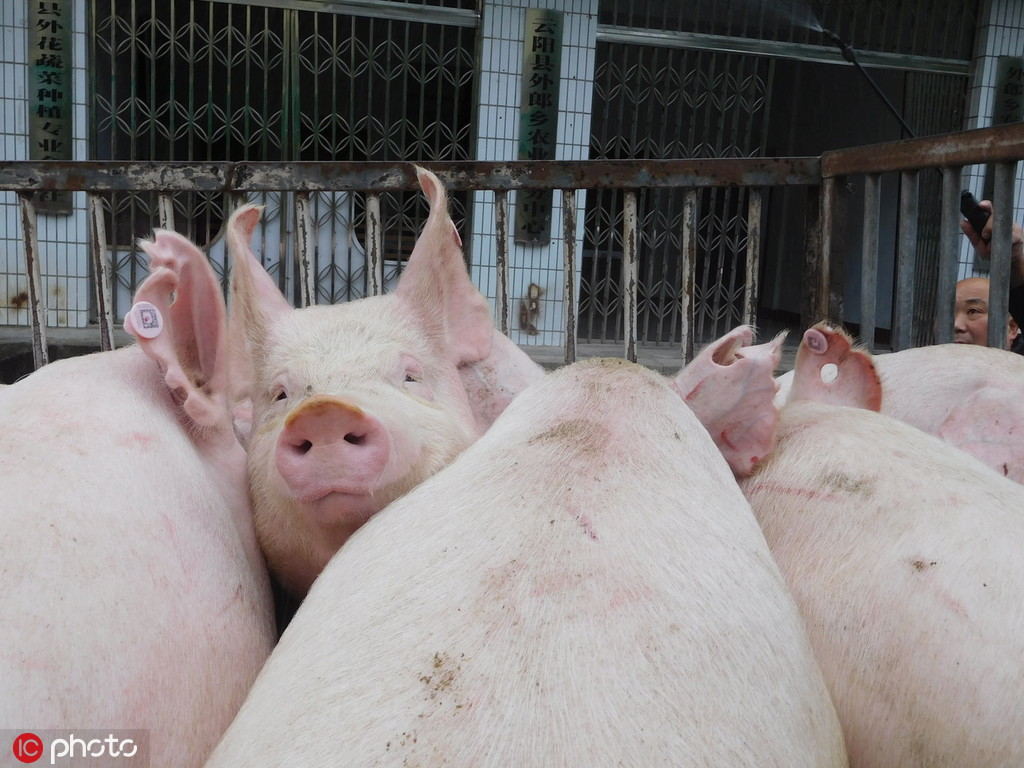
The central authorities released 10,000 tons of pork from the central reserve on Sept 19 followed by another 10,000 tons on Sept 24 to increase pork supply during the National Day golden week holiday.
The move is aimed at controlling the rising pork prices. In August, for example, the price of pork increased 46.7 percent year-on-year, raising the consumer price index by 1.08 percentage points.
Since pork accounts for more than 60 percent of Chinese people's meat consumption, the drastic rise in its price is the main factor driving up the CPI.
Pork prices have risen because of three major reasons. First, the culling of pigs to prevent the spread of the African swine fever seriously reduced the pig stock. Statistics show that since the first African swine fever case was detected in China in 2018, the government has shut down or relocated about 1,000 pig farms, which housed 2.05 million pigs accounting for 0.6 percent of China's total pig stock. Thanks to the epidemic, the consequent economic loss and the fear of suffering more losses in the future, pig farmers are reluctant to increase their stocks.
Second, currently we are at the low level of pig production cycle. Pork price fluctuation is marked by periodical characteristics: high pork prices increase sow stock, which causes a decline in pork prices subsequently leading to a reduction in sow stock and thus pork supply, which in turn raises pork prices. With pork prices dropping to the lowest level in May 2018, sow stocks fell accordingly causing a decline in pork supply.
Third, some inappropriate local administrative interventions have had a negative impact on pig breeding. For instance, some local authorities arbitrarily extended the ban on pig farms and shut down many of them for environmental protection, leading to a sharp fall in pig production.
The CPI has shown a rising tendency since the beginning of this year. From January to August, it increased 2.4 percent year-on-year. True, the price of pork alone may not be responsible for the large-scale increase in the CPI. But general consumers are very sensitive to any rise in pork prices because it's a staple.
A rising CPI combined with a slowing economy is not conducive to maintaining economic growth within a reasonable range, because one of the important factors determining sustainable growth is price stability. Therefore, increasing pork supply to stabilize pork prices and control inflation is important for not only meeting people's expectations but also helping the country to maintain sustainable growth.
On Sept 6, the General Office of the State Council, China's Cabinet, issued a guideline on stabilizing pig production and pork supply by upgrading the sector's structure. And the release of 20,000 tons of pork from the central reserve indicates the central government is taking active measures to achieve that goal.
The guidance also says long-term measures should be taken including developing a modern breeding system, strengthening the disease prevention and control system, and building a nationwide chain of modern cold stores to ensure unhindered supply of pork to the market. And local governments should be responsible for stabilizing pig production and pork supply in local areas.
Measures should also be taken to encourage pig farmers to increase their stocks in order to guarantee regular pork supply to meet the consumers' demand, as well as to help stabilize pork prices and therefore create an environment conducive to China maintaining economic growth within a reasonable range.
The author is a research fellow at the National Academy of Economic Strategy, Chinese Academy of Social Sciences. The views don't necessarily represent those of China Daily.





