



Financial sector on a generally stable path









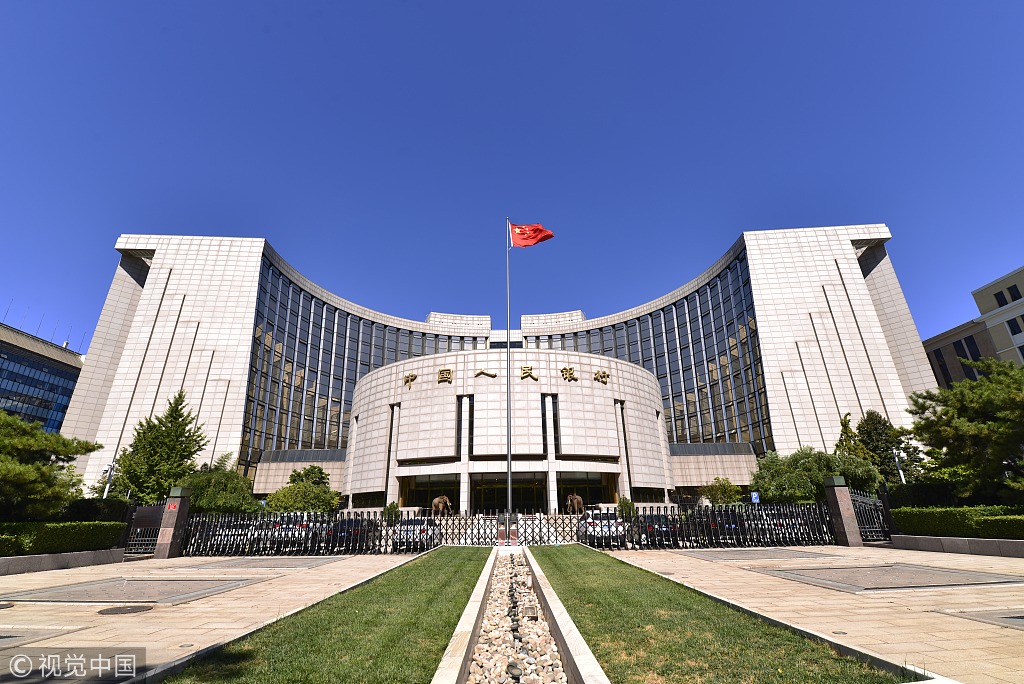
PBOC report says investor confidence has improved significantly in nation
China's $42 trillion financial industry has been judged as "generally stable" in the central bank's annual examination, but supervision still needs to be tightened to prevent potential risks, especially in the banking sector, a report said.
China's financial risks have been slowly resolved although some risks still exist, after accumulating rapidly in the past few years, the People's Bank of China, the central bank, said in its annual financial stability report.
The PBOC issued a draft of its assessment method for domestic systemically important banks on Tuesday, and 30 banks were on the list. A set of quantitative indices, including the amount of assets, and the degree of correlation and complexity, will be used to evaluate the "significance" of banks.
Once the banks are regarded as "systemically important", they will be asked to achieve higher regulatory standards, such as stricter requirements on liquidity and capital, the PBOC said in a statement on its website.
The assessment method is "a key mechanism" which is designed to win the battle of preventing and resolving major financial risks, and it will help to strengthen the stability of the banking sector, the PBOC said.
To prevent systemic financial risks in the future, the central bank will continually improve macro-prudential management and provide necessary liquidity. The PBOC will tailor its credit supply to better boost the economy and strike a fine balance between achieving growth and fending off risks, according to the financial stability report, which was released on Monday.
Financial stability is one of the country's priorities to achieve the overall economic stability goals. China has a three-year plan that aims to contain major financial risks by 2020.
"Regulations should focus on some key areas, including the local government contingent debt, the corporate bond market and the real estate market," an official from the central bank told China Daily.
Financial holding groups, rural financial institutions and the online lending platforms also should be paid attention to. "Abnormal fluctuations in the financial market cannot be ignored," said the official, highlighting that financial markets are highly sensitive to external shocks and the cross-sector risk contamination should be prevented.
In the third quarter, the leverage rate, or the debt-to-GDP ratio, fell to its weakest level in about three decades, the report indicated.
To control the debt level, a prudent monetary policy should continue, and the broad money supply, or the M2, should match the growth pace of the real economy. Too much easing of the monetary policy may boost irrational investment in the financial sector, said He Ping, a professor with the School of Finance at Renmin University of China.
"The central bank has taken efforts to curb potential risks, especially in the banking system. Measures included using the deposit insurance fund in time and injecting liquidity to prevent bank runs," said Xu Gao, chief economist of BOC International.
"Commercial banks are suggested to better recognize and assess potential risks. Under a marketoriented interest rate system, they need to set prices of financial products based on different risk levels," said Xu.
"A prudential management mechanism is required in banks, and they need to realize the boundary of doing business," he added, meaning that some highrisk interbank investment may not be guaranteed by the government.
China built the deposit insurance mechanism in 2015, under which a special fund was collected by the central bank to ensure depositors can get certain compensation if the bank fails.
"The usage of the deposit insurance fund has stabilized investors' confidence, which will strengthen the country's financial safety network and protect the rights and interests of depositors," said Zong Liang, a senior economist at the International Financial Institute under Bank of China.
After a full-scale examination of the banking sector, the PBOC report showed that by the end of the third quarter, the liquidity level of more than 99.2 percent of the country's small-and medium-sized banks was higher than the regulatory standards. Their net profit, which reached 448.35 billion yuan ($63.68 billion) in the first nine months, is enough to offset the risks, said the report.











