



UK treads fine line on Huawei









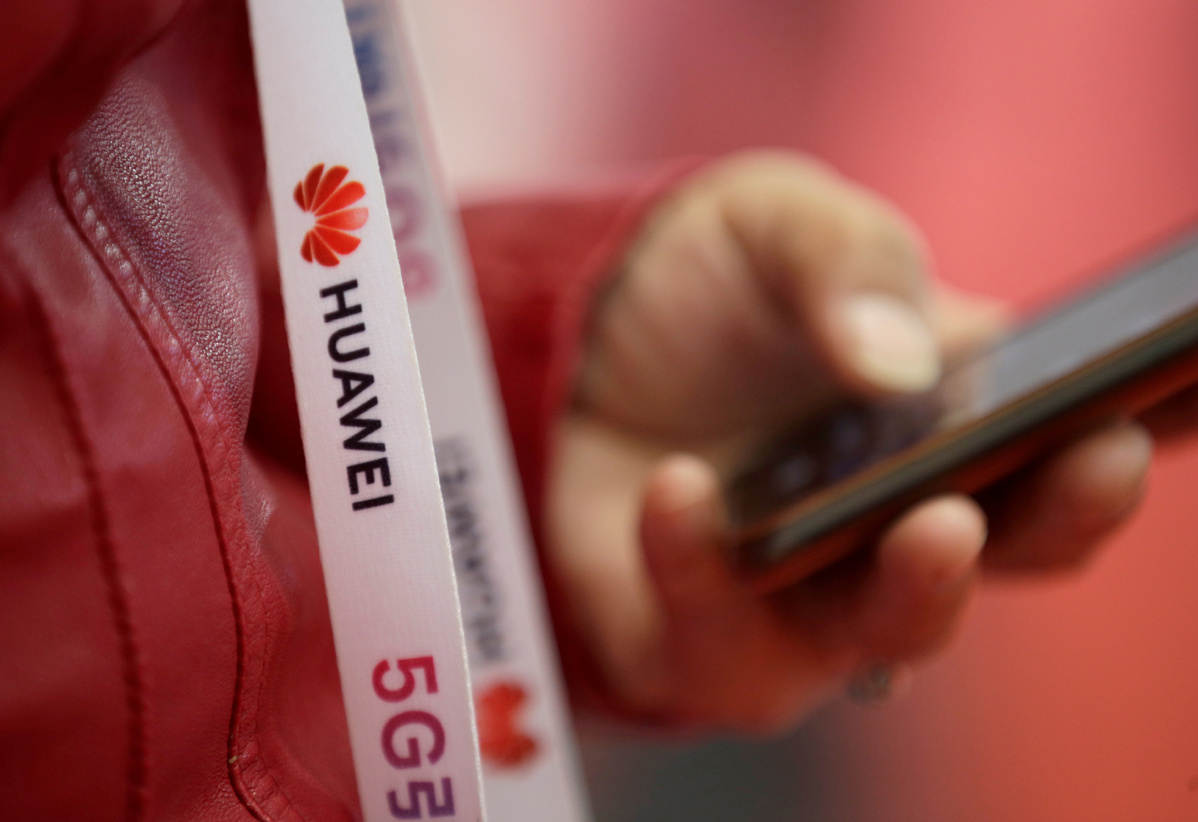
5G constraints on Chinese giant viewed as addressing security concerns of US
The United Kingdom executed the final and most consequential move in a yearslong balancing act on Tuesday morning, when it announced that Huawei would not be banned from building infrastructure for the country's 5G telecommunications network.
The decision, giving the green light to the Chinese technology giant, was made at a meeting of the National Security Council, chaired by Prime Minister Boris Johnson alongside top Cabinet ministers and security officials.
Hours later, Foreign Secretary Dominic Raab made a statement in Parliament, in which he sought to reassure allies in the so-called Five Eyes intelligence-sharing community, which include the United States, Canada, Australia and New Zealand.
"We would never take decisions that threaten our national security or the security of our Five Eyes partners," Raab said. "How we construct our 5G and full fiber public telecoms network has nothing to do with how we share classified data. And the UK's technical security experts have agreed that the new controls on high-risk vendors are completely consistent with the UK's security needs."
The US had put sustained pressure on the UK to boycott the company due to concerns over cybersecurity. On the other hand, the UK government has long been aware that a full ban on Huawei would delay the rollout of 5G networks by years, at great cost to the economy.
On Tuesday, in response to the outcome of the National Security Council meeting, the US said it was "disappointed by the UK's decision".
"There is no safe option for untrusted vendors to control any part of a 5G network," an unnamed senior US administration official said in a statement emailed to media.
Matthew Howett, principal analyst at London-based tech analysts Assembly Research, said that in the end the UK has made a determination that has left no stakeholder either truly outraged or happy, which might be the sign of a workable compromise.
According to the guidelines released by the Department for Digital, Culture, Media and Sport on Tuesday, Huawei can operate in the UK, but only on the periphery of 5G infrastructure, and the company's kit will be excluded from the most sensitive parts of UK networks.
And while UK mobile operators can continue to work with Huawei, the government has stipulated that in three years Huawei must operate within a market share cap of 35 percent.
"It's not ideal for mobile operators, it's not ideal for Huawei, everyone is impacted to some extent," Howett told China Daily. "Which maybe suggests that the government has struck some kind of good balance between all the objectives that they were trying to juggle."
UK mobile operators have worked with Huawei for more than a decade, and the company's kit runs through the nation's 4G networks. An outright ban on Huawei would have required ripping out the structures on top of which 5G will be built, causing huge delays to the 5G rollout.
"If Huawei was taken away as an option, this whole process-including testing-would have to be started all over again," said Jimmy Jones, cybersecurity expert at Londonbased telecoms solutions provider Positive Technologies. "Ultimately any country that does that is facing a more expensive network and a delay that could result in its national infrastructure being inferior compared to other countries."
By excluding Huawei and other "high-risk vendors" from the core of network infrastructure, the UK is telling the US and other allies that have banned Huawei that their voices have been heard. At the same time, stopping short of a full ban on Huawei avoids an act of real selfharm.
Assembly Research estimates that such a ban would delay the rollout of 5G in the UK by up to two years at a cost of 6.8 billion pounds ($8.8 billion) to the economy.
"The impact would have been on consumers and businesses, and the UK wouldn't have a digital infrastructure to rival the US, Japan, (South) Korea, and China, when it comes to the networks of the future," Howett said.
On Tuesday, Huawei Senior Vice-President Zhang Jiangang welcomed the news that the UK would continue to work with the Chinese company.
"This evidence-based decision will result in a more advanced, more secure and more cost-effective telecoms infrastructure that is fit for the future," Zhang said. "It gives the UK access to world-leading technology and ensures a competitive market."










