



Explainer: What is China's five-year plan?









The Fifth Plenary Session of the 19th CPC Central Committee, which is scheduled from Oct 26 to 29, will deliberate the country's 14th Five-Year Plan (2021-25).
So what is the five-year plan? What does it mean for ordinary Chinese people? And what the country's past plans can tell us? We have a look at some of the major changes China has experienced since the first plan was drafted.

The five-year plan is China's policy blueprint for medium-term social and economic development.
The drafting of the FYP started in 1953, four years after the founding of the People's Republic of China.
Apart from a period of economic adjustment from 1963 to 1965, China has implemented 13 five-year plans. Economic development has been the priority of each of the plans.
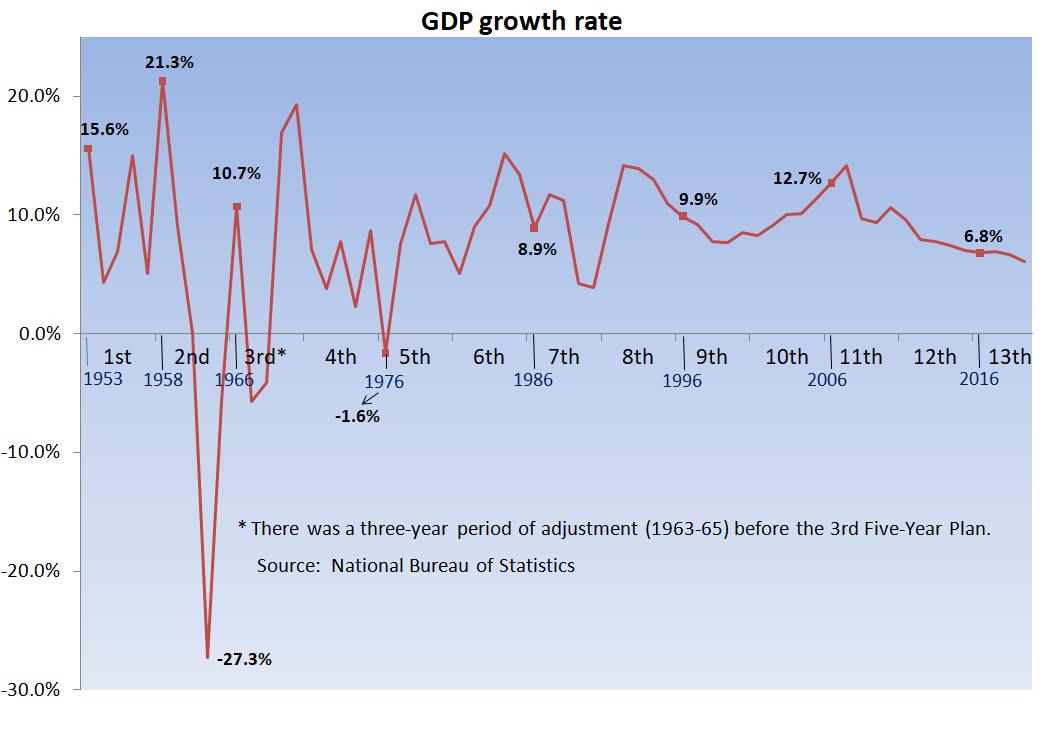
For example, in 1953, the central government launched its first Five-Year Plan (1953-1957), which aimed at turning the country from an agricultural economy into an industrial country based on the development of heavy industry.
To achieve the goal of becoming a strong industrial power, the FYPs up to 1980 continued to focus on developing agriculture to ensure food supply and also expanding industry to build an independent and complete industrial system.

From the 6th Five-Year Plan (1981-85) onward, the blueprints have been drawn up in line with the reform and opening-up drive and the shift from a planned economy to a market-oriented economy.
In terms of contribution to GDP, the secondary industry maintained a major share with a growing tertiary sector and a dwindling primary sector.

As the economy grew rapidly, the importance of economic growth speed gave way to the quality of development, and greater emphasis has been placed in recent years on improving balanced social and economic development.
For instance, the 10th Five-Year Plan (2001-05) aimed to build a relatively complete social security system.

The 11th Five-Year Plan (2006-10) proposed upgrading the industrial structure and optimizing resource allocation. The 12th plan (2011-15) put forward to increase investment in education, science and technology, and set goals for environmental protection.


The 13th Five-Year Plan put forward more comprehensive and balanced development goals.
These emphasized sustainable development through industrial upgrading, boosting consumption, increasing urbanization rate, eliminating poverty, and improving environmental protection.
The goal of "building a beautiful China" was written in the 13th plan for the first time. Of the 13 binding targets, 10 relate to the environment and natural resources.

As the 14th plan is being developed, we expect to see a more prosperous, innovative and greener China in the upcoming years.


- Increase in western Pacific military activities noted
- China, Pakistan pledge deeper military ties
- SPP to oversee handling of Shanxi mine explosion case
- Mine blast victims get mental health counseling
- China leads with ‘deep and real’ methane control efforts, expert says
- China calls for fair global ocean governance in Xiamen symposium





