


"One of the bestsellers at the chain is the braised mandarin fish in soy sauce," Chen said. "Ensuring that a whole fish is placed on the dining table speaks to the cooking skills of our chefs and fresh ingredients that we use."
Therefore, servers ask customers for their preferences on how to serve dishes that come in big portions.
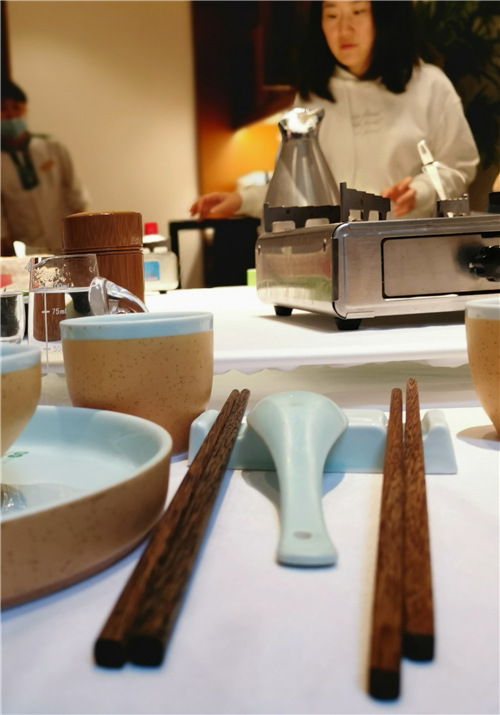
"Diners have generally appreciated that we are now providing communal chopsticks to every dish and offering to divide large-portioned dishes for them," Chen said." Even though we began serving chopsticks long before the COVID-19 outbreak, the number of people actually using them has increased."
However, he also noticed that when dining with a few family members or close friends, customers have found swapping from one set of chopsticks to another a nuisance. Compliance in those scenarios is much poorer.
In Chinese culture, sharing food with personal chopsticks is a sign of intimacy. Defying the ingrained tradition can sometimes result in misunderstandings.
Lu Hanrong, 52, said when he worked for a factory in Guangdong province in the 1990s, lunch at his workplace was served in individual portions.
"But when I came back to my hometown in Jiangsu province, nobody would divide dishes or use communal chopsticks, whether at home or at a restaurant," he said."It would be strange and out-of-place to request having an individual portion or ask for an extra pair."
Ma Li, a 27-year-old employee in Wuxi city in Jiangsu, planned to visit her family in the countryside during the Spring Festival. She said the pushing of new dining habits could be met with more resistance there.
"In Wuxi, communal chopsticks are very common at formal banquets," she said. "But they remain a rarity in casual meet-up meals. I do not think the practice has yet reached rural areas."
The challenge has come as no surprise to health experts and government officials. They agree that the COVID-19 outbreak is unlikely to be a factor in eradicating a deeply rooted custom. But the disease outbreak does present a valuable opportunity to bring the topic of enforcing new dining etiquette back to the table.
Zhao, from the China CDC, said adopting a new lifestyle and internalizing it among the public will certainly take a long time.
"We need every person to practice the new dining method proactively and consistently," he said."Gradually, these practices can be passed on to future generations."
Xu Hejian, a spokesman for the Beijing municipal government, also said during an earlier conference that fostering the new habit will involve a long-running campaign.
"The key is to persevere, and not forget about the significance of personal hygiene, even after the virus outbreak is completely controlled," he said.





