



Two-way opening-up of financial market will be bolstered









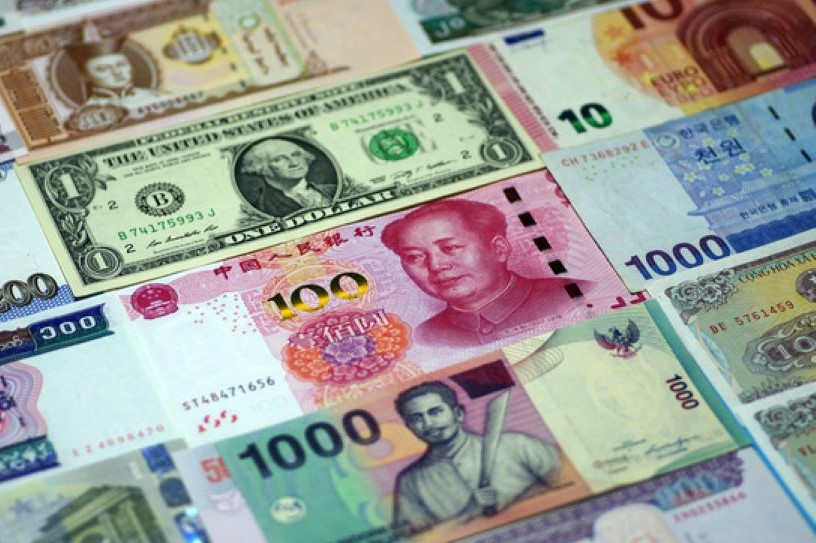
China's foreign exchange regulator highlighted specific measures on Friday to further promote two-way opening-up of the financial market, mainly through steadily freeing up cross-border capital flows and improving the renminbi exchange rate regime.
Based on a generally stable balance of payment in 2020, the State Administration of Foreign Exchange plans to expand the scale of the Qualified Domestic Limited Partner plan this year. The plan allows domestic investors to access more foreign assets.
It will also continue to approve quotas of the Qualified Domestic Institutional Investor plan, another program for outbound investment, according to Wang Chunying, deputy head and spokeswoman for SAFE.
These measures will boost capital outflows. That will help balance rising inflows, given renminbi assets' bullish momentum and China's sound economic outlook, experts said.
A broader opening-up of the domestic financial sector and relatively stable renminbi-denominated investment instruments are expected to continue to attract foreign capital, especially into the onshore bond market, Wang said.
The global economy is expected to rebound gradually in 2021 but with uncertainties, and coronavirus risks should not be ignored, Wang told reporters on Friday, adding that financial fluctuations overseas may bring about potential risks to China's foreign exchange market.
She stressed the need to tighten monitoring on cross-border capital flows and forex trading, enhance the assessment of forex risks and deepen the reform of the renminbi exchange rate regime.
The renminbi exchange rate is expected to be more flexible, floating around a reasonable and balanced equilibrium and not only just appreciating. The currency's value will be determined more by supply and demand in the market, Wang added.
According to the central bank, China's currency had appreciated by 6.9 percent against the US dollar year-on-year by the end of 2020, supported by the country's economy recovering faster than most major economies.
Impacts of the periodical appreciation of the renminbi on China's exporters, as well as the overall balance of payment, are "still within a normal range", Wang said.
The stronger currency didn't reverse China's current account surplus, which accounted for 1.6 percent of the GDP last year, thanks to the value of exported goods and services being higher than that of imports. This ratio expanded from 1 percent in 2019 and 0.4 percent in 2018, showing the sustainable growth momentum of exports, the SAFE reported.
China also saw higher bond yields than most developed countries last year, making renminbi assets a "safe haven", to some extent, for cross-border investment, said Xie Yaxuan, chief analyst at China Merchants Securities.
The SAFE said that overseas investors increased onshore bond holdings by $186.1 billion in 2020, and the investments outstanding hit $512.2 billion by year's end. More than half of the bond investments are from foreign central banks.
It is still a period in which the foreign capital is increasing holdings in onshore bonds, fostering capital inflows. A period of stable development is expected in the future, said Wang, of SAFE.
Stephen Chiu, Asia FX and Rates Strategist at Bloomberg Intelligence, said that overseas investors' holdings of China bonds rose by more than 48 percent in 2020, the fastest annual growth in two years. But this pace may be hard to replicate this year given a larger base, a narrowing China-US yield gap and tapering bond-index inclusion support.
Chiu forecast more conservative growth in bond holdings by foreigners of 18 to 33 percent this year.
On Friday, SAFE also reported that China's commercial banks saw a net forex settlement surplus of $158.7 billion last year, and the surplus stood at $66.6 billion in December. That indicated that banks' clients sold more foreign currencies than purchased them, supporting a strong Chinese currency.











