Migrants' burden much heavier amid pandemic










African cities have remarkably transformed in terms of political, socioeconomic and infrastructural development over the years. The upward trajectory, fairly prompted by the UN Agenda 2030, the African Union's Agenda 2063 and the budding potential of the newly launched African Continental Free Trade Area, has occasioned an unparalleled demographic growth spurt largely signified by increased mobility of labor.
Regardless of other existing independent factors, economic opportunities accessible in each nation act as an incentive for cross-border migration within regions and between states on the continent. The sequence of movements has been safeguarded by the Migration Policy Framework for Africa (2018-30) which advocates, among other things, the integration of migrants into the labor market and the provision of social protection and social security benefits for labor migrants.
The AU's Africa Migration Report, released on Oct 15, specified that intra-African mobility has grown from 13.3 million to 25.4 million migrants between 2008 and 2017, accounting for an annual growth rate of 7.5 percent. Recent figures also indicate that approximately 80 percent of African migrants stay in Africa, with limited numbers moving to Europe, North America, the Middle East and the Gulf Cooperation Council countries.
However, the COVID-19 outbreak and its related travel restrictions last year in 43 of Africa's 54 countries affected the working and living conditions, as well as the prospects, of migrant workers. For instance, in West and Central Africa, regional migration dropped nearly 50 percent during the first half of last year, compared with 2019.
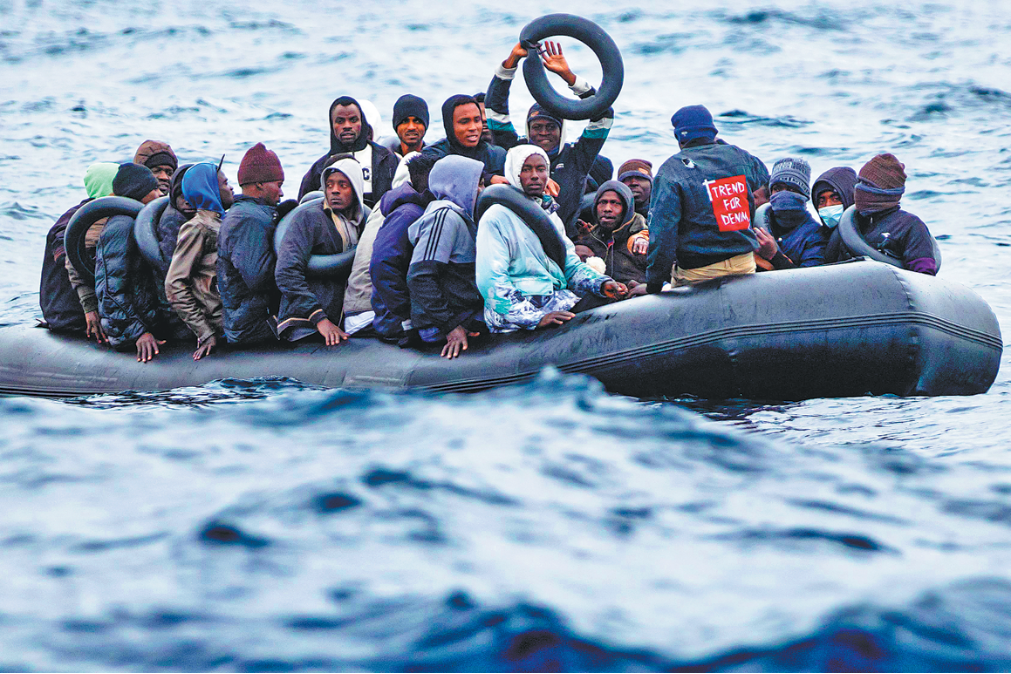
Migrants, mainly from the informal sector, are also more exposed to the pandemic due to their often precarious working conditions, limited access to healthcare provisions, and exclusion from most government response plans. Additionally, the restrictions on movement have forced some people to take migration routes that are more dangerous, resulting in detentions and forced deportations, leaving many migrants stranded in foreign countries.
Moreover, African countries are experiencing overarching economic disruption partially due to severe job losses and a decline in income of migrants, constraining their ability to remit funds to their home countries. The amount of money that migrant workers send home is forecast to decline by 14 percent this year compared with 2019 before the COVID-19 pandemic, according to the World Bank. Last year, total remittances to sub-Saharan Africa were projected to be $44 billion, down from $48 billion in 2019, even though the cost of sending money was reduced last year. The reduced remittance flows could increase poverty and reduce households' access to much-needed health services.
The crisis has also exacerbated xenophobic behavior, with anti-immigrant groups staging demonstrations demanding the mass deportation of foreigners to reduce competition in the job market. With 12 million graduates entering the labor market each year and only 3 million of them finding jobs, the continent has yet to reduce the unemployment rate. Similarly, migrants may be at risk of abuse and other human rights violations, which calls for greater vigilance against such practices.
But the continent's ability to rise even higher from the adverse effects of the pandemic is taking course. In Kenya, remittances improved by 10.7 percent, from $2.8 billion in 2019 to $3.1 billion last year. This momentous upturn in remittances has been underpinned by efficient financial technologies that provide more convenient transactions.
States in the region should facilitate and guarantee secured movement of workers across countries. There is a need to strategically restructure or align migration policies to the current situation, and build the capacity of all migration stakeholders to promote initiatives aimed at enhancing work-related mobility. Extension of work visas and granting temporary work permits should be considered. The management of the pandemic should not be a barrier to movement in the region, and movement should not be an obstacle to alleviating the impact of the virus.
Quality healthcare services should also be made accessible to migrant workers in equal measure, irrespective of their migration status.
Finally, there is a need to involve migrants in COVID-19 socioeconomic impact assessments, as well as response and recovery plans for any given country, while safeguarding the livelihoods of many households falling into poverty as a result of the pandemic.
Fairness and observation of human rights standards are crucial while promoting cross-border labor migration and developing economies.
The author is the acting executive director of the Center for Humanitarian Policy at the Africa Policy Institute, a Kenya-based think tank. The views do not necessarily reflect those of China Daily.