



Getting 'smarter' to survive









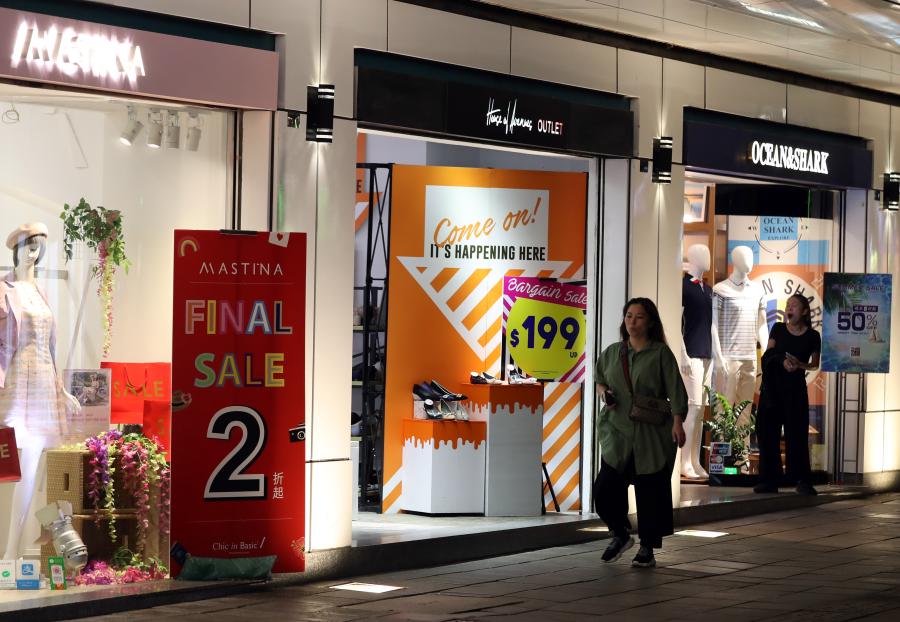
Consumer habits have also changed, prompting a reshuffle in various industries, such as the wide adoption of e-commerce.
"The pandemic marks a watershed (for e-commerce). I think going virtual will be the order of the day," said Ross Settles, an adjunct professor in the Journalism and Media Studies Centre at the University of Hong Kong.
"A lot of people who haven't really thought of going online as part of their business operations have been forced to do so. So over time, they'll get 'smart' to bring in new customers."
Go 'smart'
The pandemic took a heavy toll on Hong Kong cosmetics chain SaSa, which said its turnover plunged by more than 60 percent in the first half in 2020, compared to the same period in the previous year. The group, which used to run about 230 retail stores in Hong Kong and Macao, took to e-commerce, which paid off with an almost 70 percent year-on-year surge in sales in the third quarter of last year.
According to the group's financial report, its increased focus on online business by leveraging campaigns on WeChat and Taobao led to its online-to-offline business taking up more than 20 percent of total e-commerce turnover during the period.
Martin said COVID-19 has undoubtedly accelerated the integration of online and offline business activities. "Consumers rarely shop just online or offline. Most of them do both and don't care whether they're by online or offline as long as it's convenient to them."


- China-Laos Railway sees rising cross-border passenger traffic
- Xi replies to letter from Chinese, US students participating in 'A Shared Voyage: China-US Youth Friendship Program'
- Xi, Surinamese president exchange congratulations over 50th anniversary of ties
- Xi, Austrian president exchange congratulations over 55th anniversary of ties
- Fudan University reveals top 10 scientific and technological advances of 2025
- Shenzhou XXI astronauts complete handover, ready for returning to Earth soon





