



Spur for China's textile industry to upgrade









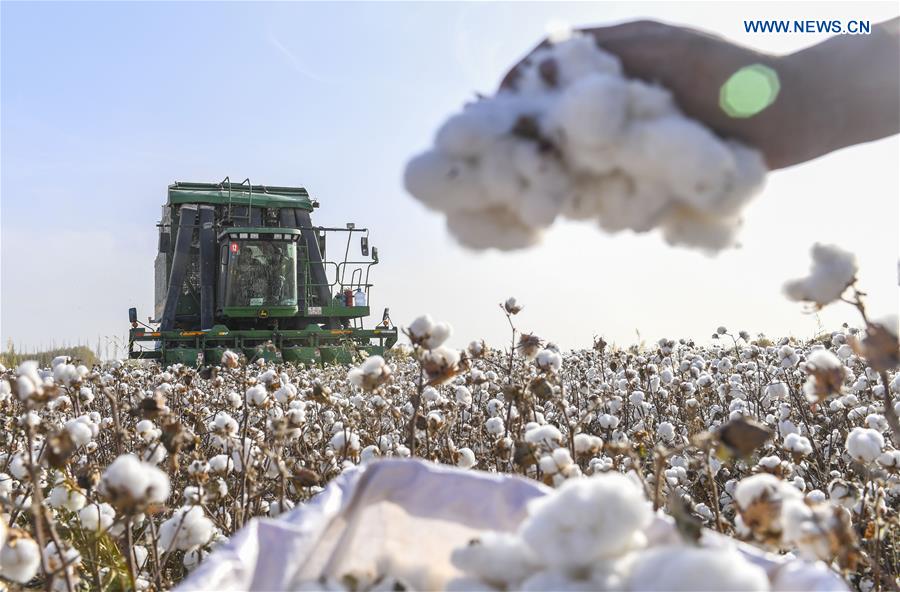
Some multinational clothing companies have announced they will not use cotton from the Xinjiang Uygur autonomous region, citing "forced labor" as the reason.
But as the Commerce Ministry has said, "forced labor" is a fiction the anti-China forces have fabricated. Relevant enterprises should respect the market law and facts, and stop politicizing commercial issues.
The open attacks on the cotton industry in Xinjiang expose some Western countries' intention to destroy China's textile industrial chain and weaken the status of Chinese textiles in the global market.
Statistics show the scale of China's textile industry accounts for more than 50 percent of the global industry and China's chemical fiber output accounts for 70 percent of the world's total. The country's trade in textile goods accounted for one-third of the global total last year.
With a complete industrial chain and advanced technology in the textile industry, China is the world's largest textile and garment market, the largest consumer of cotton and the second-largest producer of cotton.
China produces about 5.95 million tons of cotton, and consumes around 7.8 million tons of cotton a year. It imports about 1.85 million tons of cotton. Xinjiang accounts for 87 percent of China's output of cotton.
Despite this, the cotton industry and market is dominated by the Better Cotton Initiative, a nongovernment organization supported, if not dominated, by the US government. The BCI has acted as an accomplice with the United States in the latter's organized smearing of Xinjiang cotton.
Although the BCI ban will not deprive Xinjiang cotton of its market as all of it can be consumed at home, the almost unbounded power of the BCI, which means that it can arbitrarily ban a country's exports of cotton, deserves the vigilance of the whole world.
Also, it must be noted that China's textile and garment enterprises rely heavily on foreign trade, as most of them are original equipment manufacturers for foreign brands. With the rising prices of labor and resources in China, the country will gradually lose its comparative strengths in the labor-intensive textile and clothing industries to countries in Southeast Asia, South Asia and Africa.
So rebutting the lies and hypocrisy of the BCI's scheme targeting Xinjiang cotton is one thing, to build Chinese clothing brands and move the country up the industrial value chain is another. The latter being more important in the long run.
The country's textile and clothing industries should show more foresight and courage so they hold their fates in their own hands.





