



'Orchestrated attack' suspected in biased reporting









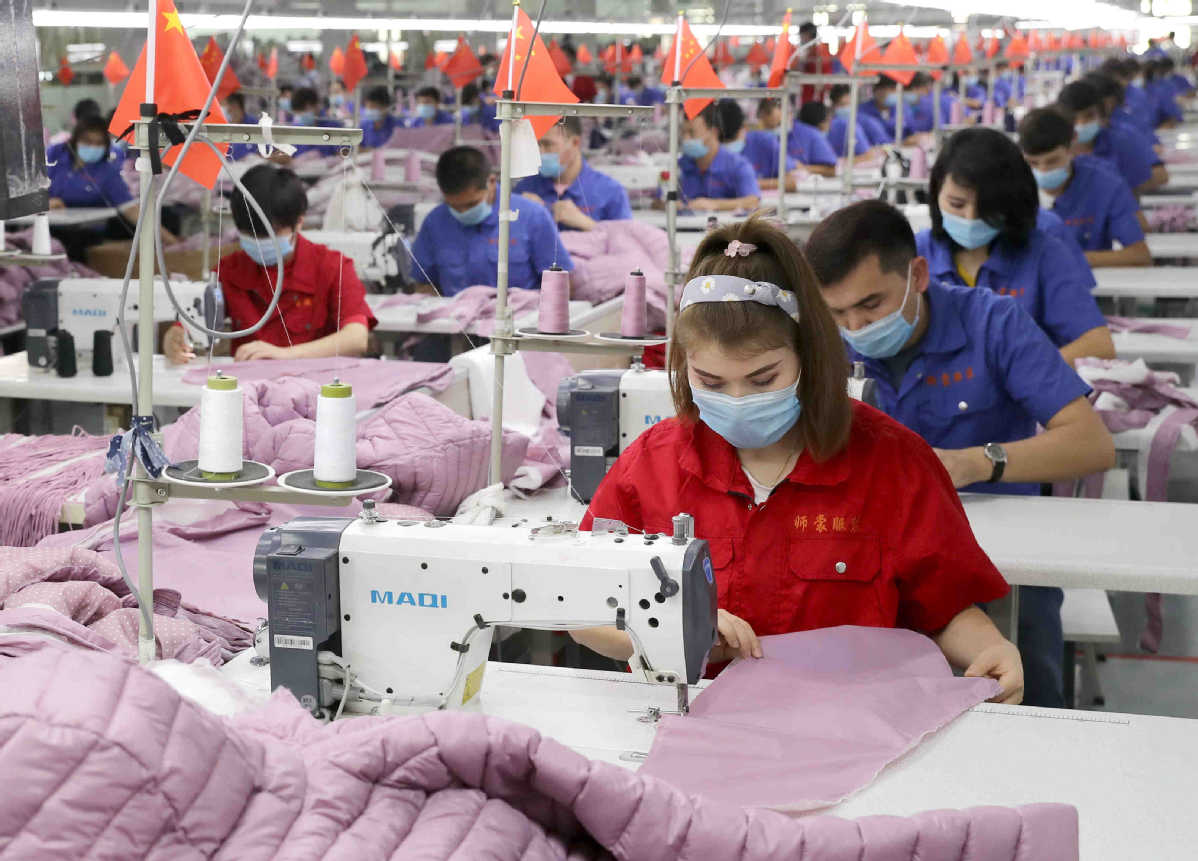
Western media's one-sided misreporting and allegations about China's Xinjiang Uygur autonomous region are prompting suspicions of an orchestrated attack to stoke anti-China sentiments in some parts of the world, analysts and observers said.
By leveling accusations of so-called "forced labor and genocide" in Xinjiang without offering any hard evidence, the big media appear to have taken on the task of furthering the interests of US-led Western powers against a rising China, they added.
"When the mainstream media has pumped out an almost uniform position on Xinjiang … with virtually no content that offers a different perspective or nuance, it's hard to believe this is not an orchestrated attack," said Sameena Rahman, a Los Angeles-based peace activist and member of the Act Now to Stop War and End Racism Coalition.
Rahman said the reporting on Xinjiang by Western media is not only one-sided, but also has a "clear agenda of furthering the interests of the United States and other governments against China".
"These Western interests include Balkanizing China, promoting civil unrest through separatist sentiments and disrupting China's Belt and Road Initiative, which passes through Xinjiang to the Global South," she said. Balkanization refers to the division of a state or region into smaller, mutually hostile entities.
Dina Yulianti Sulaeman, director of the Indonesia Center for Middle East Studies, said, "I think the US only uses the issue of Xinjiang Muslims to increase anti-Chinese sentiment in the world," adding that the US has never been "a defender of Muslims and has even dropped bombs on (Muslim-majority) countries".
She questioned why the US "has suddenly become the defender of Muslims in Xinjiang".
Dina cited Washington's "disinformation" campaign against Syria and how that campaign had provoked Muslim youths worldwide to join jihadist groups because they felt there was a "massacre against Sunni Muslims".
The allegations against Xinjiang are part of an "economic war "being waged by the US against China, she added.
Early this year, the administration of former US president Donald Trump banned the import of cotton, as well as related products, from Xinjiang over allegations of "forced labor "in the industry. China has repeatedly dismissed those accusations, noting that cotton production in Xinjiang is highly mechanized and does not require a large number of laborers.
Rahman said no one has found any hard evidence of forced labor in Xinjiang.
Mustafa Izzuddin, a visiting professor at the international relations department of Islamic University of Indonesia in Yogyakarta, Indonesia, questioned the calls to boycott Xinjiang cotton.
"Boycotts could result in a loss of jobs and a slowdown in the economy of Xinjiang," he said.
Rene Pattiradjawane, chairman of the Indonesia-based Center for Chinese Studies and an associate fellow at The Habibie Center in Jakarta, said the boycott of Xinjiang cotton will not resolve anything.
He also questioned the allegations of "genocide" against the Uygur ethnic group. "I don't believe (that there is) genocide in Xinjiang, since any kind of genocide will be very difficult to conceal," he said.
Rahman, the Los Angeles-based activist, said the Western media need to check facts before publishing reports on so-called genocide in Xinjiang.
"One only needs to look at the statistical data to see that the population in (Xinjiang), and among Uygur people, is not only growing, but is growing at a disproportionately faster pace (than that) in the rest of China," she said.
The Uygur population in Xinjiang has been growing steadily for the past few years. From 2010 to 2018, the Uygur population in Xinjiang rose from 10.17 million to 12.72 million, Xinhua News Agency has reported. In addition, the growth rate of the Uygur population-25 percent-was higher than the 13.99 percent growth rate recorded by the total Xinjiang population during the same period.
Rahman said reports on alleged "genocide" in Xinjiang "trivialize the historical issue of genocide".
"The US government and the media are trying to invoke the images of the Nazi genocide against Jewish people and the death camps and apply that label falsely to China. I'm actually disgusted," she said.
Meanwhile, the United States itself has had a long history of forced labor and slavery, Rahman said, pointing out that prison labor is used in the US, in some cases, for picking cotton.
The activist cited the example of the Louisiana State Penitentiary, which paid inmates "abysmal wages" to pick cotton. "They (prisoners) were paid 4 US cents an hour in 2016," she said.










