



Catering and retail recoil at Japan's water move impact









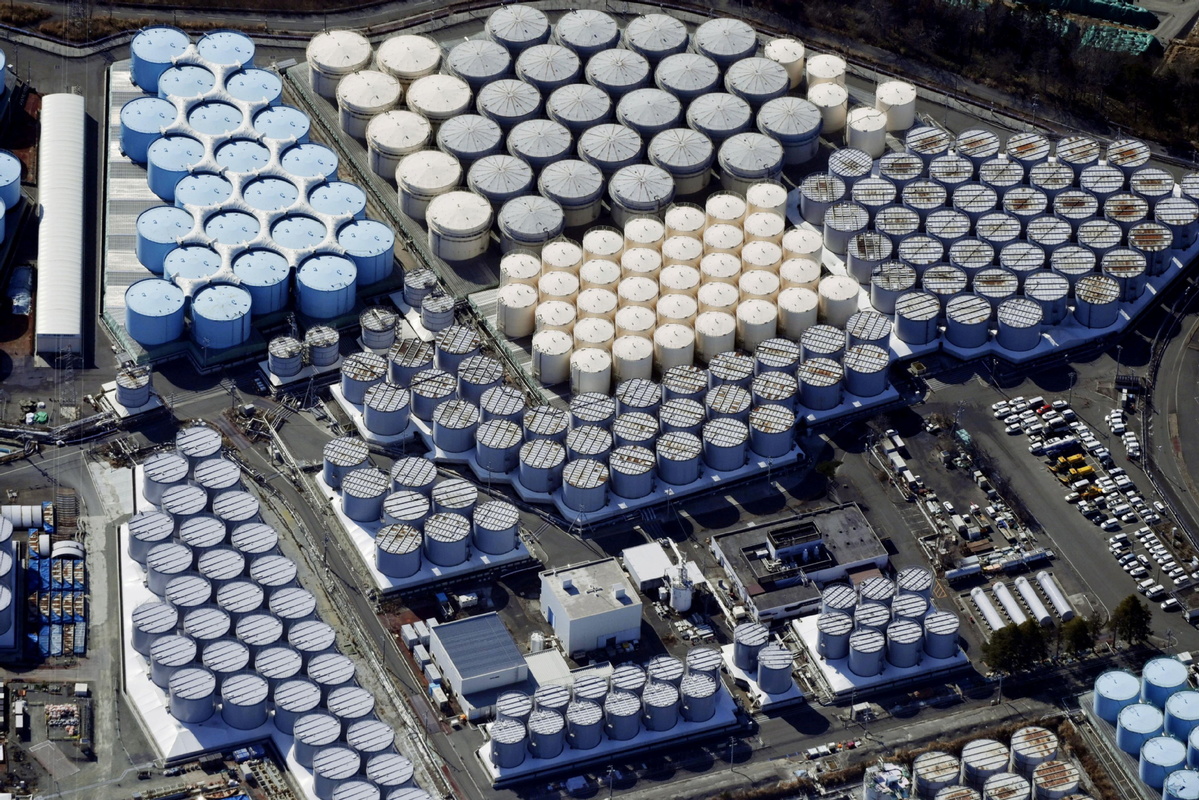
Chinese catering companies and retailers have expressed concern over the possible disruptions to marine supply chains and seafood consumption in the country, after Japan said it would release more than 1 million metric tons of contaminated water from the destroyed Fukushima nuclear plant into the Pacific Ocean within two years.
Jason Yu, general manager of Kantar Worldpanel China, a leading market researcher, said the contaminated water will have a negative impact on breeding and growth of marine creatures near Japan and along the coastal regions of China.
"Though marine product exports from Japan to China are not that large, the impact from the radioactive water release will be felt in the global supply chains and the overall marine ecosystem, considering that marine animals are constantly on the move," said Yu.
Yu said imports and exports of Japan-made food products will also be affected, due to lingering safety concerns.
Among the supply chains that are likely to be affected, the sea salt sector would face the maximum impact, said Zhu Danpeng, a food industry expert based in Guangzhou.
"The release will pose a direct threat to the marine environment, the fisheries industry as well as sea salt industry, which accounts for 90 percent of the salt consumption in China," said Zhu.
Consumers in the country have also voiced their concerns over the safety of food from the oceans near Japan.
Isaac Yao, who works at a multinational agricultural company in Beijing, said the discharge of contaminated water would definitely cast a shadow over his food choices at Japanese restaurants and on shopping at supermarkets.
"I would raise questions on the origin of the sea food on the menu at restaurants," said Yao. "While shopping for groceries, I would have second thoughts on any sea food from the coastal areas of the Pacific Ocean."
Bian Jiang, a cuisine industry veteran in Beijing, said China imports very little food from Japan. The majority of the food materials used in restaurants in China are from Europe or the Mediterranean region.
However, in the long term, "there is no way to escape the negative effect of the radioactive water discharge in Japan on marine animals, the seafood sector and the catering industry," said Bian. "The scale of the impact still requires scientific analysis."
Bian said per capita fish consumption in China is about half that of the people in Europe and the United States. Most of the Chinese consume freshwater fish, rather than those from the ocean, he said.











