



Deeply integrated Asian economy for Bo'ao to reflect on









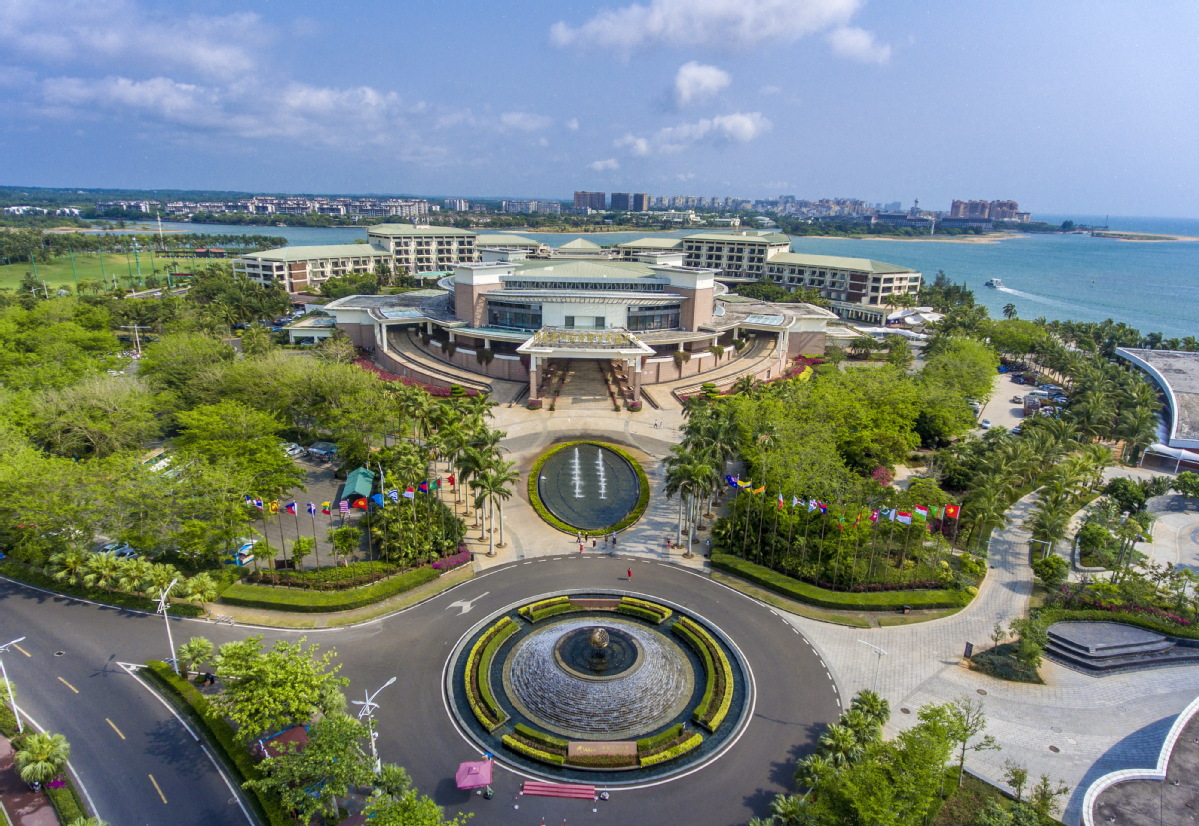
With the 20th Bo'ao Forum for Asia set to open on Sunday, it's time to reflect on how to promote economic cooperation in Asia in the post-pandemic period.
China and the Republic of Korea have set a good example in the fight against the pandemic in East Asia by making concerted efforts to strengthen bilateral ties and facilitate mutual economic recovery by promoting to recognize each other's health code. If they eventually do so, it will boost economic and trade cooperation and people-to-people exchanges not only between the two sides but also across the rest of East Asia.
Compared with Western European countries, East Asian countries have not been severely affected by the pandemic, which, combined with the rapid rollout of COVID-19 vaccines in East Asian countries, means there exist favorable conditions for the rapid economic recovery of the region. And China's strong economic performance and the signing of the Regional Comprehensive Economic Partnership agreement among China, Japan, the Republic of Korea, Australia, New Zealand and the 10 member states of the Association of Southeast Asian Nations in November have contributed to the favorable conditions.
But to actually realize rapid economic recovery, East Asian countries have to effectively contain the epidemic as soon as possible.
China was the only major economy to achieve positive economic growth (of 2.3 percent) last year. It has also largely controlled the spread of the novel coronavirus within the country. No wonder it remained a major destination for foreign investment despite the pandemic-induced global economic downturn.
According to data from China's State Administration of Foreign Exchange and the UN Conference on Trade and Development, China attracted $520.6 billion in foreign investment in 2020, up 81 percent year-on-year, and $163 billion in foreign direct investment, up 4 percent year-on-year, overtaking the United States to become the largest FDI recipient.
Some countries and regions with huge investments in the research and development sector have benefited from the Chinese mainland's demand for high-tech products, with Japan, the ROK and Taiwan enjoying major benefits.
And that ASEAN became China's largest trading partner last year indicates the regional bloc, along with China, will drive East Asia's economic development.
True, some foreign enterprises operating in China have relocated to their base or other countries due to Sino-US frictions and/or the impact of the pandemic, as well as their declining competitiveness, bringing about some changes in the global value chains. But since China is still the "world's factory" and the world's manufacturing industry is still highly dependent on China, there is little possibility of the existing global value chain structure undergoing drastic changes any time soon.
Besides, many economies depend heavily on goods imported from China, and it is difficult for them to find alternative sources for those goods. And given that China's per capita GDP has crossed $10,000 and more and more Chinese people will travel and spend across the world, no country or company can turn a blind eye to such a huge consumers' market. China has more or less managed to offset the negative impact of the pandemic and will continue to play an important role in the global supply chains, which will further increase its influence in Asia.
As for the RCEP, with 29.5 percent of the world's GDP, 29.5 percent of global population, and 25.4 percent of global trade, it has surpassed the US-Mexico-Canada Agreement to become the world's largest trading bloc. The RCEP signatory states are likely to further open up their respective markets for goods, services and investment, and build stable supply chains in the region. And by standardizing the rules of origin, they can consolidate the links of the value chains in the region, with the RCEP playing a positive role in improving the global value chains, which were damaged or disrupted due to the previous US administration's protectionist policies and the Sino-US frictions.
Thanks to ASEAN's efforts, China, Japan and the ROK have for the first time become signatories to the same multilateral trade agreement (the RCEP). Hopefully, that will prompt them to sign a special, trilateral free trade agreement.
In the meantime, the three countries should expand their cooperation to achieve win-win results and common development, so that in the post-pandemic period, the RCEP can serve as a springboard for deepening global cooperation and become a powerful engine for development.
The views don't necessarily reflect those of China Daily.
The author is a guest professor at the International Business School, Beijing Foreign Studies University.





