



China's FTZs should align with RCEP to boost development









For Asia-Pacific countries, the signing of the world's largest free trade agreement (FTA), the Regional Comprehensive Economic Partnership, last year can pave the way to recovery from economic recession and the impacts of the COVID-19 pandemic.
For China, integrating the rules of its pilot free trade zones (FTZs) and the RCEP, which covers about one-third of the world's population and global GDP, can synergize its economic development with that of the Asia-Pacific region.
Amid the tide of anti-globalization in many economies, Asia-Pacific countries have pledged to uphold multilateralism and free trade by signing the RCEP agreement. The signatories to the FTA are the 10 member states of the Association of Southeast Asian Nations, and China, Japan, the Republic of Korea, Australia and Japan. Thailand, Singapore, China and Japan have already ratified the RECP, and after four more ASEAN members and one more non-ASEAN signatory do the same, the agreement will come into force.
To begin with, the RCEP can end the imbalance in regional trade, which has been created due to the mature production networks and close intra-regional trade and the lack institutional agreements on overall economic cooperation, and help signatory countries better deal with the uncertainties created by the changing global situations.
Besides, the agreement will help China establish closer trade and investment relations with other RCEP signatory countries and achieve higher level opening-up. The industrial orientation and functions are common to the rules of China's pilot FTZs and the RCEP agreement. Both aim to integrate the industrial and value chains. While China will promote domestic and regional economic integration, the RCEP will boost Asia-Pacific economic integration and the RCEP's rules of origin will help lower tariffs and strengthen regional industrial supply chains.
As such, China should upgrade the international investment and trade rules for its pilot FTZs and further open up its economy in order to seize the opportunities offered by the RCEP.
Moreover, the RCEP will benefit the regional digital economy, thus facilitating the development of China's "dual circulation" development paradigm, which is centered on the domestic economy and aimed at integrating the domestic and international economies and promotes the building of a community with a shared future for mankind.
There are three ways in which China's pilot FTZs can align with the RCEP. First, the pilot FTZs should establish scientific management mechanisms. And based on relations with RCEP signatory states that are geographically closer to China, the pilot FTZs should develop different development patterns.
For example, the local government can lead the unified management of a particular FTZ, probably by establishing a specific committee for the purpose, and enterprises can lead the market-oriented operation of the FTZ in a professional way. Also, since doing business with Japan and the ROK is more convenient for the China (Shandong) Pilot Free Trade Zone because of geographical proximity, the Shandong FTZ should make rules accordingly and acquire a sound knowledge of the FTZs in those two countries, as that would help strengthen mutual trust and reduce trade costs for all sides.
Second, the differences in development levels, local conditions and the core industries will remain characteristic features of China's pilot FTZs. Therefore, each FTZ should develop different industrial characteristics based on their advantages, such as lower costs, and avoid homogeneous competition with other FTZs.
Hence, the China (Yunnan) Pilot Free Trade Zone should establish cooperation with enterprises in ASEAN member states, using RCEP tariff preferences. By making good use of the China-ASEAN Free Trade Agreement, and the China-Vietnam, China-Laos-Thailand and China-India-Bangladesh-Myanmar economic corridors, China can deepen cross-border cooperation and boost cross-border production capacity, as well as increase financial, energy, tourism, e-commerce, logistics and cross-border renminbi business. Which will help the FTZs establish a tax regime in line with international standards.
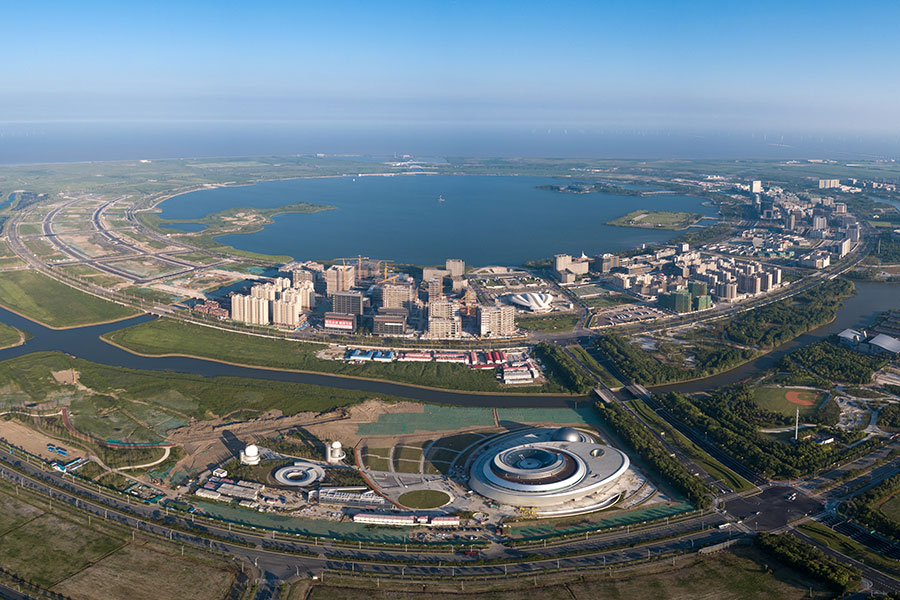
As for the China (Shanghai) Pilot Free Trade Zone, given its advantages of sea, land and air connections, it can play an important role in the RCEP's import and export trade, and help strengthen the RCEP signatory states' industrial chains. Shanghai's rich education infrastructure and more open business environment can help it attract more leading global and regional enterprises, and thus sign higher-level FTAs.
And third, China should improve the legal system in the pilot FTZs, so it can be conducive to international economic and trade rules. In fact, China has vowed to build a business environment that is more "law-based, internationalized and business-friendly". And although China has made some progress on this front, it should make more efforts to further improve the legal system so that it matches international standards.
True, the domestic conditions of different countries are different, but the market laws and regulations, and trade facilitation, investment, and trade rules are similar in FTZs around the world. So China's pilot FTZs should, learning from their counterparts in other countries, further open up their markets to boost their development.
The views don't necessarily reflect those of China Daily.
The author is a research fellow at the Pangoal Institution, a Beijing-based public policy think tank.





