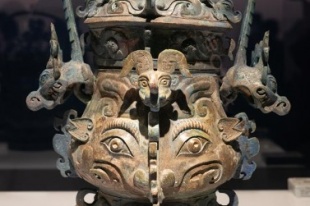



What they found in the realm that just vanished
An exhibition brings to light some of the mysteries of the State of E, Zhang Kun reports in Shanghai.









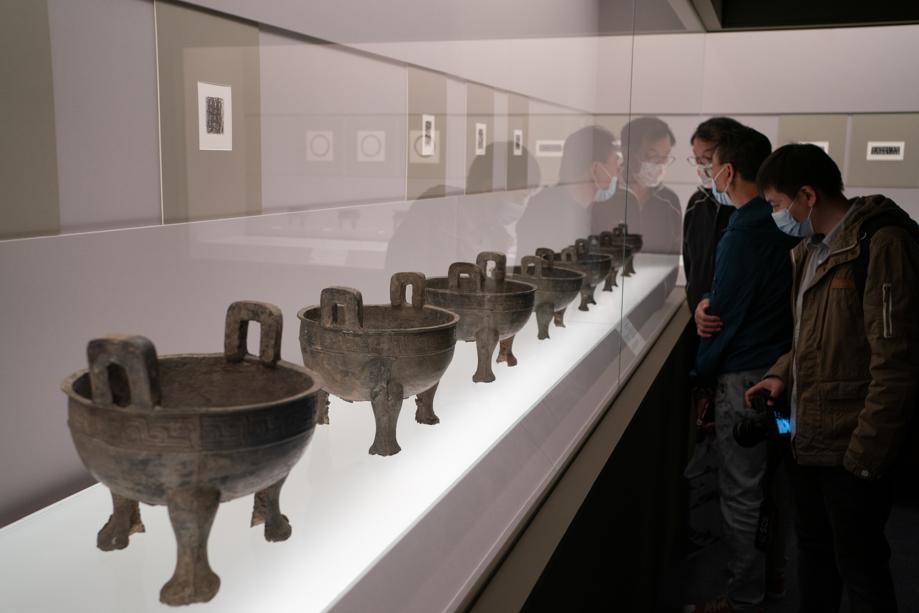
The State of E existed more than 3,000 years ago in China, and few records survive.
An exhibition at the Shanghai Museum, featuring 60 pieces and sets of bronze of the State of E casts light on some of its mysteries.
A Legend of the Han and Huai Valleys: Selected Bronzes of the State of E, on until Jan 16, presents objects from five Chinese institutions. It is the first comprehensive study of the history of E, a state of the Zhou Dynasty (c. 11th century-256 BC).
The Shanghai Museum itself has no more than three bronze objects of E (the pronunciation of the name is similar to that of the ir in "birth") and has borrowed 57 pieces of selected bronze ware from the National Museum of China in Beijing, Suizhou Museum in Hubei province, Nanyang Cultural Relics and Archaeology Research Institute, Henan province, and private collectors.
"Thanks to their trust and help, we are able to present the first assembly ever of E bronze ware from the early Western Zhou Dynasty (c. 11th century-771 BC) to the early Spring and Autumn Period (770-476 BC)," said Yang Zhigang, director of the Shanghai Museum.
"Through the exhibits and their inscriptions, the exhibition delineates the complete evolution of E's bronze art and depicts the state's true presence in history," he said before the show opened on Oct 18.
"We hope viewers will enjoy an unforgettable experience of history and art, and learn more about the long history and glorious civilization of China."
The 60 bronze objects of E State are treasures of great artistic and historical value, and doing research on them would reveal some missing pieces in understanding bronze processing technology in ancient China too, said Ma Jinhong, head of the bronze department of Shanghai Museum.
"The objects feature some unique elements not found anywhere else, and even the green rust on the surface has a different tint."