



China's railways reflect country's changes









I could see from the map that this country, obviously had a great wealth of railway opportunities awaiting, if I could just master the system. It did not take long before I would strike out across the country - something I still have an enduring passion for, with rail continuing to be my preferred mode of travel.
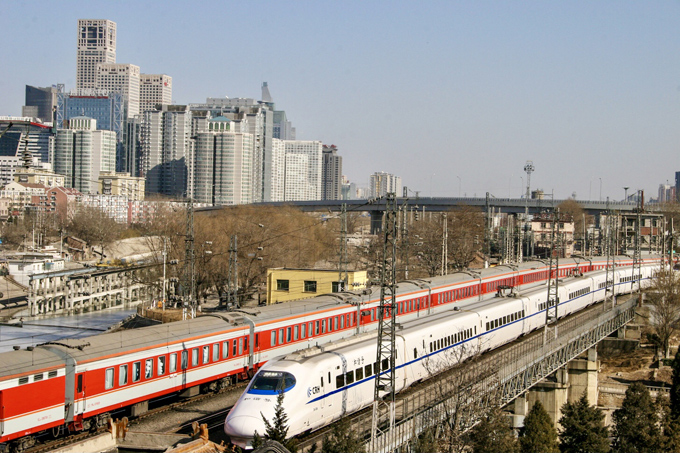
As the country’s economy grew, rail usage increased substantially and such inevitably became major bottlenecks. This was one of several reasons for the construction of a high-speed network — to move most passenger traffic from the older, standard tracks which would then carry increased volumes of freight along with a reduced number of conventional services. The latter, often referred to as “green trains”, continue to play an important role in the overall system, often serving smaller towns, cities and more remote areas.
Rail travel can also showcase incredible civil engineering achievements from the past. A lengthy section on the line between Guizhou and Yunnan provinces traverses difficult mountain landscapes. Construction involved multiple bridges and tunnels to carry this vital line south. As the train steadily, carefully moved along a terrace cut out of a cliff, I would look down over steep drops into a valley below. At tunnel entrances, plaques indicated construction dating to 1965 and 1966. Long before the advent of modern technology on today’s lines, some of those older tracks involved considerable human labor. Such railways, still operating successfully today, are a testimony to the incredible work undertaken to cross such a harsh landscape.
From such journeys I could appreciate the importance of rail construction in creating a modern land transport infrastructure for China, particularly after 1949. Aviation was not yet an option, and road journeys would be long and difficult. Railways were pushed westward toward Xinjiang and into the high-altitude Qinghai-Tibet Plateau. These are lines I have explored thoroughly on my quest to discover China outside its eastern coastlines.





