



Shared climate leadership will make a beautiful environment in Asia









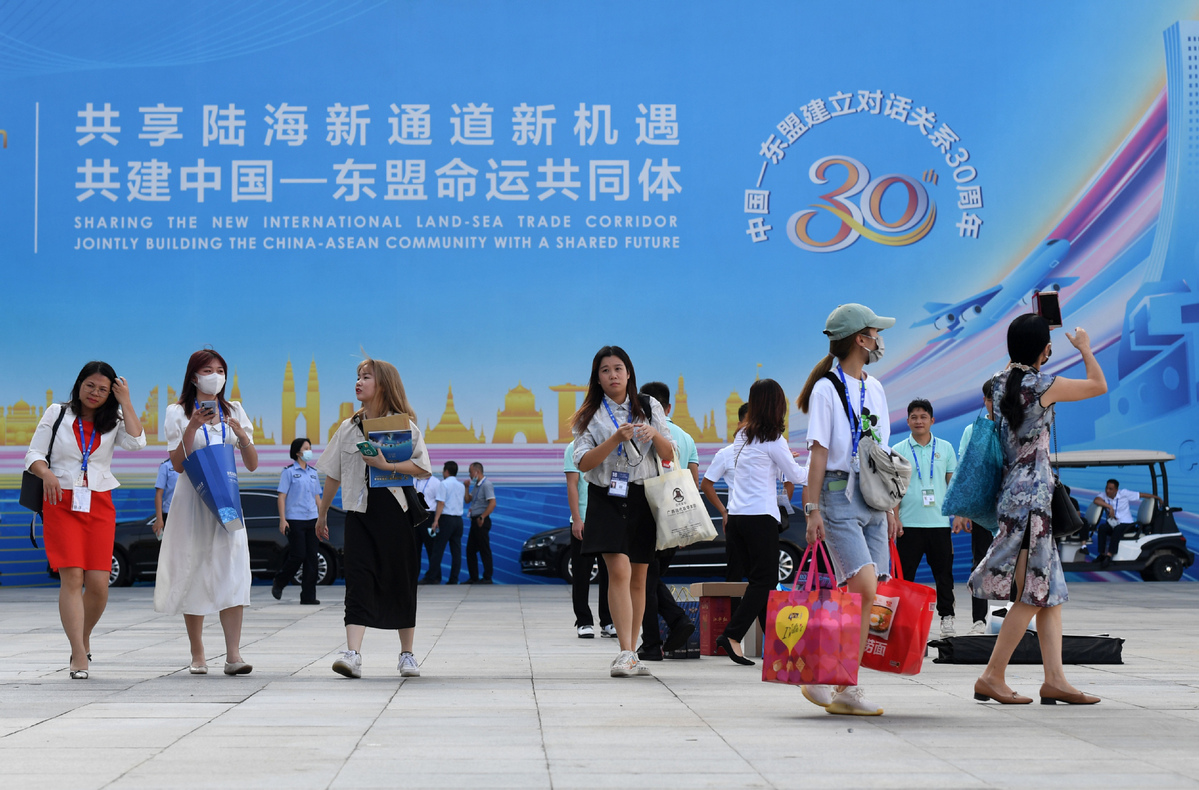
On Nov 23, at the Special Summit to Commemorate the 30th Anniversary of China-ASEAN Dialogue Relations, Chinese President Xi Jinping delivered a speech entitled "For a Shared Future and Our Common Home".
"The valuable experience we have gained over the past 30 years is the shared asset of China and ASEAN," Xi said in his speech, calling it the foundation for developing the Comprehensive Strategic Partnership.
There is much in common between China and Southeast Asian countries. We all want a peaceful, safe, prosperous, beautiful and harmonious home, as Xi outlined in his vision of the China-ASEAN future.
The vision of a shared home is particularly compelling and inspiring. I remember my travels in China five years ago, from Yunnan to Inner Mongolia, and from Beijing to Shanxi. I was awed by the long history and great beauty of China as a history scholar, but as an environmentalist, I was also shocked at the pollution generated by a hungrily developing economy.
I today recall a remark by a coal worker in the city of Datong in northern China's Shanxi province. "Coal is the only sector we are good at," he said, not too far from the 1,500-year-old Yungang Grotto. "Here in Shanxi, the transition will be difficult, and it will take time."
It was a striking comment. The first part of his comment could have been said by anyone in Indonesia. The latter part about transition, could have been said by a worker in Vietnam, the Philippines or Thailand.
At this moment, these countries and China, are all facing a common threat with the climate crisis.
Rainfall in Shanxi province reached 120 millimeters in just a few days in early October, compared with a monthly average of only 31 millimeters. In Zhengzhou, capital of Henan province, around 200 millimeters of rain fell in a single hour in July, killing 300 people. It is a reality the peoples of Thailand, Indonesia, the Philippines and Vietnam know only too well. Sea levels in the Philippines are rising at twice, if not thrice the global rate, indicating further salinization of fresh water meant for irrigation and drinking. Jakarta, Indonesia's capital, is literally sinking.
The UN Secretary-General issued a Code Red for humanity because warming is worsening and accelerating, meaning vulnerable countries will face more intense tradeoffs. Communities in many parts of China, such as Shanxi and Henan, are just as vulnerable as many ASEAN countries.
We are obliged to protect the heritage of civilizations against the threat of climate change and ensuring they remain intact or even more beautiful, long after we have passed on.
In his description of "a beautiful China-ASEAN" future, Xi talked about plans to open dialogues with ASEAN on the region's climate response, increase sharing of renewable energy technologies and jointly promoting a regional energy transition with stronger green finance and a China-ASEAN clean energy cooperation center.
With the announcement by Xi in September that China will step up support for other developing countries in developing green and low-carbon energy while pledging no new coal power projects abroad, a vital first step was taken.
The cleanest, greenest and most reliable energy sources are wind and solar. In Datong, I learned "wind and sunlight" in Chinese meant "beautiful scenery". That is certainly an inspiring future.
For regions long dependent on coal, such as Shanxi in China and Sumatra in Indonesia, a dialogue is urgently needed on how to jointly get their economies prepared, before it is too late, for a coal-free future. For China and Southeast Asia, it is also time to initiate climate leadership from our region, to face grave difficulties together, instead of relying solely on the self-interested so-called assistance from the West.
China and ASEAN are defined by our rich histories and our common resolve to secure the long-term welfare of our people. But we are also defined by vulnerabilities to climate change. We are given a unique opportunity to demonstrate climate leadership and take our cooperative work seriously. It's time we roll up our sleeves and take cooperation to the operational level.
The energy transition toward a beautiful future is likely to happen fast, even faster than the Datong coal worker had imagined over half a decade ago.
Red Constantino is executive director at the Institute for Climate and Sustainable Cities.





