



Low dose uptake could push more African countries to vaccine mandates









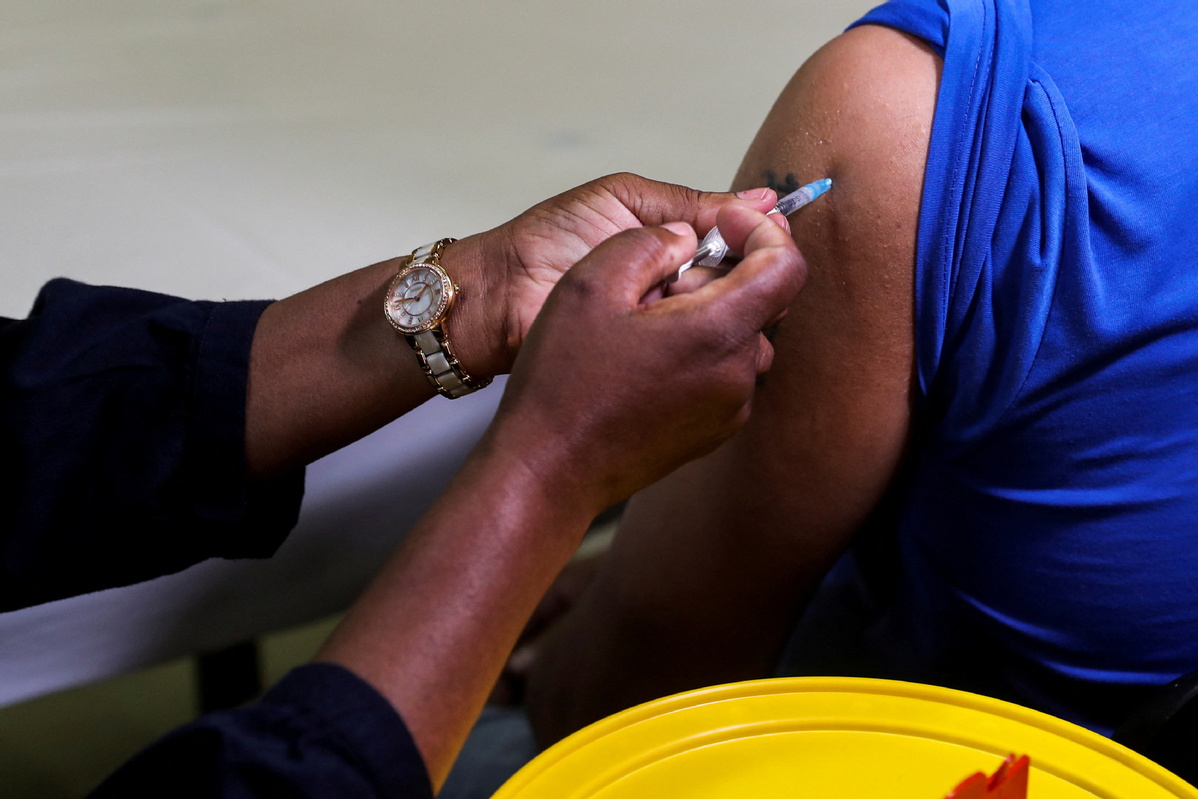
With vaccine hesitancy still widespread across Africa despite availability of COVID-19 doses, the Africa Centers of Disease Control and Prevention has warned that governments might resort to vaccine mandates.
John Nkengasong, the director of Africa CDC, said it's unfortunate that the continent has been fighting for access to vaccines for almost two years, only for the uptake to remain low when the vaccine supply is increasing.
"If people do not go for the vaccines, then governments will have no choice than to impose vaccine mandates. Some countries are already doing that," Nkengasong said.
"We have seen vaccine mandate work in some developed countries, but we don't need to get there if we do the right thing. The only way to win the battle against the pandemic is through vaccination."
Already several countries across the continent have made COVID-19 vaccination mandatory.
Zimbabwe published a law in late September that has seen unvaccinated civil servants barred from work since mid-October. Those with valid reasons for not being vaccinated have been given up to December 31 to get the shot on the arm.
Since October 21, Moroccans are required to produce vaccine pass to access their place of work, government buildings, restaurants, gyms and cafes, among others.
Kenya, on the other hand, announced that those who are not fully vaccinated will not be able to access in-person government services from December 21.
Kenyans will therefore be required to present a proof of vaccination to access services offered by the Kenya Revenue Authority, National Transport and Safety Authority as well as for admission into national parks and game reserves, hotels, bars and restaurants.
In Nigeria, all government employees are required to show COVID-19 vaccination proof or a negative PCR result taken in the past 72 hours to get access to public offices since December 1.
Egypt has also imposed vaccine mandate rule that requires all those seeking government services to be vaccinated against COVID-19 since November 15.
Public sector employees are also required to either be vaccinated or take a weekly COVID-19 test to be allowed to work.
All civil servants in Ghana, including teachers, health workers, and security personnels, should be vaccinated against COVID-19 by January, 2022.
In Tunisia, both citizens and foreign visitors will be required to produce COVID-19 vaccine pass to access public and private spaces such as hospitals, business premises, and state institutions from December 22.
This is in addition to being allowed to attend public and private events and gatherings.
South Africa, the most affected country in Africa in terms of COVID-19 infections and deaths, seems to be taking a similar route.
On Sunday, President Cyril Ramaphosa said he is awaiting a report from a task force on possible introduction of vaccine mandates in the country.
To date, 7.4 percent of Africa's population are fully vaccinated against COVID-19. The continent has so far procured 431.9 million vaccine doses, of which 245.2 million have been administered, according to Data from Africa CDC.
Meanwhile, 11 AU member states have reported the Omicron COVID-19 variant. They are South Africa, Botswana, Nigeria, Ghana, Uganda, Zambia, Senegal, Tunisia, Mozambique Namibia and Zimbabwe.
The World Health Organization on Thursday said that despite the rapid spread of the variant, there are signs of hope as preliminary data from South Africa indicate that the variant may cause less severe illness. The rate of hospitalization is also low.
WHO said between November 14 and December 4, South Africa recorded 6.3 percent ICU occupancy, which is very low compared with the same period when the country was facing the peak linked to the Delta variant in July.
Africa accounts for 46 percent of almost 1,000 Omicron cases reported by 57 countries across the globe.
In the week ending December 5, Africa recorded more than 107, 000 new infection cases, up from around 55, 000. Research is ongoing to ascertain whether Omicron is fueling the surge.










