


Fit for a prince










Exhibits include imperial roof decorations depicting chiwen, a mythical Chinese dragon. Its size is in line with historical records of the Yingzao Fashi, a technical treatise on architecture written by ancient Chinese architect Li Jie in the Song Dynasty (960-1279).
"We had already known that the official architecture of the Jin inherited many features of the Song, but the Taizicheng site provides us with more details. Its architectural layout allows us to gain new knowledge of Jin imperial architecture," said Huang.
Nabo originated in the Liao Dynasty, as a term meaning the emperor's temporary residence in the Khitan language. It refers to the tradition kept by the imperial family, following their ancestors' nomadic habit of moving around according to the seasonal climate. This tradition was inherited by later dynasties established by nomadic groups, such as the Jin and Yuan, even extending to the Qing Dynasty (1644-1911), which practiced similar customs.
During the Nabo period, there were hunting expeditions, rituals, entertainment and other activities held. Emperors met with local officials and dealt with political and military affairs.
"Nabo had strategic importance for the political, economic and military aspects of the country at that time. Many major policies and decisions were actually formed during the process," said Huang.
Some jade exhibits show people's activities during the nomadic hunting events, such as hunting geese and deer, and taming the gyrfalcon, an important totem for traditional hunters.
The nomadic groups in northern China have a long history taming falcons, especially gyrfalcons. Many cultural relics and murals in tombs show patterns of this animal, usually with its wings spread and sharp talons targeting prey on the ground.
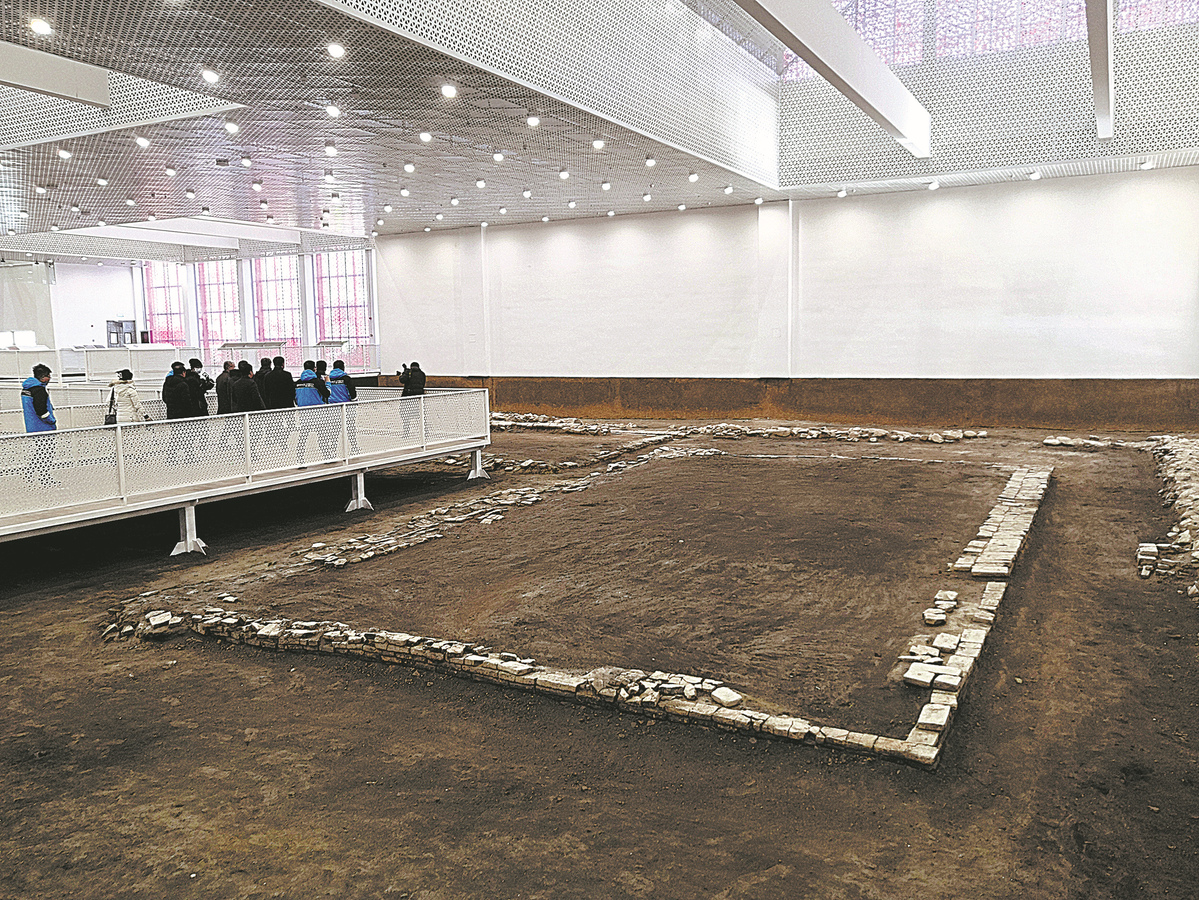
The Taizicheng site is a rectangular area covering 14.3 hectares, with 72 building bases and 22 major roads, according to archaeological work. Buildings in the area are distributed along a central axis, and show the layout of working areas in the front and living areas in the rear, in line with traditional imperial, palace layouts.
The excavation of the site was rated as one of the top 10 archaeological discoveries in 2018. A Taizicheng archaeological-site park is also planned.
Guo Xinyao, vice-mayor of Zhangjiakou, said the park will become "a new model that combines cultural relic protection and the Winter Olympics".





