



Shameless, irresponsible and dangerous









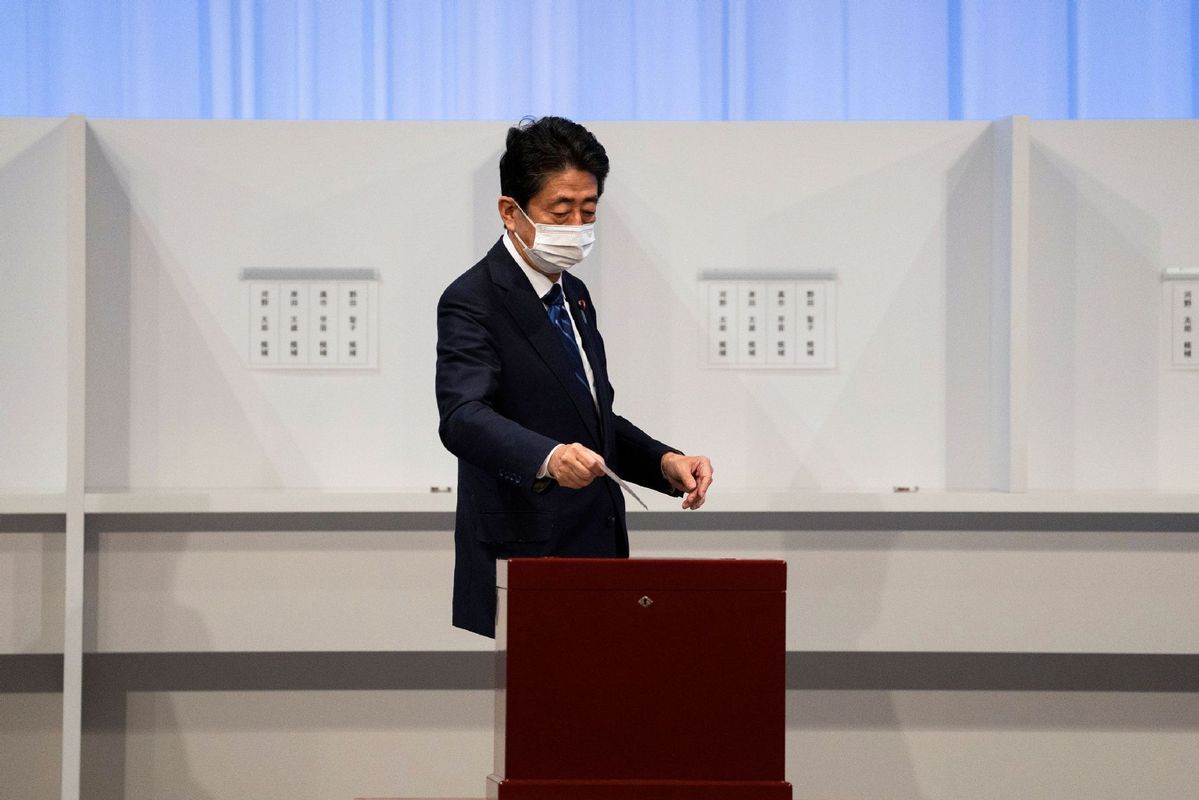
At present, Japan maintains the three principles of not producing, possessing or allowing nuclear arms on its territory. But in a television program aired on Sunday, former Japanese prime minister Shinzo Abe said Japan must learn lessons from the Russia-Ukraine crisis, and proposed that Japan should seek a nuclear sharing arrangement with the United States similar to the North Atlantic Treaty Organization's nuclear deterrence policy.
Former Osaka mayor Toru Hashimoto, who also appeared on the program, echoed Abe's views, saying that "we must have the ability to defend our country".He then went on to suggest that Japan discuss adjusting the "three non-nuclear principles" and also called for a nuclear weapons sharing arrangement with the US. Citing NATO as an example, Abe spouted his views that "all options should be on the table and discussed as to what the country can do to protect the lives of Japanese people".
What exactly is "nuclear sharing"?
The US deploys nuclear missiles in Belgium, Germany, the Netherlands, Italy and other NATO members, and in the event of a conflict, strikes could be carried out using nuclear missiles deployed in those countries rather than those in the US. This sharing of nuclear weapons deepens the ties between the US and Europe.
If Abe is proposing such an arrangement to deploy nuclear weapons in Japan, what about Japan's three non-nuclear principles? Abe's stance goes against those principles and Japan's participation in the Nuclear Non-Proliferation Treaty.
There are also hawkish Japanese politicians who have floated the idea of Japan developing its own nuclear weapons, but such talk has not gained public support. The calls for a nuclear sharing agreement with the US have not only reignited the contradiction between the three nuclear-free principles and the Japan-US security alliance treaty, but also drawn the ire of anti-nuclear groups in Japan.
The Japanese government considered developing them in the past, but decided doing so would make Japan less secure. Opinion polls in Japan have also consistently shown there is strong public opposition to Japan developing its own nuclear weapons or deploying US nuclear weapons.
Indeed, there has also been a long-standing consensus among Japanese security officials and experts, including those concerned about the credibility of the US' extended deterrence, that there is no imaginable scenario in which it would be advantageous to the defense of Japan for it to develop nuclear weapons.
Nonetheless, there is a group of Japanese politicians that has ties to the US defense establishment which is pushing the role of US nuclear weapons in Japanese security policy. Meanwhile, Abe's fundamental intention is to get rid of the post-war regime that he and likeminded Japanese politicians view as imposing shackles on Japan.





