



Fukushima dumping plan toxic as ever









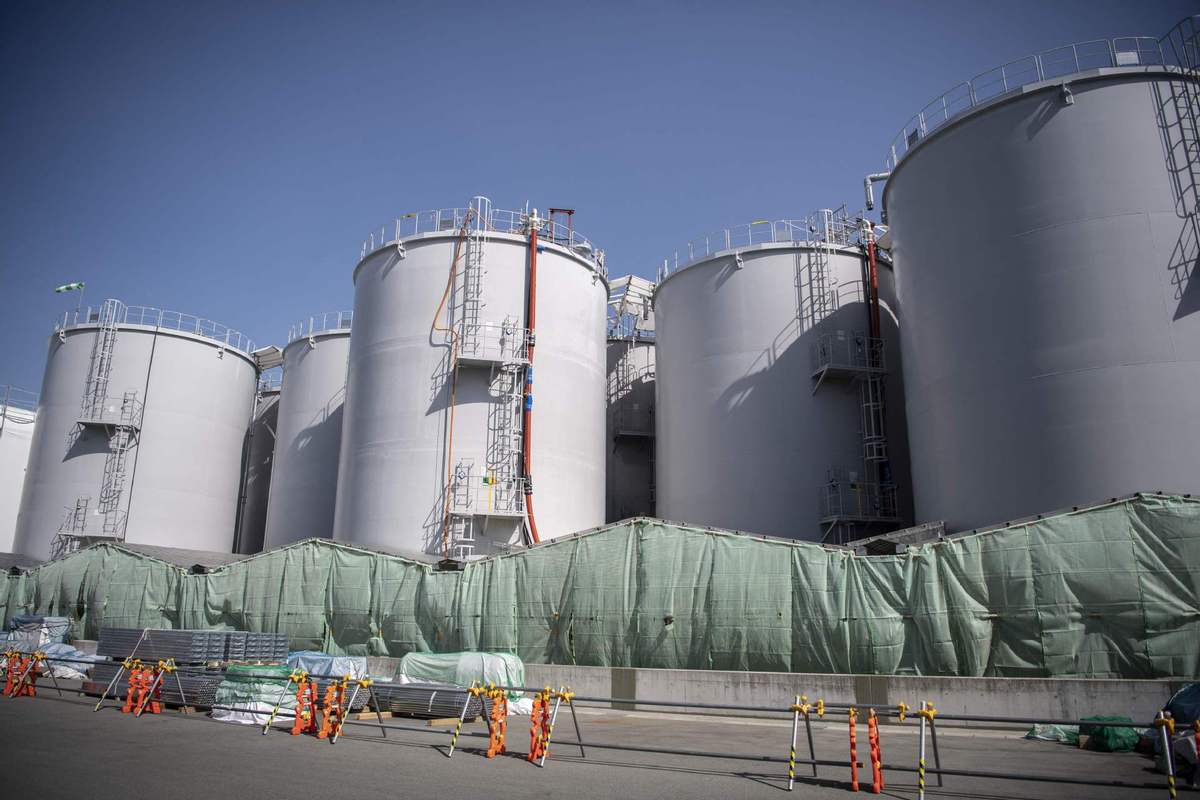
Year after Japan's decision, anger over release of tainted water undiminished
International opposition to Japan's move to dump toxic water from the crippled Fukushima nuclear plant into the ocean is as strong as ever a year on from the decision that sparked fears for the impact on neighboring nations.
The Japanese government said on April 13, 2021, it would discharge over 1 million metric tons of contaminated water into the Pacific Ocean. Plant operator Tokyo Electric Power Company will carry out the process gradually from spring 2023.
A year after the announcement, governments, global environmental groups and experts remain vocal in their condemnation as they step up the pressure on Japan to use a safer alternative than the ocean discharge.
The water has been used to cool the reactors at the nuclear plant after the Fukushima region was devastated by a tsunami in March 2011.
Seo Sam-seok, a lawmaker from South Korea's Democratic Party, told a forum on Monday that the discharge "will spread across the entire Pacific Ocean in 10 years and affect almost all of our seas", according to a report by Xinhua News Agency.
The Pacific Islands Forum, or PIF, comprising 18 countries, last month established an independent panel of global experts on nuclear issues. The panel will provide advice to the forum in its discussions with Japan on Fukushima contaminated water.
PIF Secretary-General Henry Puna said in a statement that the forum's "ultimate goal is to safeguard the Blue Pacific-our ocean, our environment, and our peoples-from any further nuclear contamination. This is the legacy we must leave for our children".
Tilman Ruff, a Nobel peace laureate and co-president of International Physicians for the Prevention of Nuclear War, said the concerns voiced by Japan's neighbors are justified, noting the "significant amount of radioactivity" involved in the Fukushima contaminated water.
"All radioactivity has harmful health consequences for all living things, not just humans. Once (the contaminated water is) released into the ocean, it will be minutely distributed with the ocean current and will find its way into the food chain," Ruff said in an interview with China Daily.
Ruff said there are "reasonable alternatives" to dumping the contaminated water into the ocean. One option is to contain it in a land-based storage system.
Greenpeace said the "most acceptable solution" is to continue long-term storage and processing of the contaminated water at its original site, rather than releasing it into the ocean. The environmental group has submitted a technical analysis to United Nations agencies, held seminars with residents of Fukushima and urged the Japanese government to reverse its ocean discharge decision.
Opposition voiced
The Northern Mariana Islands, a US territory some 2,500 kilometers southeast of Japan, supports Greenpeace's proposal. The territory has adopted a resolution opposing any nation's decision to dispose of nuclear waste in the Pacific Ocean.
Renato Redentor Constantino, executive director of the Institute for Climate and Sustainable Cities, a think tank in Manila, said Japan's decision to dump the contaminated water despite its potentially harmful impact on its neighbors shows that Japan "has learned nothing" from its history.
"The stain of shame is twice layered on Japan. First, for the obscenity of dumping on innocent lives the folly of its refusal to leave behind its deadly embrace of nuclear energy. Second, because it has learned nothing despite having been a victim of nuclear dumping through the Hiroshima and Nagasaki bombs," Constantino told China Daily.
Ruff said there's a "general growing norm that radioactive waste should not be dumped indiscriminately into the ocean and into places where it's not contained and can't be properly monitored and managed".
He said a claim by Japan that it is running out of space to store the contaminated water "is just a red herring". Ruff said Japan is using the towns of Okuma and Futaba as storage facilities. "There is actually quite a lot of land around the site that could be a site for expanded storage facilities."










