


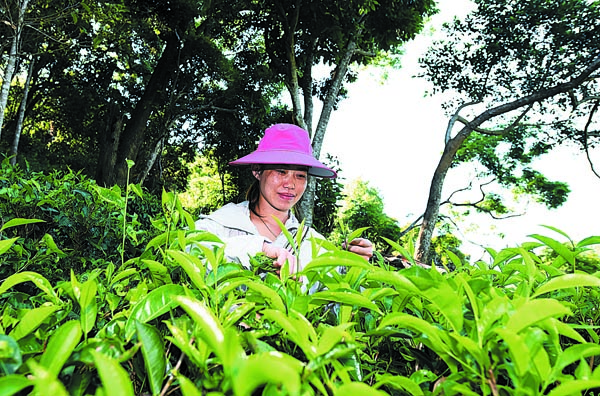
At the break of dawn, Wang Juru heads to her tea garden, tucked away on a lush green mountain. The tender tea leaves there will guarantee a handsome income for her family.
In 2013, Wang started growing 3.33 hectares of tea before opening a tea-processing workshop. Her handmade tea can fetch up to 800 yuan ($126) per kilogram.
Wang is a resident of Maona, a Li ethnic village in the city of Wuzhishan, South China's Hainan province. It sits amid mountainous valleys and streams. Poor transportation and little arable land severely stymied local agricultural development in the past.
"Villagers used to make a living by bird-hunting and exploiting the mountain terrain," says Wang Youshou, secretary of the Communist Party of China village branch of Maonao, which administers Maona. "Some people lived in thatched cottages."
In 2013, local authorities guided villagers to grow tea in Wuzhishan, which gradually transformed fortunes in the locality.
"We require that CPC members and cadres play leading roles in rural vitalization," Wang Youshou says.
There is a big difference in temperature between night and day in Wuzhishan, and it is always shrouded in mist, making it a perfect place for tea plantation.
Locals used to pick wild tea leaves for their families or sell them in the market on a small scale. Without scaled plantations, villagers couldn't rake in profits from the tea industry.
In 2013, under the guidance of the local government, villagers began a new phase of life in tea gardens.
"The government invested in local infrastructure such as roads and irrigation facilities and also supplied tea plant seedlings and fertilizer," Wang Youshou says.
So far, the local tea plantation area has expanded significantly, while several tea-processing factories also sprang up.
As the government helped to beautify rural areas, the Maona village began to draw outside tourists with its rainforest scenery and the Li ethnic culture. The tourists drink and buy tea or other agricultural products, which helped increase the income of the locals.
"Currently, our annual per capita disposable income has exceeded 15,000 yuan," says the village official.
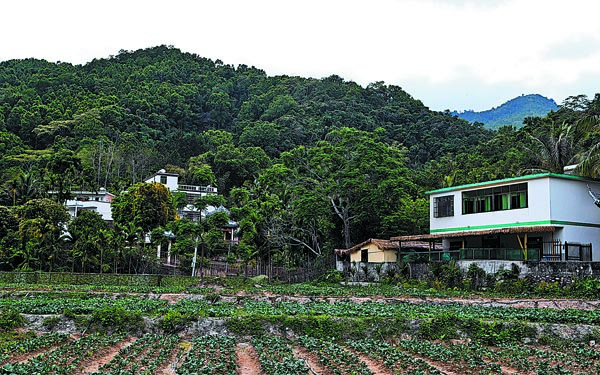
As rural vitalization gains momentum, the old, dilapidated houses in the village made way for spacious and bright new ones. All roads within and leading to the village have been cemented, and a wide bridge has replaced an old, small one, which was often submerged by water.
The local government has also built a sightseeing hall and a public square, transforming the village into a tourist spot that incorporates leisure activities such as camping, stargazing and tea drinking.
"People here live prosperous lives through hard work," Wang Youshou says.





