Vets give animal patients expert care and attention









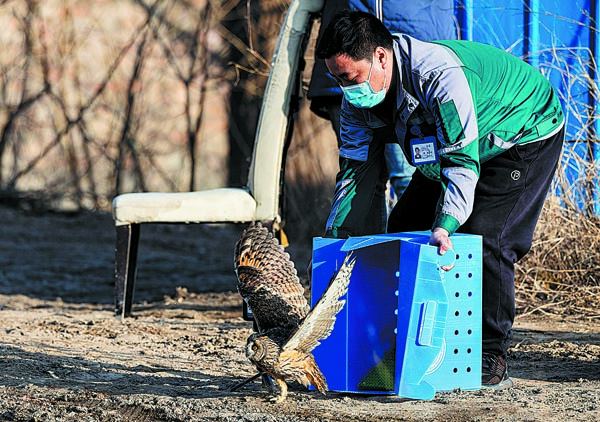
Over the past 10 years, Liu has treated more than 8,000 animals. They are usually released into the forests of Beijing upon recovery. But when it comes to migratory birds, Liu and his colleagues wait for the appropriate season.
From 2016 to 2020, the wildlife center spanning 16 hectares had received 21,432 animals, including 19,075 birds, 963 reptiles, 797 mammals, 38 arthropods and 31 amphibians.
"Birds are in the majority because Beijing is an important migration route for them," Liu says.
According to the latest survey, Beijing has more than 503 bird species, the proportion of which surpasses a third of the country.
When locals spot birds in distress, most residents would send them to the wildlife care center for treatment. Such occurrences are common during spring and autumn, the migration seasons. The center has also established a breeding platform and set up numerous aid stations in wildlife habitats. There are two types of veterinarians in the center. Experimental vets are in charge of analyzing death cases and collecting blood, feces and biopsy samples, while clinical vets manage the treatment plans for animals.
While most animals rescued are released into the forest, a small proportion is used for scientific research and demonstration. The non-local ones are sent back to their original habitats, and those deemed incapable of survival following injuries are kept in the zoo under proper care. In comparison to purely treating the creatures, habitat rehabilitation increases the benefits of wildlife protection.
"Hundreds of wild animals I rescue every year seem to be an enormous amount, but in reality, it is just a drop in the bucket considering countless wildlife species are suffering in Beijing, as well as the rest of the country," Liu says.
He says he hopes the unremitting efforts of vets in treating animals can enhance public awareness of wildlife protection and habitat rehabilitation.
According to the local forestry and park authority, Beijing's urban green spaces and wetland areas increased by 3,773 hectares and 11,000 hectares, respectively, during China's 13th Five-Year Plan period (2016-20).
A variety of birds, such as black storks, great bustards, mallards and herons, choose Beijing as their habitat. There are currently 79 nature reserves in the city, occupying 368,000 hectares of area.
"The public's consciousness toward habitat rehabilitation will save more wildlife than clinical vets do," Liu says, adding that the efforts of society will contribute to the protection of the environment.