


Fenjiu offers clues to China's history of distilling










It is speculated that China has a history of alcoholic beverage production dating back more than 5,000 years. The speculation is based on written records and even legends.
However, an archaeological discovery in Xinghuacun town of Shanxi's Fenyang city has offered material evidence for the long history and extended it to 6,000 years.
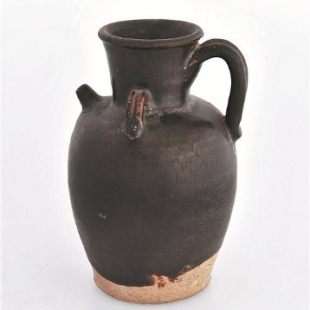
One of the remarkable findings at the site, which is located in the premises of today's white liquor producer Xinghuacun Fenjiu Group, was a waving spindle-shaped bottle with a distinctive feature of Yangshao Culture, an ancient civilization in the middle reaches of the Yellow River between 5,000 and 7,000 years ago. Archaeologists identified it as a utensil used to brew alcoholic beverages.
The discovery suggests that Fenyang, along with its neighboring areas in Shanxi province, could be the birthplace and hub of China's alcoholic beverage industry.
The fame of Fenyang-made alcoholic beverages, or Fenjiu as locals call it, has been associated with its status as a special offering to the royal families since the Tang Dynasty (618-906).
Tang was also a period of frequent international exchanges. And that was when Fenjiu from Shanxi began to exert influence on the overseas alcoholic beverage industry and became recognized in foreign countries. Japan was one such region to see its industry influenced by Fenjiu.
To learn the Chinese culture and technologies, Japan began dispatching large groups of exchange scholars to China during the Tang Dynasty.
Kuhai, a Japanese Buddhist monk, was one of the scholars.
During his three-year stay in China, he not only studied the Buddhist sutras, but also learned some Fenjiu-making techniques in his spare time. Historical records said he brought the techniques back to Japan.
In Japanese, liquor made with a distilling technique is called sake. This is a pronunciation derived from shaojiu, the Shanxi pronunciation of distilled liquor.
Historical records said the city of Fenyang is the birthplace of distilled liquor in China. The double-distilling technique, which is still used by today's distillers like Xinghuacun Fenjiu Group, has been the secret of making high-quality and high-purity liquor that is sought after in East Asian markets including Japan.
The exchanges have endured in modern times, and a number of distilling masters from Shanxi have been invited to share their experiences with Japanese counterparts.
Liu Jiarui contributed to this story.